


Headline inflation was largely driven by rising fuel prices in July. Core inflation picked up decisively, reflecting a strong increase in rents. Headline inflation is set to hover above the target over the forecast horizon, yet in our view, it will not get out of hand. Developments in the housing market represent a substantial risk
Core inflation driven by punchy rents
Czech annual inflation was confirmed at 1.7% in July. Consumer prices gained 0.6% month-on-month, driven by an increase in fuel prices, along with a seasonal pickup in prices of package holidays. Imputed rents entered July’s inflation reading forcefully at 0.9% MoM, up 5.7% year-on-year, which reflects the continuation of the overheating housing market. Meanwhile, food prices recorded another annual and monthly decline. Core inflation picked up to 3%, driven mostly by a stronger dynamic in services prices. Prices of goods fell 0.2% YoY, while prices of services increased by 4.7% from a year ago.
Imputed rents continue in a strengthening growth trend
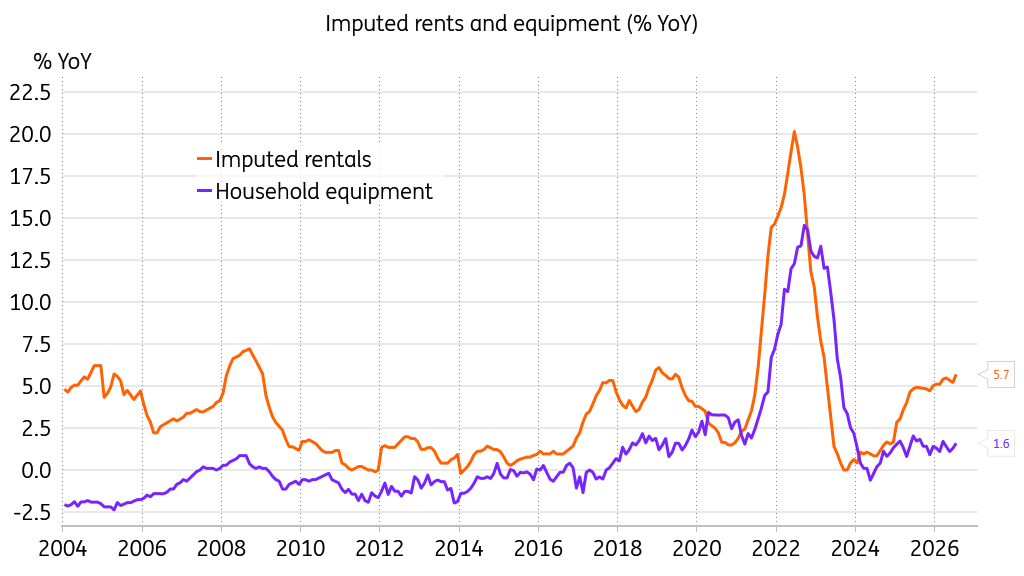
July’s significant core inflation reading was a surprise, especially as the monthly imputed rents dynamic of 0.9% doubled from the previous month, showing no signs of easing. We have seen periods of more than 5% annual growth in imputed rents before, but the question is where the ceiling is this time. The main drivers of imputed rents, such as house prices and prices of construction materials and work, are still seeing ample demand that reliably exceeds supply capacity.
Inflation above target on the outlook
With the latest inflation breakdown, this year’s headline inflation is set to average 2%, which is exactly in line with the inflation target. Nevertheless, the core rate is set to average about 3%, which is close to being uncomfortably high. We still expect core inflation to slow down over the coming year to 2.5%, yet the overheating housing market and continued growth in prices of building materials remain a substantial risk. It is the lagging supply side that is largely driving house prices.
Easing of the core rate is partially subject to housing market
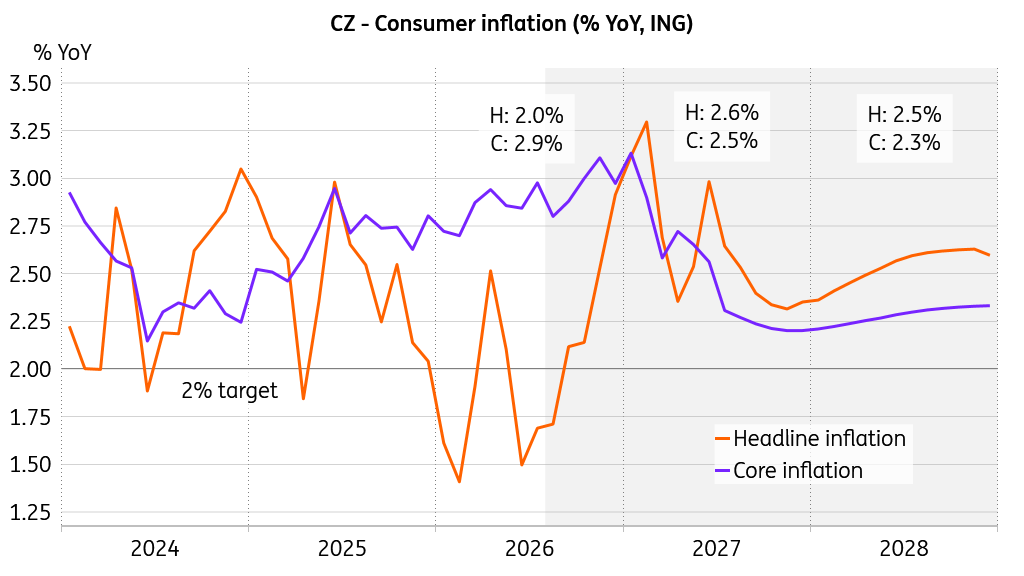
For 2028, we have plugged in the emission allowances (ETS2) effect, which accounts for 0.4ppt of headline inflation, with two-thirds expected to come through as a direct effect, mostly through regulated prices. The rest is channelled via other price channels as second-round effects, as the measure is designed to affect both households and small and medium-sized businesses. We still need to see whether the ETS2 will eventually be implemented, and whether the government will come up with some mitigating measures for either households or firms.
Regulated prices will rise over the next two years
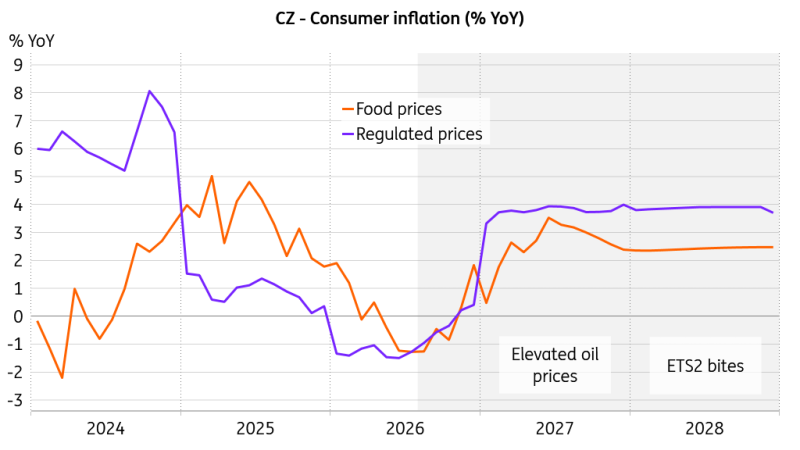
In any case, we forecast inflation to hover above the inflation target over the next two years, without surpassing the 3% upper limit of the Czech National Bank's tolerance band. With near- to medium-term risks for growth, we see unchanged rates as the best answer given the inflation profile. Meanwhile, some aspects, such as the housing market, remain to be seen and will be a key determinant of whether core inflation will gradually slow down after the first quarter of 2027.



Comments
Log in or sign up to join the conversation.