
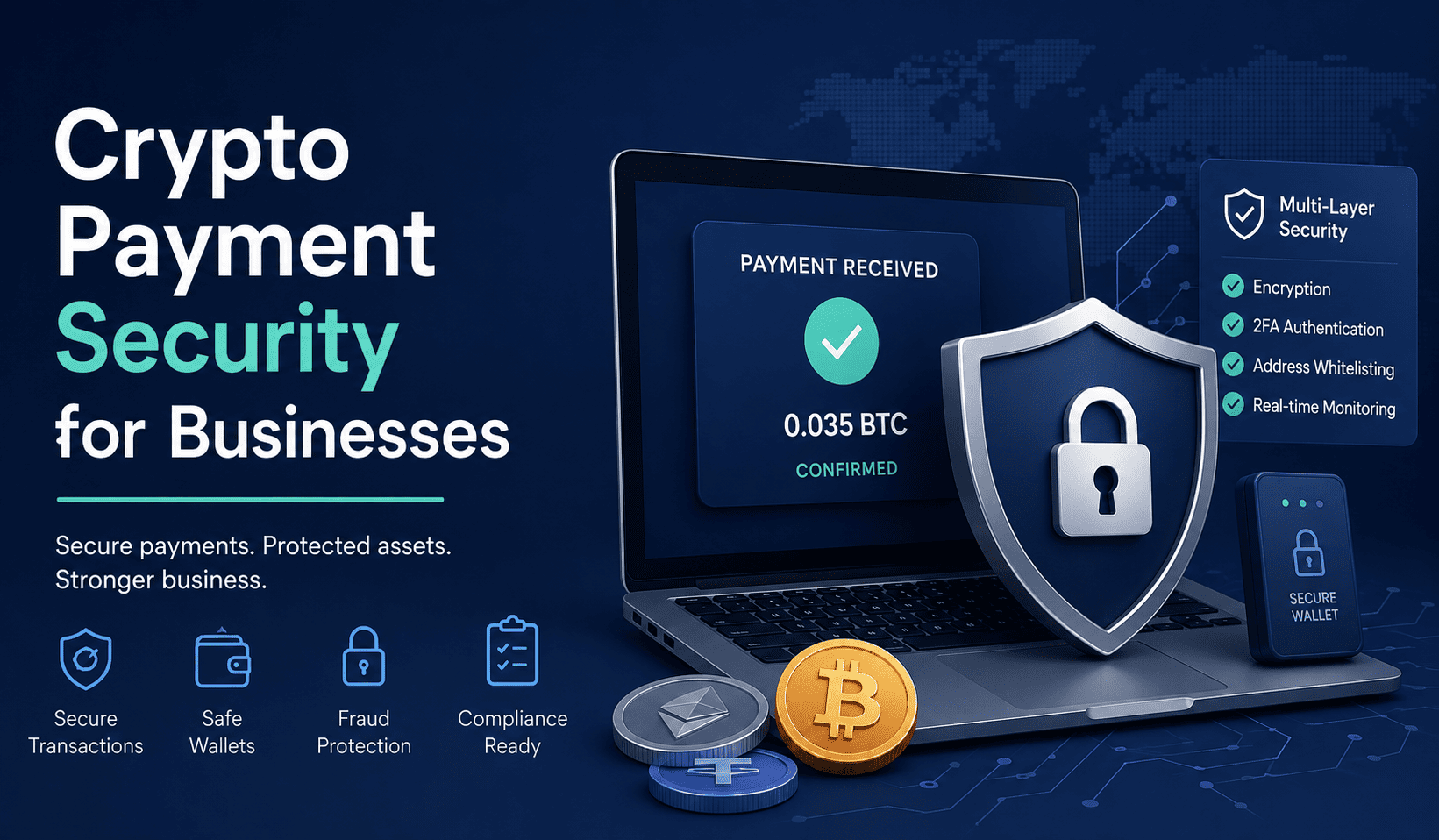
Accepting cryptocurrency can give businesses another way to receive payments from customers around the world. It can also introduce new security considerations that are different from traditional card or bank payments.
Before moving crypto payments on-chain, businesses should understand how blockchain transactions work, how wallet addresses are protected and what happens when a payment is sent incorrectly. Good preparation can reduce avoidable mistakes and help create a safer payment experience for both businesses and customers.
The goal is not to make crypto payments complicated. It is to understand the important risks and put sensible controls in place before accepting digital assets.
What Does Going On-Chain Mean?
An on-chain transaction is a transaction that is recorded directly on a blockchain network.
When a customer pays a business with cryptocurrency, the transaction is broadcast to the relevant blockchain. Once processed according to that network's rules, the transaction becomes part of its public transaction record.
This is different from a traditional card payment, where a bank or card network manages the transaction between the customer and merchant.
Because blockchain transactions can be difficult to reverse, businesses need to pay close attention to payment details before accepting funds.
1. Choose the Right Payment Infrastructure
Businesses should decide how they want to process crypto payments before accepting their first transaction.
One option is to manage payments directly through a business wallet. This may be suitable for businesses receiving occasional payments, but manual processing can become difficult as transaction volumes increase.
A crypto payment gateway can provide infrastructure for businesses that want a more organised way to accept cryptocurrency.
Depending on the provider, businesses may be able to create payment requests, monitor transactions and connect crypto payments with their existing checkout or payment systems.
Choosing the right infrastructure can reduce manual work and help create consistent payment processes.
2. Protect Business Wallets
A cryptocurrency wallet can provide access to business funds, making wallet security a critical consideration.
Businesses should use strong security controls and restrict wallet access to authorised employees.
Access should not be shared through ordinary messaging platforms or stored in unsecured documents.
For wallets that use private keys or recovery phrases, these credentials must be protected carefully. Anyone who obtains them may be able to control the associated assets.
Businesses should also consider how wallet access will be managed if an employee leaves the company or changes responsibilities.
3. Verify the Blockchain Network
One of the most common sources of payment problems is network confusion.
Some cryptocurrencies can operate across multiple blockchain networks. A customer may hold the correct asset but send it using a network that the business does not support.
For example, a business requesting USDT on one network should make it clear that customers must use that specific network.
Payment instructions should clearly show:
The cryptocurrency being accepted.
The supported blockchain network.
The payment amount.
The payment address or payment request.
Any payment deadline.
Clear instructions can reduce the risk of incorrect transactions.
4. Check Payment Confirmations
A transaction appearing in a wallet does not always mean that it should immediately be treated as final.
Businesses should establish how many blockchain confirmations are required before an order is considered paid.
The appropriate approach can depend on the cryptocurrency, blockchain and value of the transaction.
For low-value transactions, a business may use a different process from a high-value payment.
Payment software can help monitor transaction status and notify the business when the required conditions have been met.
Also, businesses that are new to accepting crypto can learn more in our guide, Crypto Checkout: What Happens When a Customer Pays With Cryptocurrency?
5. Protect Against Fake Payment Notifications
Businesses should not rely solely on screenshots or messages from customers as proof of payment.
A customer may show a transaction screen that says a payment has been sent, but the transaction may still be pending or may not have been sent to the correct address.
Businesses should verify payments through their own payment system or an appropriate blockchain data source.
This is particularly important for online businesses that automatically release products or services after receiving payment.
6. Use Separate Wallets Where Appropriate
Businesses may benefit from separating operational funds from long-term holdings.
For example, a company could use one wallet for receiving everyday payments and another more secure arrangement for funds that are not needed for regular transactions.
This can help reduce exposure if the wallet used for everyday payments is compromised.
The exact structure will depend on the company's size, payment volume and security requirements.
7. Understand Smart Contract Risks
Businesses may interact with smart contracts when accepting or using certain cryptocurrencies and blockchain services.
A smart contract is software deployed on a blockchain that can automatically perform actions when predefined conditions are met.
Businesses should understand what permissions they are giving to third-party services before approving transactions or connecting wallets.
Employees should also be trained to recognise suspicious links, fake websites and unexpected requests for wallet credentials.
8. Plan for Refunds
Blockchain payments can be difficult to reverse in the same way as card payments.
If a customer requests a refund, the business may need to send cryptocurrency back to the customer separately.
Businesses should create a clear refund policy before accepting crypto.
The policy should explain how refunds are handled, which asset is used and how the refund amount is calculated.
This is particularly important when the cryptocurrency's market value can change between the original payment and refund.
9. Consider Conversion and Price Volatility
Some businesses may want to hold cryptocurrency after receiving it, while others may prefer to convert it into traditional currency.
Bitcoin and other cryptocurrencies can experience significant price changes. Holding payments for a period of time can therefore expose businesses to market movements.
Stablecoins may reduce some of this volatility, although they still have their own risks and considerations.
Businesses should decide in advance how they want to manage received cryptocurrency rather than making decisions after every transaction.
10. Keep Accurate Records
Every crypto payment should be recorded properly.
Businesses should maintain information such as:
Date and time of the transaction.
Cryptocurrency received.
Amount received.
Relevant blockchain network.
Transaction reference.
Value in the business's accounting currency.
Fees paid.
Conversion or settlement details.
Accurate records can make accounting, reconciliation and tax reporting easier.
Businesses should also seek professional advice about the specific tax and regulatory rules that apply to their location and activities.
Final Thoughts
Crypto payments can provide businesses with another way to serve customers and receive funds, but going on-chain requires careful planning.
The most important areas to consider are wallet security, network compatibility, payment verification, employee access, refunds, transaction records and the handling of received cryptocurrency.
Businesses do not need to build every part of their crypto payment infrastructure themselves. Using suitable payment technology can simplify the process and reduce manual work.
Most importantly, security should be considered before the first transaction, not after something goes wrong. A clear payment process, properly protected wallets and well-trained staff can help businesses accept cryptocurrency with greater confidence.
Comments
Log in or sign up to join the conversation.