
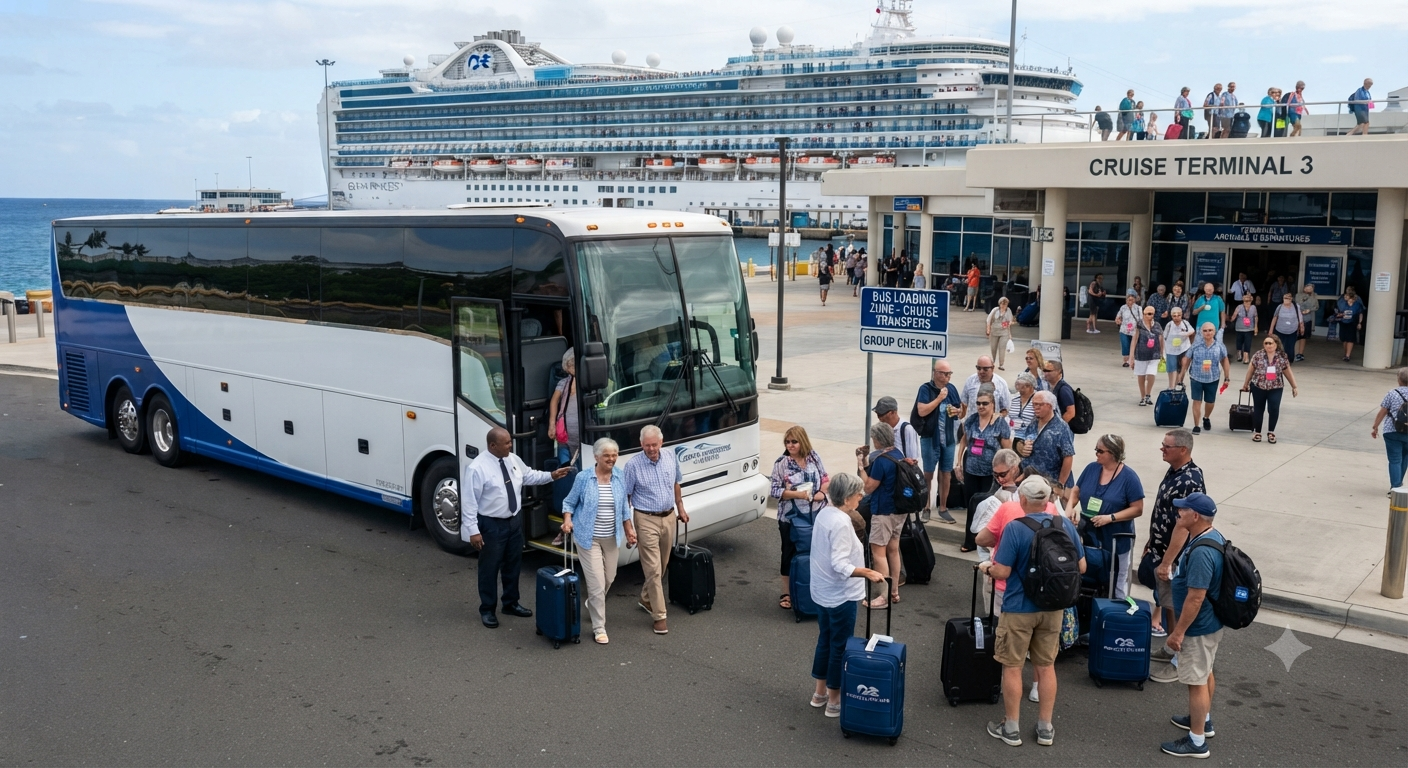
Planning transportation for a cruise group requires more than simply booking a vehicle with enough seats. Travelers may have large suitcases, different pickup locations, mobility needs, and a strict boarding schedule to follow. Choosing reliable cruise port charter transportation can make the journey much easier by keeping everyone together and providing organized transportation from an airport, hotel, hometown, or meeting point. With the right bus and a carefully planned itinerary, your group can arrive at the cruise terminal comfortably and on time.
Why Choose a Charter Bus for Cruise Port Transfers?
Cruise terminals can become extremely busy on embarkation days. Large numbers of passengers may arrive within a short period, causing traffic congestion and making rideshares, taxis, and personal vehicles difficult to coordinate.
A charter bus provides one centralized transportation solution. Instead of asking everyone to arrange separate transportation, passengers can meet at a predetermined location and travel together.
A professional driver handles navigation, traffic, and the route, allowing passengers to focus on their cruise plans instead of driving.
Charter buses can be especially useful for family reunions, corporate groups, church organizations, school trips, wedding parties, and groups of friends.
Determine Your Group Size First
The first step in choosing the right charter bus is determining exactly how many people will travel.
Don't estimate your passenger count too loosely. Create a list of confirmed travelers and consider whether additional passengers may join later.
Your group size can help determine whether you need a minibus, mid-size charter bus, or full-size motorcoach.
Small Groups
Smaller groups may be comfortable in a minibus or smaller shuttle-style vehicle. These options can be convenient for short airport, hotel, and cruise terminal transfers.
Medium-Sized Groups
Groups with more passengers may need a mid-size charter bus that provides additional seating and luggage capacity without requiring a full-size motorcoach.
Large Groups
Large cruise groups can benefit from a full-size motorcoach. These buses generally provide substantial seating and underbody luggage storage, making them suitable for large families, organizations, and corporate groups.
For very large groups, multiple buses may be more practical than putting everyone into one vehicle.
Don't Forget About Luggage
Passenger capacity isn't the only factor when choosing a charter bus. Cruise travelers often carry more luggage than passengers taking a short weekend trip.
Large suitcases, carry-on bags, backpacks, strollers, mobility equipment, and other belongings can quickly fill a luggage compartment.
Before booking, estimate the number of large bags and carry-ons your group will bring. Tell the transportation provider about oversized items such as golf equipment, coolers, or mobility devices.
Choosing a bus based only on seat capacity can create storage problems on travel day.
Consider Your Pickup Location
Your pickup location can also influence the best vehicle choice.
Airport Pickup
Airport-to-cruise transfers are common for groups flying into the cruise destination. A charter bus can collect passengers after baggage claim and transport them to the cruise terminal or a nearby hotel.
If travelers are arriving on different flights, provide the transportation company with the flight details so the schedule can account for arrival times and potential delays.
Hotel Pickup
Many cruise groups stay at a hotel the night before sailing. A charter bus can pick passengers up from the hotel and transport them directly to the terminal.
This can make group coordination easier because the hotel becomes a central meeting point.
Hometown Pickup
Groups traveling from nearby cities can arrange transportation from a central hometown location. This can eliminate the need for multiple cars and allow everyone to begin the cruise journey together.
Compare Travel Distance and Trip Duration
The length of your transfer should influence your vehicle choice.
A short hotel-to-port trip may not require the same amenities as a three- or four-hour journey from an inland city.
For longer transfers, consider amenities such as reclining seats, climate control, Wi-Fi, power outlets, overhead storage, and an onboard restroom.
For shorter transfers, a standard charter bus may provide everything your group needs without paying for features you won't have time to use.
Think About Comfort and Amenities
Charter buses can vary considerably in comfort and available features. Before choosing a vehicle, determine which amenities matter most to your group.
For a short transfer, comfortable seating and climate control may be enough. Longer journeys may justify additional features such as reclining seats, entertainment systems, Wi-Fi, charging outlets, and onboard restrooms.
If you're traveling with older adults or passengers with special needs, comfort and accessibility should receive additional attention.
Consider Accessibility Requirements
If someone in your group uses a wheelchair or has limited mobility, mention the requirement before booking.
An ADA-accessible charter bus may include features such as wheelchair lifts, ramps, and securement areas. Availability varies by fleet and location, so accessibility should be confirmed in advance.
Also tell the provider if passengers will bring walkers, mobility scooters, strollers, or other equipment requiring additional space.
Planning accessibility needs early can help avoid last-minute transportation problems.
Understand Cruise Port Logistics
Every cruise port can have different traffic patterns, terminal layouts, and loading procedures. Your transportation provider should know where charter buses are permitted to pick up and drop off passengers.
Provide the exact terminal or pier information rather than simply giving the name of the city.
This is especially important at major cruise destinations where multiple ships may use different terminals on the same day.
Your driver may also need to account for port traffic, restricted areas, designated loading zones, and passenger drop-off procedures.
Plan Your Schedule Carefully
Cruise ships operate according to strict boarding and departure schedules. Your charter bus itinerary should therefore include enough time for traffic, luggage handling, and unexpected delays.
Don't schedule your pickup based on the shortest estimated driving time.
Traffic congestion, construction, weather, accidents, and road closures can all affect travel time. Build a reasonable buffer into your schedule.
If you're flying to the cruise destination, arriving the day before sailing can provide an additional layer of protection against flight delays or cancellations.
Compare Charter Bus Quotes
Once you've determined your passenger count, luggage requirements, pickup locations, and schedule, request quotes from transportation providers.
Make sure each quote is based on the same information so you can make a meaningful comparison.
Ask whether the quoted price includes tolls, parking, driver costs, waiting time, and other potential fees.
A lower initial quote isn't necessarily the best value if additional charges are added later.
Ask the Right Questions Before Booking
Before signing a rental agreement, ask about the vehicle's passenger capacity, luggage storage, available amenities, accessibility features, and driver experience.
You should also confirm the cancellation policy, payment requirements, pickup procedure, and emergency contact information.
Ask whether the company has experience serving your specific cruise port. Familiarity with port logistics can be valuable when traffic and loading procedures become complicated.
Book Early for Better Options
Cruise transportation should be arranged well in advance whenever possible. Popular cruise dates, holidays, weekends, and peak travel seasons can increase demand for charter buses.
Booking early gives your group more time to find the appropriate vehicle and coordinate the transportation schedule.
For larger groups or travelers requiring an ADA-accessible bus, early planning is particularly important.
Final Checklist Before Travel Day
Before your cruise transfer, confirm the passenger count, pickup location, departure time, cruise terminal, luggage requirements, and driver contact information.
Send the itinerary to every passenger so everyone understands where and when to meet.
Assign a group leader to complete a headcount before departure and help coordinate luggage.
Passengers should keep passports, identification, cruise documents, medications, valuables, and other essential items with them instead of placing them in stored luggage.
Final Thoughts
Choosing the right charter bus for cruise port transfers comes down to matching the vehicle to your group's size, luggage, travel distance, comfort preferences, accessibility needs, and schedule.
A little planning can prevent many common transportation problems. Determine your passenger count, discuss luggage requirements, confirm the exact cruise terminal, compare quotes, and allow extra time for traffic.
Whether you're organizing a family cruise, corporate getaway, church trip, school outing, wedding group, or friends' vacation, the right charter bus can make getting to and from the cruise port more comfortable, organized, and stress-free.
Comments
Log in or sign up to join the conversation.