

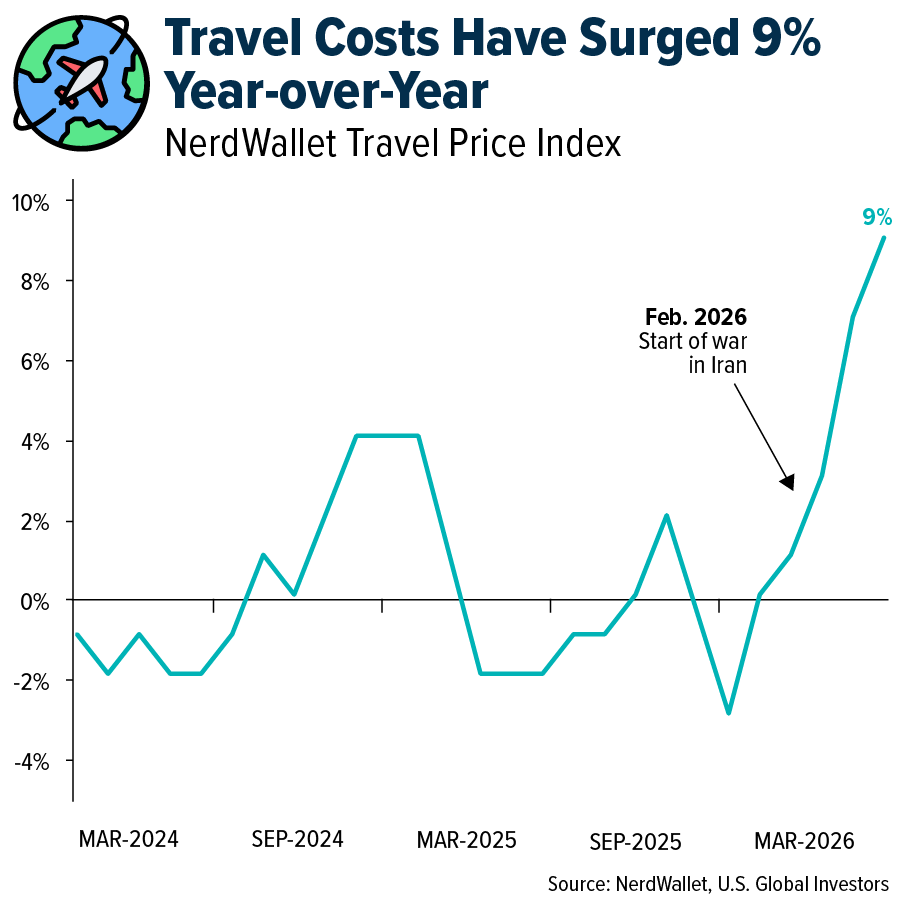
With the busy summer travel season upon us, the average price of gas in the U.S. is approaching $4.50 per gallon, a four-year high. Travel costs in general—including flights, lodging, food, car rentals and more—have increased 9% year-over-year, according to NerdWallet’s proprietary index based on Bureau of Labor Statistics data.
Despite these higher costs, a projected 45 million Americans were expected to travel at least 50 miles from home this Memorial Day weekend, setting a new record. Close to 40 million drove while some 3.7 million flew.
Bank of America’s summer survey found that 77% of Americans are planning to travel this summer, up from 74% last year and 72% in 2024.
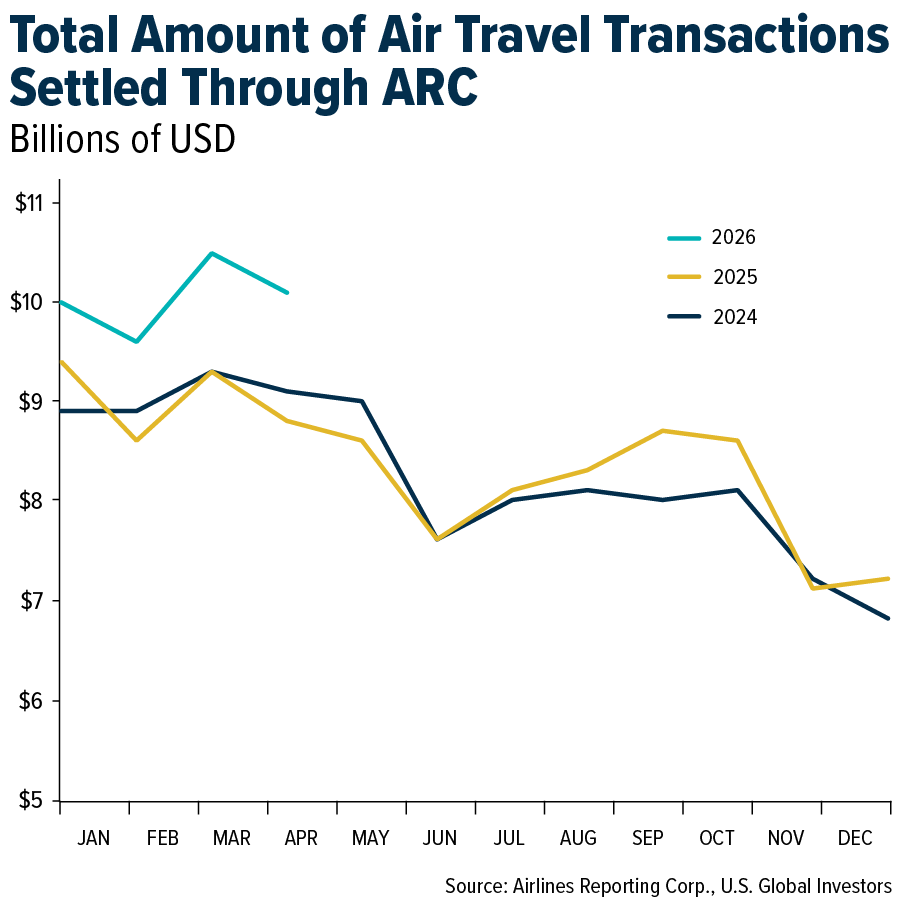
Meanwhile, data from Airlines Reporting Corporation (ARC), which settles airline ticket transactions, shows that April travel agency ticket sales topped $10 billion, a 15% increase from the same month last year. Total passenger trips settled through ARC hit 26.4 million.
Those are more than domestic numbers. The International Air Transport Association (IATA) reported that Asia-Pacific carriers posted an 11.5% jump in demand in March, while European carriers grew 7.7% and Latin Americans airlines surged 12.1%. Traffic between Europe and Asia alone skyrocketed more than 29% as travelers rerouted around the conflict in Iran.
The TSA, meanwhile, is gearing up to screen 18.3 million passengers in the week ahead. And that’s before the FIFA World Cup kicks off on June 11, an event expected to draw some 6 million visitors.
Cruise Lines Are Effectively Sold Out
I want to mention the cruise industry because the momentum there is extraordinary. According to the Cruise Lines International Association (CLIA), global cruise passengers hit a historic 37.2 million last year, and the projection for this year is 38.3 million, which would be an increase of 4%. Nearly 90% of cruisers say they plan to sail again.
Viking (VIK) is a good case study. The Switzerland-based company reported first-quarter revenue of $1.05 billion, up 17.5% from the same period last year. Its 2026 sailings are 92% booked. Effectively, it’s sold out. And 2027 is already 31% ahead of last year in advanced bookings.
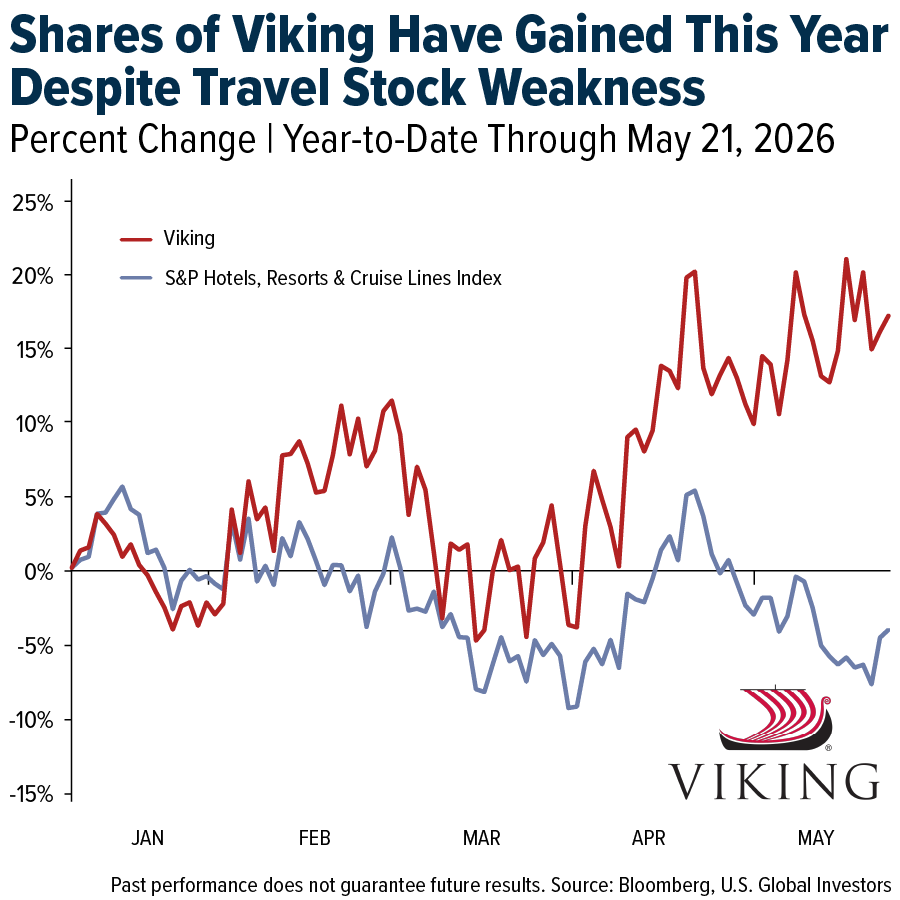
We’ve been very pleased with Viking’s performance this year. Amid weakness in the broader leisure travel industry due to higher fuel costs, shares of Viking have gained approximately 18% as of May 21.
What I find remarkable is that demand persists despite the hantavirus and Ebola headlines that would have torpedoed bookings just a few years ago. Outbreaks on cruise ships are making news, but I don’t believe they’re likely to slow the industry’s growth. Indeed, the Bank of America survey I mentioned earlier found that over a third of Americans plan to take a cruise in the next 12 months, with Gen Z leading at close to 60%.
Your Health on Travel
I’ve always believed that travel is one of the best investments you can make… and not just financially, but in your own health and well-being.
That’s why I want to share with you the results from a recent study, which found that each additional vacation a person takes reduces their risk for metabolic syndrome—high blood pressure, blood sugar and cholesterol levels—by nearly a quarter. Participants who vacationed more frequently had a lower risk of contracting heart disease and diabetes.
When you combine this science with data showing that younger Americans are prioritizing travel, you get a demand profile that looks far more resilient than traditional consumer spending. On average, Americans expect to spend more than $2,800 on travel this summer.
The Headwinds Are Real, But Airlines Are Adding Capacity
I’m not dismissing the challenges. Fuel prices are sky-high right now, and consumer behavior is already shifting: the share of Americans planning a road trip of two or more hours dropped from nearly 70% to 56%.
Hotel rates are climbing too. HotelHub data shows the global average rate per night rose over 7% to $189, with U.S. rates hitting $226. Bookings to the U.S. from abroad dropped nearly 12%.
Sadly, the hotel industry’s own outlook on the FIFA World Cup is cautious, with roughly 80% of respondents in one survey saying bookings are tracking below expectations, partly due to visa barriers and geopolitical concerns.
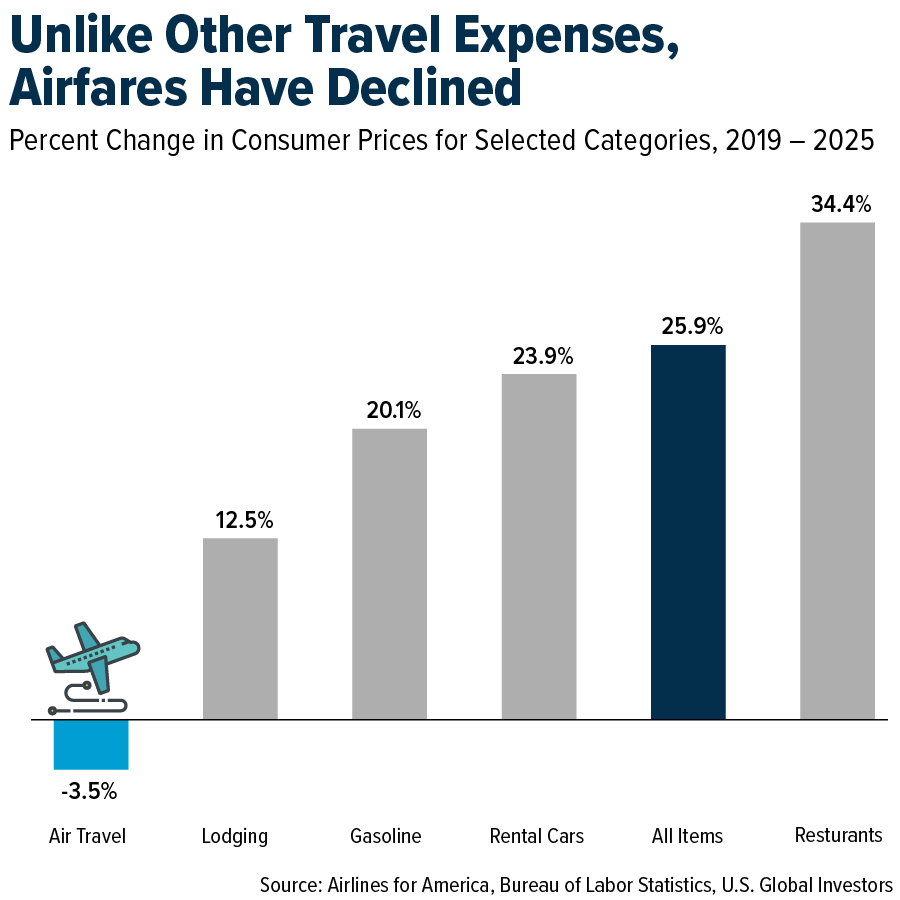
The good news is consumers don’t appear to be canceling plans. While the consumer price index (CPI) for airline fares actually fell 3.5% from 2019 to 2025 in real terms, low-cost carriers like Breeze, Frontier (ULCC) and JetBlue (JBLU) are aggressively adding capacity in markets vacated by Spirit Airlines (SAVE), keeping competitive pressure on pricing even as demand grows.
The Investment Case Write Itself
Right now, airlines, cruise operators and travel-adjacent companies are operating in an environment where consumers are telling us, through their wallets, that they will pay more, adapt their plans and blend their work with their vacations before they’ll give up the trip entirely.
Both the tailwinds (infrastructure investment, America 250 celebrations, FIFA) and the headwinds (visa restrictions, energy costs, geopolitics) are shaping a travel landscape that rewards companies with scale and pricing discipline.
Americans—and, increasingly, travelers worldwide—are voting with their feet. Smart investors should pay attention.


Comments
Log in or sign up to join the conversation.