

As a result of the COVID-19 pandemic, we are now in a bear market and the longest bull market in history is over. Here's a roundup of some informative charts, including the S&P 500, changes in the Dow, NASDAQ, and S&P since 2000, and a few more that are relevant.
We will be updating our series of monthly valuation pieces starting on April 1, after the March close. Stay tuned for that!
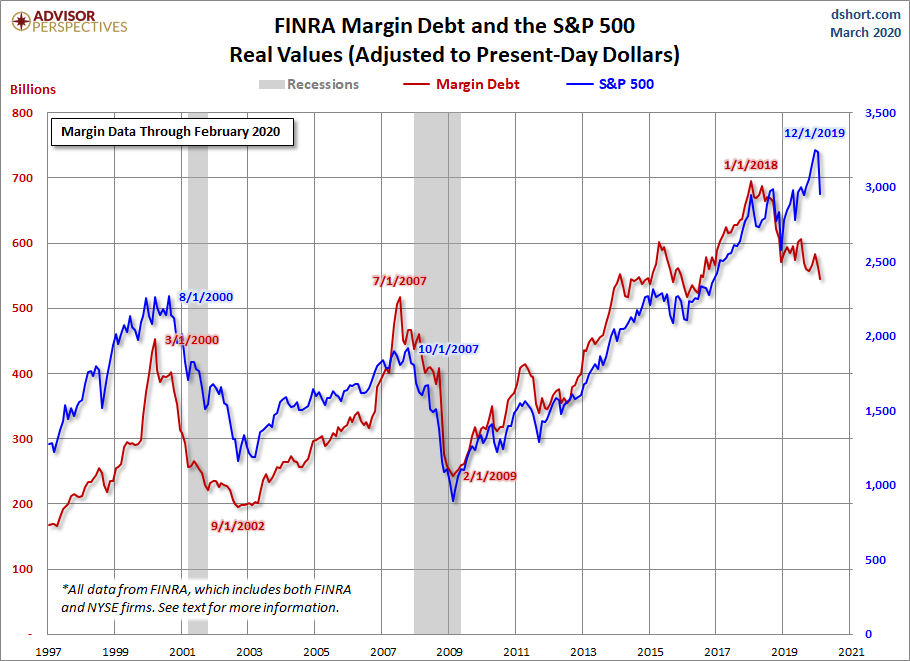
Let's start with margin debt, which began a decline in Q3 of 2017. The latest FINRA margin debt data for March is not yet available, but we've updated the S&P data and the margin debt data through February. The last S&P 500 all-time high was on February 19 at 3386.15. As of the March 26 close, the index is down 22.33% off that high. In the previous two recessions, the S&P peak came at least three months after the margin debt peak, but this market drop has obviously been a different case. This has been a cycle-long increase in margin debt and its highest ever.
Please note that this chart is typically updated monthly, so the data for March is incomplete for the S&P 500 and the March CPI data has been extrapolated through March.
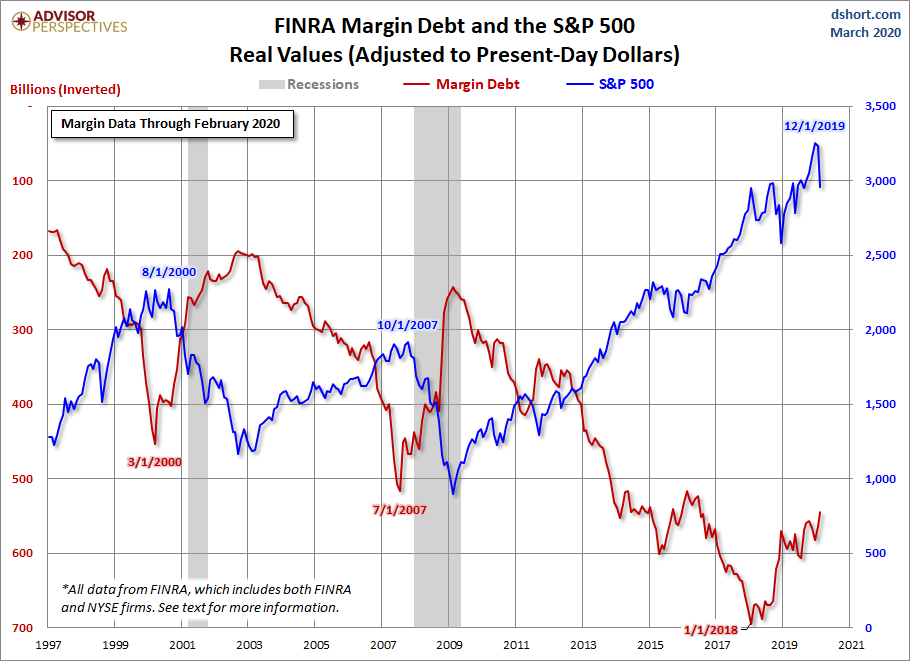
Here's the same chart inverted to show the relationship between the two as a divergence.
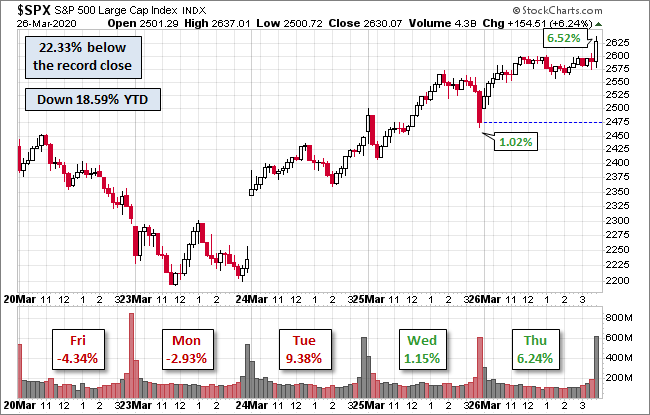
Let's move on to the S&P 500 itself - here's a couple of charts from our S&P Snapshot. The first is a five-day look at the volatility and havoc that COVID-19 has wreaked on the markets.
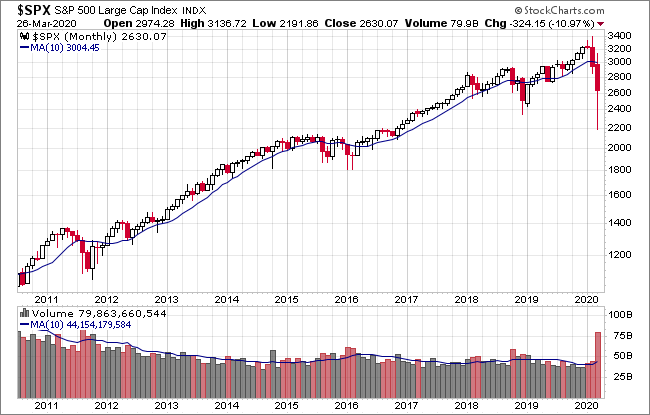
To put the market downturn into perspective, let's look at the index since about 2011. It's clear how much of a bull market this has been and how high the index has gone.
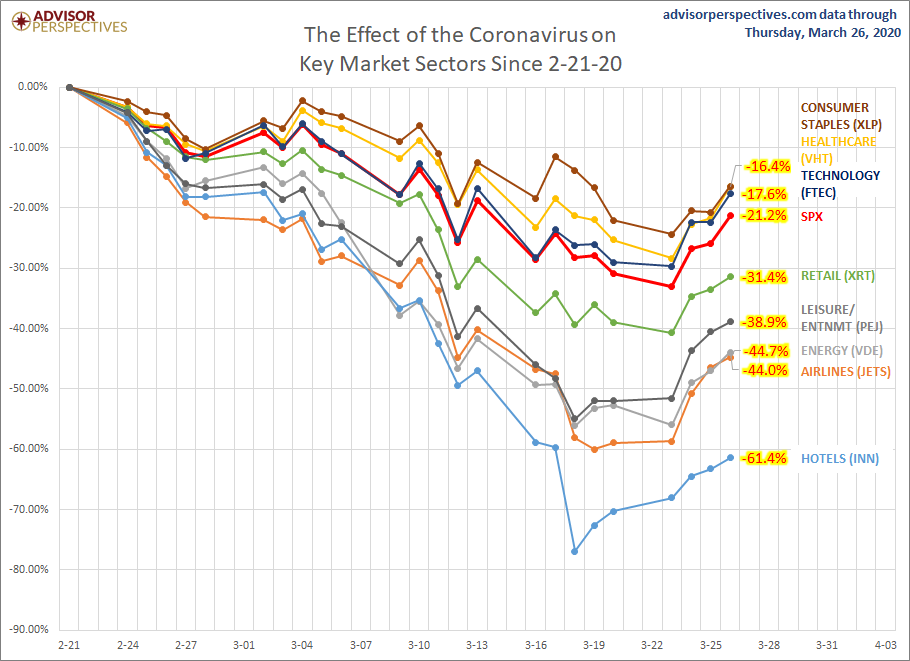
Now let's take a look at major sectors in the ETF world since February 21.
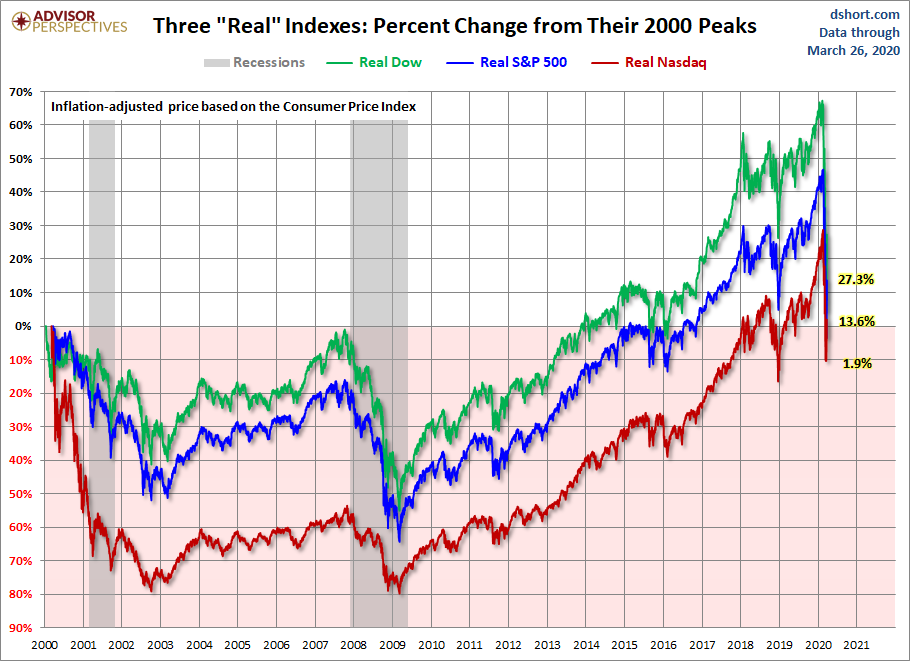
This next chart we typically update monthly, but have included data through the March 26 close. This takes a look at the inflation-adjusted changes since the 2000 peaks for the Dow, S&P 500, and NASDAQ.
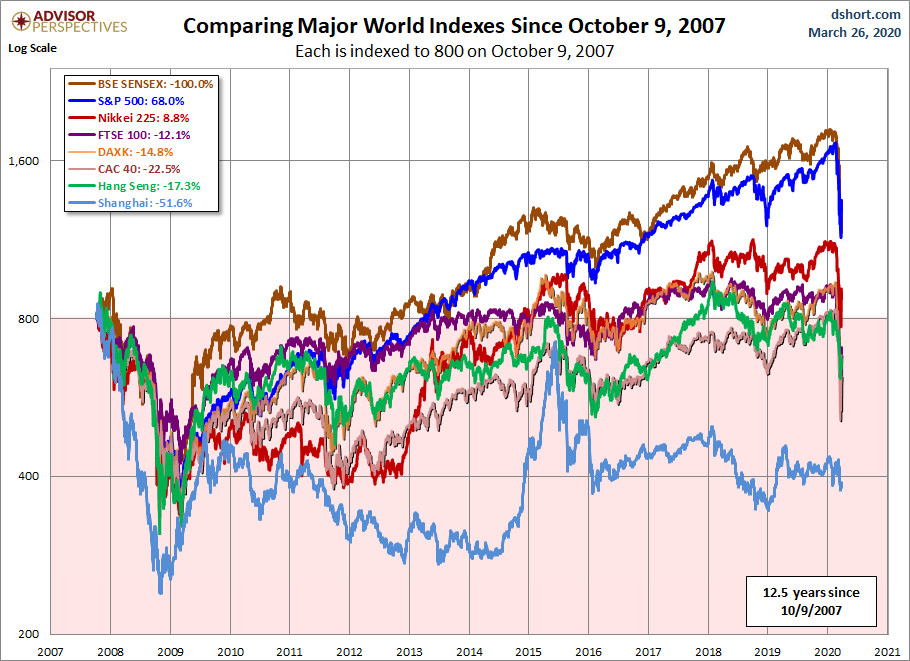
Here is a chart on world markets since the October 9, 2007 market downturn.
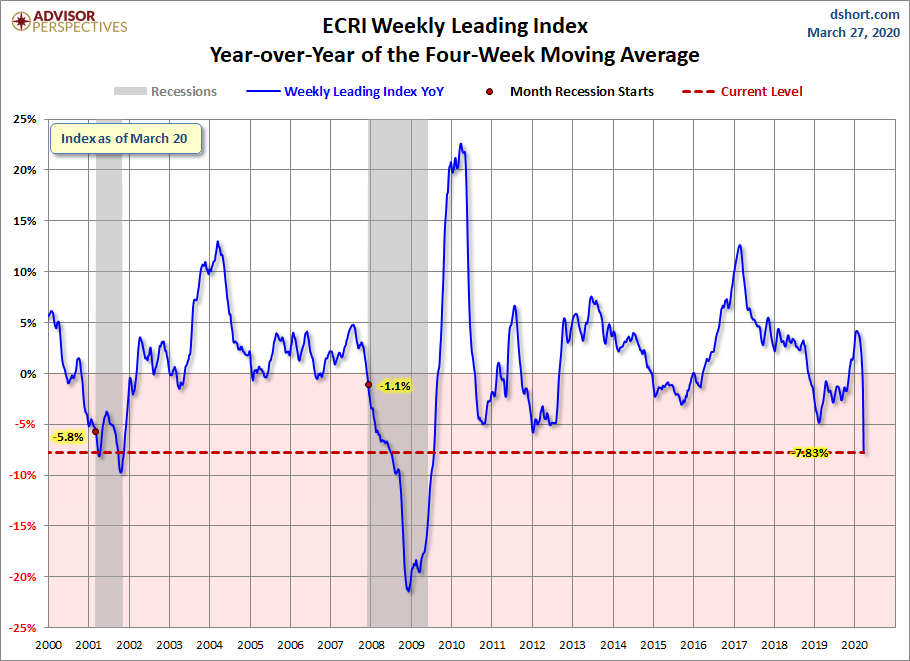
Lastly, here's is ECRI's smoothed year-over-year percent change since 2000 of their weekly leading index. Index data as of March 20.

Comments
Log in or sign up to join the conversation.