

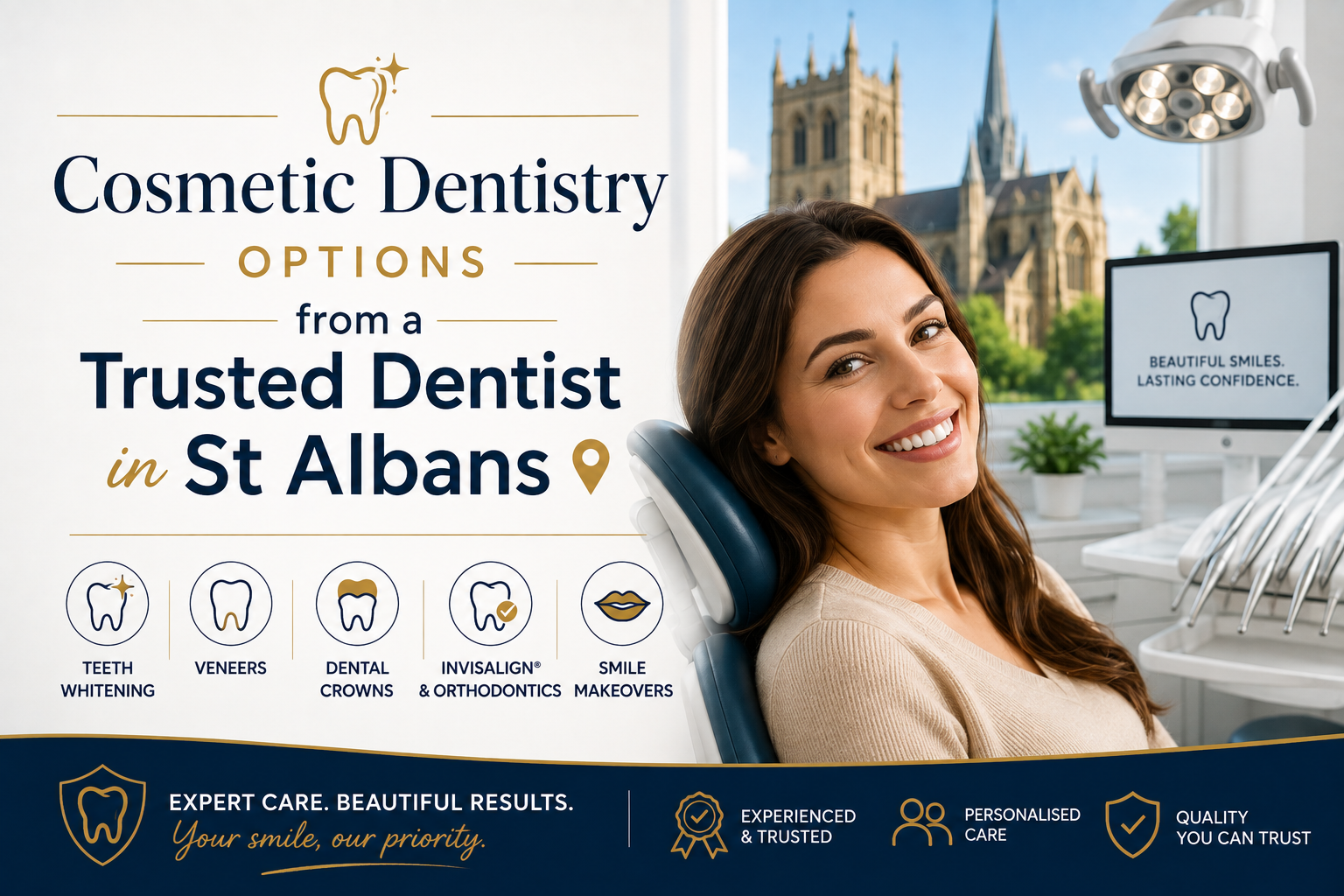
A smile you feel comfortable with affects more than how you look in photos. It changes how confident you feel speaking up in meetings, how relaxed you are meeting new people, and honestly, how often you actually smile without thinking about it first. Cosmetic dentistry has moved a long way from the exaggerated, obviously "done" results people sometimes picture. Modern treatment is far more about natural-looking, proportionate improvements that suit your face, not a one-size-fits-all template.
If you're considering cosmetic treatment, here's a genuinely useful breakdown of what's available, what each option actually involves, and what to expect from a dentist in St Albans offering these treatments.
Where to Start: What Are You Actually Trying to Fix?
Cosmetic dentistry isn't one treatment, it's a category, and the right option depends entirely on what's bothering you. Discolouration, gaps, crowding, chipped edges, and an uneven bite all call for different approaches. A proper consultation should start with this, not with a sales pitch for a specific treatment. A trustworthy practice will assess your teeth, discuss what's realistically achievable, and recommend the option that actually addresses your concern, not necessarily the most expensive one on the menu.
Teeth Whitening
The most common starting point, and often the one with the most immediately visible impact for the least invasive treatment. Professional whitening, done under dental supervision, uses controlled concentrations of whitening gel that are far more effective and considerably safer than over-the-counter kits, particularly for sensitivity management.
Results typically last anywhere from six months to two years depending on diet, smoking habits, and how well you maintain the results afterwards. It's worth noting: whitening only works on natural tooth enamel, so it won't change the colour of existing crowns, veneers, or fillings, which is something a good dentist will flag before you start rather than after.
Invisalign and Clear Aligners
For crowding, gaps, or a bite that's slightly out of alignment, clear aligners have become the treatment most adults actually choose, largely because they're close to invisible and removable for eating and cleaning. Treatment typically runs anywhere from a few months for minor corrections to over a year for more complex movements, tracked through a series of custom-fitted aligners that gradually shift teeth into position.
This is a genuinely different experience from traditional metal braces, both in appearance and day-to-day practicality, which is a large part of why demand for it has grown so consistently among working adults who don't want visible orthodontic work during meetings or events.
Veneers
Veneers are thin, custom-made shells fitted to the front surface of teeth, typically used to address chips, gaps, discolouration that whitening can't fix, or teeth with an uneven shape. They're a more involved and permanent treatment than whitening, since a small amount of enamel is usually prepared beforehand, so this is a decision worth discussing thoroughly rather than rushing into.
A good cosmetic dentist will talk through both porcelain and composite options, the differences in longevity, cost, and how much natural tooth structure needs to be adjusted, so you're making an informed decision rather than picking based on the treatment name alone.
Composite Bonding
For smaller fixes, a chipped edge, a slight gap, an oddly shaped tooth, composite bonding is often the quickest and least invasive route. A tooth-coloured resin is shaped directly onto the tooth and hardened in place, usually completed in a single appointment with no need for impressions or lab work.
It's not as long-lasting as veneers and can be more prone to staining over time, but for minor cosmetic corrections, it's frequently the most sensible first option before considering anything more involved.
Dental Implants for Cosmetic Restoration
Missing teeth affect appearance as much as function, and implants have become the standard replacement option where a permanent, natural-looking result matters. A titanium post is placed to act as an artificial root, with a custom crown fitted on top that's matched to your surrounding teeth.
This tends to be the right conversation to have if tooth loss, rather than the condition of existing teeth, is the primary concern. It's a longer treatment process than most other cosmetic options, generally spanning several months to allow proper healing, but the result is designed to function and look like a natural tooth long-term.
Smile Makeovers: Combining Treatments
Some patients don't have a single issue to fix, they have several smaller concerns that together affect their overall smile. A smile makeover isn't a single treatment but a coordinated plan, often combining whitening, minor alignment work, and targeted bonding or veneers, planned together so the final result looks cohesive rather than like separate treatments layered on top of each other.
This is where working with a dentist who takes the time to plan properly, rather than treating each concern in isolation, genuinely changes the outcome. If you've already read what actually makes a dentist trustworthy, you'll recognise the same principle applies here: a practice that explains the full plan and reasoning upfront, rather than proposing treatment piecemeal, tends to deliver better, more considered results.
Why This Is Usually Private, Not NHS, Territory
It's worth being direct about this: cosmetic dentistry generally isn't covered under NHS provision, since NHS dental care is built around clinical necessity rather than appearance. This is one of the clearer, practical differences between private and NHS dental care that families and individuals run into once they start looking into treatments like whitening, veneers, or Invisalign, none of which are typically accessible through standard NHS routes.
What a Good Cosmetic Consultation Should Actually Cover
A clear discussion of what's bothering you and why, before any treatment is suggested
An honest assessment of what's realistically achievable given your natural teeth and bite
A written treatment plan with costs, timeline, and expected results explained upfront
Photos or digital previews where relevant, particularly for more involved treatments like veneers or aligners
A conversation about maintenance, longevity, and what affects how long results last
If any of this is skipped in favour of jumping straight to a treatment recommendation, it's worth asking more questions before committing.
Managing Expectations Honestly
Not every result is guaranteed, and results vary based on your starting point, oral health, and how well you follow aftercare guidance. A dentist worth trusting will be upfront about this rather than overpromising, which is part of the same transparency that should run through every stage of treatment, from the first consultation to the final result.
About St Peter's Lodge Dental Practice
St Peter's Lodge Dental Practice has offered cosmetic dentistry to patients across St Albans for over 35 years, from its practice at 48 Adelaide Street. The GDC-registered team is rated 4.8 stars from more than 460 Google reviews, offering teeth whitening, Invisalign, veneers, composite bonding, and dental implants, with written treatment plans and 0% finance options available for larger treatment plans. Appointments run Monday to Saturday, including early morning and evening slots.
Frequently Asked Questions
1. What's the least invasive cosmetic dental treatment available? Professional teeth whitening and composite bonding are generally the least invasive options, both achievable without significant preparation of the natural tooth, and often completed in a single appointment or a short course of sessions.
2. How long does Invisalign treatment usually take? Treatment length varies considerably depending on complexity, ranging from a few months for minor corrections to over a year for more involved alignment work. Your dentist can give a realistic estimate after an initial assessment.
3. Are veneers permanent? Veneers are considered a long-term treatment, typically lasting ten years or more with proper care, though they're not usually reversible since a small amount of enamel is often prepared beforehand. This is worth discussing thoroughly before proceeding.
4. Does teeth whitening damage enamel? Professional whitening carried out under dental supervision is designed to be safe for enamel when done correctly. This is a key reason to have it done through a dentist rather than unsupervised over-the-counter kits, which carry more risk of overuse or sensitivity issues.
5. Can cosmetic dentistry fix a chipped tooth without a full veneer? Yes, composite bonding is often sufficient for minor chips, offering a quicker, less invasive fix. Veneers tend to be reserved for more significant or multiple cosmetic concerns.
6. Is a smile makeover more expensive than doing treatments separately? It depends on what's included, but planning treatments together as a coordinated smile makeover often produces a more cohesive result and can be more efficient than addressing each concern separately over time.
7. Will NHS cover any part of cosmetic dental treatment? Generally, no. NHS dental care is based on clinical necessity, so cosmetic treatments like whitening, veneers, and Invisalign typically fall outside NHS provision and require private treatment.
8. How do I know if I'm a good candidate for dental implants? This depends on factors like bone density and overall oral health, which your dentist will assess through an examination and imaging before recommending implants as the right option for tooth replacement.
About the Author
Nishma Kerai, BDS, GDC 103735 Nishma is a dentist at St Peter's Lodge Dental Practice, St Albans, with a particular interest in cosmetic dentistry and helping patients achieve natural-looking results tailored to their individual smile. She has treated patients across the local community for many years.
Comments
Log in or sign up to join the conversation.