
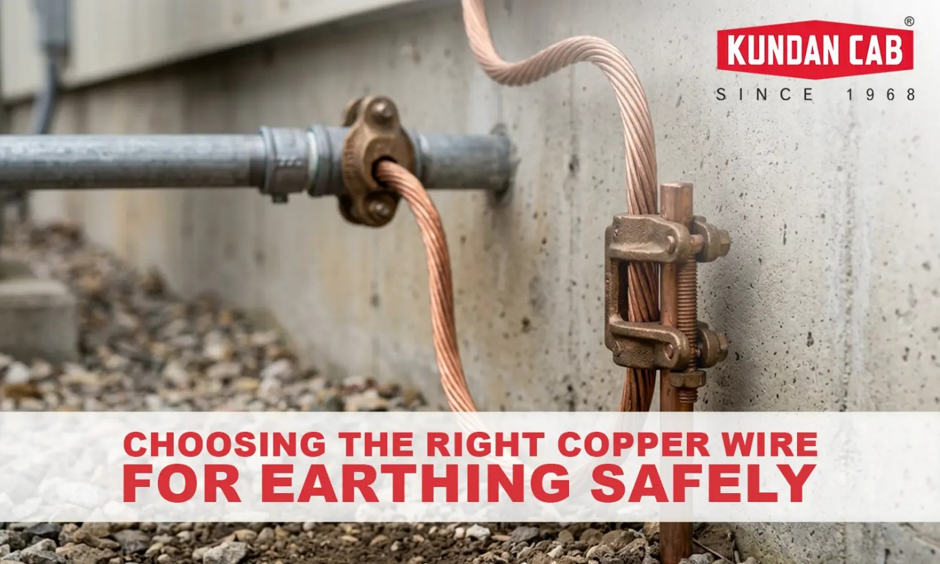
A proper earthing system is an important part of electrical safety. Copper wire for earthing is commonly used to provide a conductive path between electrical equipment, grounding points, and the earth as required by the system design.
Copper is widely considered for earthing applications because of its good electrical conductivity, durability, and availability in different conductor sizes and constructions. However, the correct conductor must be selected according to the electrical installation and applicable standards.
What Is Copper Wire for Earthing?
Copper wire for earthing is a copper conductor used as part of an electrical earthing or grounding system. Depending on the installation, the conductor may connect electrical equipment or other conductive parts to an earth electrode or grounding network.
Earthing helps provide a path for fault current and can support the operation of protective devices when an electrical fault occurs.
The conductor may be bare copper or insulated copper, depending on where and how it is installed.
Why Is Copper Used for Earthing?
Copper is commonly used in earthing systems because it has good electrical conductivity and can provide a reliable conductive path when properly installed.
Some important advantages include:
Good electrical conductivity
Reliable electrical connections
Good mechanical durability
Availability in different sizes
Solid and stranded construction options
Suitable for many grounding and bonding applications
The actual performance of an earthing system depends on the complete installation, not just the conductor material.
Types of Copper Wire Used for Earthing
1. Bare Copper Wire
Bare copper wire has no insulating covering around the conductor. It can be used for grounding, bonding, and earthing applications where an exposed conductor is permitted by the installation requirements.
Bare copper is particularly useful where direct contact with grounding components or suitable conductive surroundings is required.
2. Insulated Copper Wire
Insulated copper wire has a protective covering around the copper conductor. It can be used for earthing or bonding applications where the conductor requires additional protection from its surroundings.
The insulation type should be suitable for the installation environment.
3. Solid Copper Wire
Solid copper wire consists of a single continuous conductor. It is relatively rigid and can be suitable for fixed earthing and bonding applications where limited bending is required.
4. Stranded Copper Wire
Stranded copper wire contains multiple smaller copper strands. This construction generally provides greater flexibility and can make routing and installation easier in applications involving bends.
Copper Wire for Electrical Earthing
Electrical earthing connects appropriate parts of an electrical installation to the earth through a properly designed grounding system.
The purpose is to help manage fault conditions and reduce the risk associated with exposed conductive parts becoming energized.
Copper earthing conductors can be used in residential, commercial, industrial, and infrastructure installations, depending on the system design.
Copper Earthing Wire for House Wiring
In residential electrical systems, earthing conductors are used as part of the protective grounding arrangement. They can help connect suitable electrical equipment and circuits to the building's earthing system.
The required conductor size depends on factors such as the circuit, protective device, fault conditions, installation method, and applicable electrical requirements.
It is important not to select an earthing wire size simply based on the phase or neutral wire size without checking the relevant electrical design requirements.
Copper Wire Size for Earthing
There is no single copper wire size that is suitable for every earthing installation.
The required size can depend on:
Electrical system design
Fault current
Protective device
Phase conductor size
Installation method
Earthing arrangement
Mechanical protection
Applicable electrical standards
For this reason, earthing conductor sizing should be determined using the relevant electrical standards and project requirements.
Bare Copper vs Insulated Copper for Earthing
Both bare and insulated copper conductors can be used in grounding applications, but their suitability depends on the installation.
Feature | Bare Copper | Insulated Copper |
Insulation | No | Yes |
Flexibility options | Solid or stranded | Solid or stranded |
Common applications | Grounding, bonding, earthing | Earthing, bonding and protected installations |
Environmental protection | Depends on installation | Insulation provides additional protection |
Selection | Based on system and environment | Based on system, environment and insulation |
The correct choice should always follow the requirements of the specific installation.
Benefits of Using Copper for Earthing
Good Conductivity
Copper provides good electrical conductivity, which is important when establishing a low-resistance conductive path.
Durability
Properly selected copper conductors can provide reliable service over a long period when installed in suitable conditions.
Easy Connection
Copper is compatible with many commonly used electrical connection and termination methods.
Different Constructions
Solid, stranded, bare, and insulated copper conductors provide options for different installation requirements.
Wide Application
Copper grounding conductors can be found in residential, commercial, industrial, and electrical infrastructure applications.
Factors to Consider When Choosing Copper Earthing Wire
Choosing the right copper wire requires consideration of the complete earthing system.
Conductor Size
The conductor should have an appropriate cross-sectional area for the expected fault conditions and applicable requirements.
Installation Environment
Consider whether the conductor will be installed indoors, outdoors, underground, or in another environment.
Bare or Insulated Construction
Select the appropriate conductor construction based on exposure, mechanical protection, and installation requirements.
Solid or Stranded Construction
Stranded conductors can be easier to route around bends, while solid conductors may be suitable for fixed routes.
Corrosion Conditions
Where the conductor is exposed to soil, moisture, chemicals, or other potentially corrosive conditions, material compatibility and installation practices should be considered.
Standards and Testing
Choose products that are manufactured and tested according to the relevant electrical standards and specifications.
Common Applications of Copper Earthing Wire
Copper earthing conductors may be used in:
Residential buildings
Commercial buildings
Industrial facilities
Electrical panels
Distribution systems
Machinery and equipment
Transformer installations
Grounding and bonding systems
Electrical infrastructure
The exact application and conductor specification should be determined by the electrical design.
Copper Earthing Wire and Grounding Safety
An earthing conductor is only one part of an electrical safety system. Proper connections, earth electrodes, protective devices, conductor sizing, and installation practices are also important.
A high-quality copper wire cannot compensate for an incorrectly designed or poorly installed earthing system.
For this reason, earthing work should be planned and installed according to applicable electrical standards by a qualified electrical professional.
Final Thoughts
Copper wire for earthing is widely used in electrical grounding and bonding systems because of copper's good conductivity and reliable performance. Bare and insulated copper conductors, as well as solid and stranded constructions, provide options for different installation conditions.
When selecting a copper earthing wire, consider conductor size, installation environment, construction, fault-current requirements, and applicable electrical standards. Proper design and installation are essential for an effective earthing system.
Comments
Log in or sign up to join the conversation.