
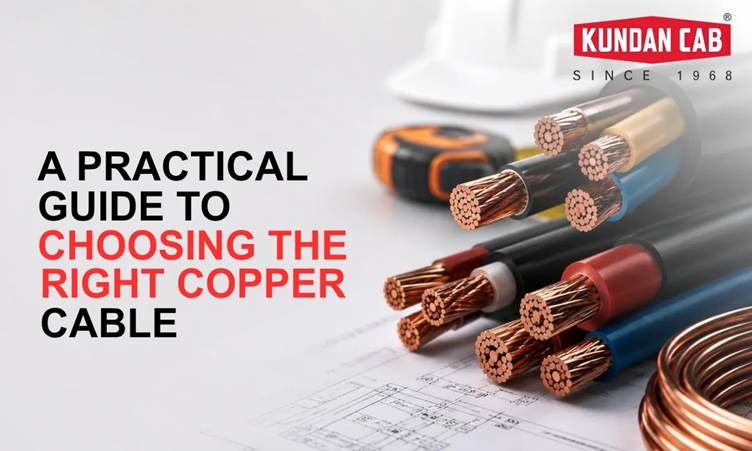
A copper cable is commonly used in electrical systems because copper provides good electrical conductivity, flexibility, and durability. Depending on the application, different copper cable types are available for homes, commercial buildings, industrial equipment, and power distribution.
Understanding the basic construction, copper cable specification, and intended use can help in selecting the right cable for an electrical installation.
What Is a Copper Cable?
A copper cable is an electrical cable that uses copper as the conductor. The conductor carries electrical current, while insulation protects it from direct contact and surrounding conditions.
A copper electrical cable can have one or multiple conductors, depending on the application. The insulation and outer protection can also vary based on voltage, temperature, flexibility, and installation requirements.
Copper Cable Types
There are several copper cable types, and each is designed for particular applications.
Single Core Copper Cable
A single core cable contains one copper conductor with insulation. It is commonly used for fixed wiring, panels, and applications where individual conductors are required.
Multi-Core Copper Cable
Multi-core cables contain two or more insulated copper conductors within a common outer covering. They can be useful when several circuits or connections need to be routed together.
Flexible Copper Cable
Flexible cables use multiple fine copper strands, allowing the cable to bend more easily. They are suitable for equipment and connections where flexibility is required.
Armoured Copper Cable
Armoured cables have an additional protective layer designed to provide mechanical protection. They can be used in installations where the cable may be exposed to physical stress or demanding conditions.
Copper Power Cable
A copper power cable is designed to carry electrical power and is available in different conductor sizes and constructions. The appropriate cable depends on the voltage, current, installation method, and project requirements.
Copper Electrical Cable Specifications
Before selecting an electrical copper cable, it is important to check its technical specifications. These can include:
Conductor material
Conductor size
Number of cores
Voltage rating
Insulation material
Temperature rating
Current-carrying capacity
Cable construction
Applicable standards
Installation conditions
The correct specification depends on where and how the cable will be used.
Why Is Copper Used in Electrical Cables?
Copper is widely used in electrical cables because of its useful electrical and mechanical properties.
Some benefits include:
Good electrical conductivity
Reliable current transmission
Good flexibility
Good mechanical strength
Easy termination
Long-term usability when properly installed
These properties make copper suitable for many residential, commercial, and industrial applications.
Uses of Electrical Copper Cable
An electrical copper cable can be used in a wide range of applications, such as:
House wiring
Commercial electrical installations
Electrical panels
Industrial machinery
Control systems
Power distribution
Building services
Equipment connections
The cable construction and conductor size should be selected according to the specific electrical load and installation environment.
Copper Cable Size and Current Capacity
Cable size is an important part of cable selection. Copper conductors are available in different cross-sectional areas, usually specified in square millimetres.
A larger conductor can generally carry more current, but current capacity also depends on factors such as insulation, ambient temperature, installation method, grouping of cables, and permissible voltage drop.
For this reason, there is no single copper cable specification that works for every application. A qualified electrical professional should determine the appropriate size for the circuit.
Copper Cable vs Aluminium Cable
Copper and aluminium are both used as electrical conductors. Copper generally provides higher electrical conductivity and good mechanical strength, while aluminium has the advantage of being lighter.
The choice depends on the installation, required conductor size, weight, cost, electrical load, and other project requirements.
How to Choose the Right Copper Cable
Before purchasing an electrical copper cable, consider the following:
Identify the electrical load.
Determine the required voltage rating.
Select the appropriate conductor size.
Choose the required number of cores.
Consider the installation environment.
Check the insulation and temperature rating.
Verify relevant standards and certifications.
Purchase from a reliable manufacturer.
Avoid selecting a cable only because it is cheaper or physically thicker. The cable should match the technical requirements of the electrical system.
Final Thoughts
A copper cable can be a reliable choice for many electrical applications when the correct type and specification are selected. From single core and flexible cables to multi-core and copper power cable options, each construction serves a different purpose.
Before choosing a copper electrical cable, compare its conductor size, insulation, voltage rating, current capacity, construction, and applicable standards. Proper selection and professional installation can help ensure dependable electrical performance.
Comments
Log in or sign up to join the conversation.