

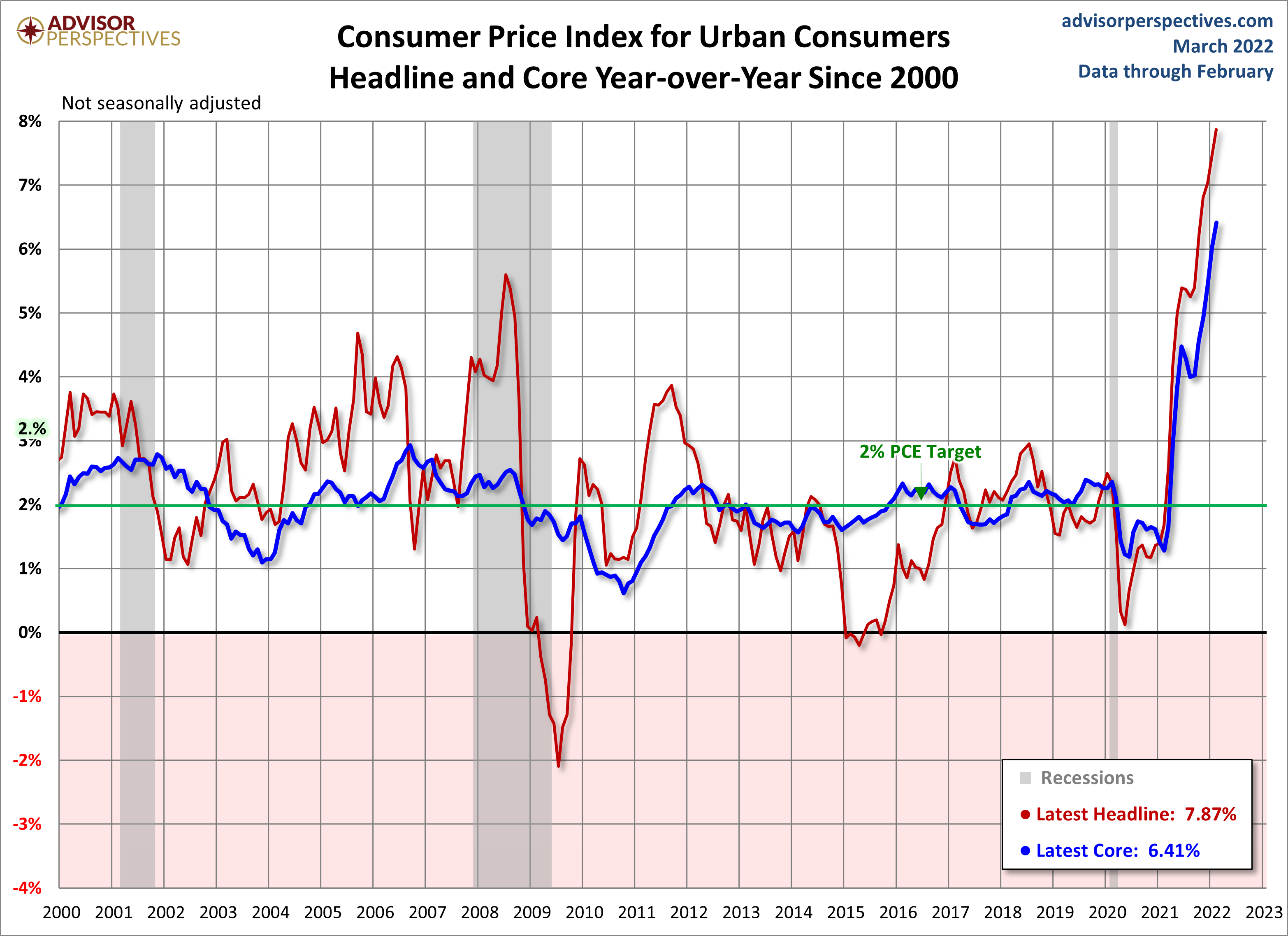
The Bureau of Labor Statistics released the February Consumer Price Index data this morning. The year-over-year non-seasonally adjusted Headline CPI came in at 7.87%, up from 7.48% the previous month. Year-over-year Core CPI (ex Food and Energy) came in at 6.41%, up from 6.02% the previous month and is above the Fed's 2% PCE target.
Here is the introduction from the BLS summary, which leads with the seasonally adjusted monthly data:
The Consumer Price Index for All Urban Consumers (CPI-U) increased 0.8 percent in February on a seasonally adjusted basis after rising 0.6 percent in January, the U.S. Bureau of Labor Statistics reported today. Over the last 12 months, the all items index increased 7.9 percent before seasonal adjustment.
Increases in the indexes for gasoline, shelter, and food were the largest contributors to the seasonally adjusted all items increase. The gasoline index rose 6.6 percent in February and accounted for almost a third of the all items monthly increase; other energy component indexes were mixed. The food index rose 1.0 percent as the food at home index rose 1.4 percent; both were the largest monthly increases since April 2020.
The index for all items less food and energy rose 0.5 percent in February following a 0.6-percent increase the prior month. The shelter index was by far the biggest factor in the increase, with a broad set of indexes also contributing, including those for recreation, household furnishings and operations, motor vehicle insurance, personal care, and airline fares.
The all items index rose 7.9 percent for the 12 months ending February. The 12-month increase has been steadily rising and is now the largest since the period ending January 1982. The all items less food and energy index rose 6.4 percent, the largest 12-month change since the period ending August 1982. The energy index rose 25.6 percent over the last year, and the food index increased 7.9 percent, the largest 12-month increase since the period ending July 1981. Read more
Investing.com was looking for a 0.8% MoM change in seasonally adjusted Headline CPI and a 0.5% in Core CPI. Year-over-year forecasts were 7.9% for Headline and 5.9% for Core.
The first chart is an overlay of Headline CPI and Core CPI (the latter excludes Food and Energy) since the turn of the century. The highlighted two percent level is the Federal Reserve's Core inflation target for the CPI's cousin index, the BEA's Personal Consumption Expenditures (PCE) price index.
The next chart shows both series since 1957, the year the government first began tracking Core Inflation.
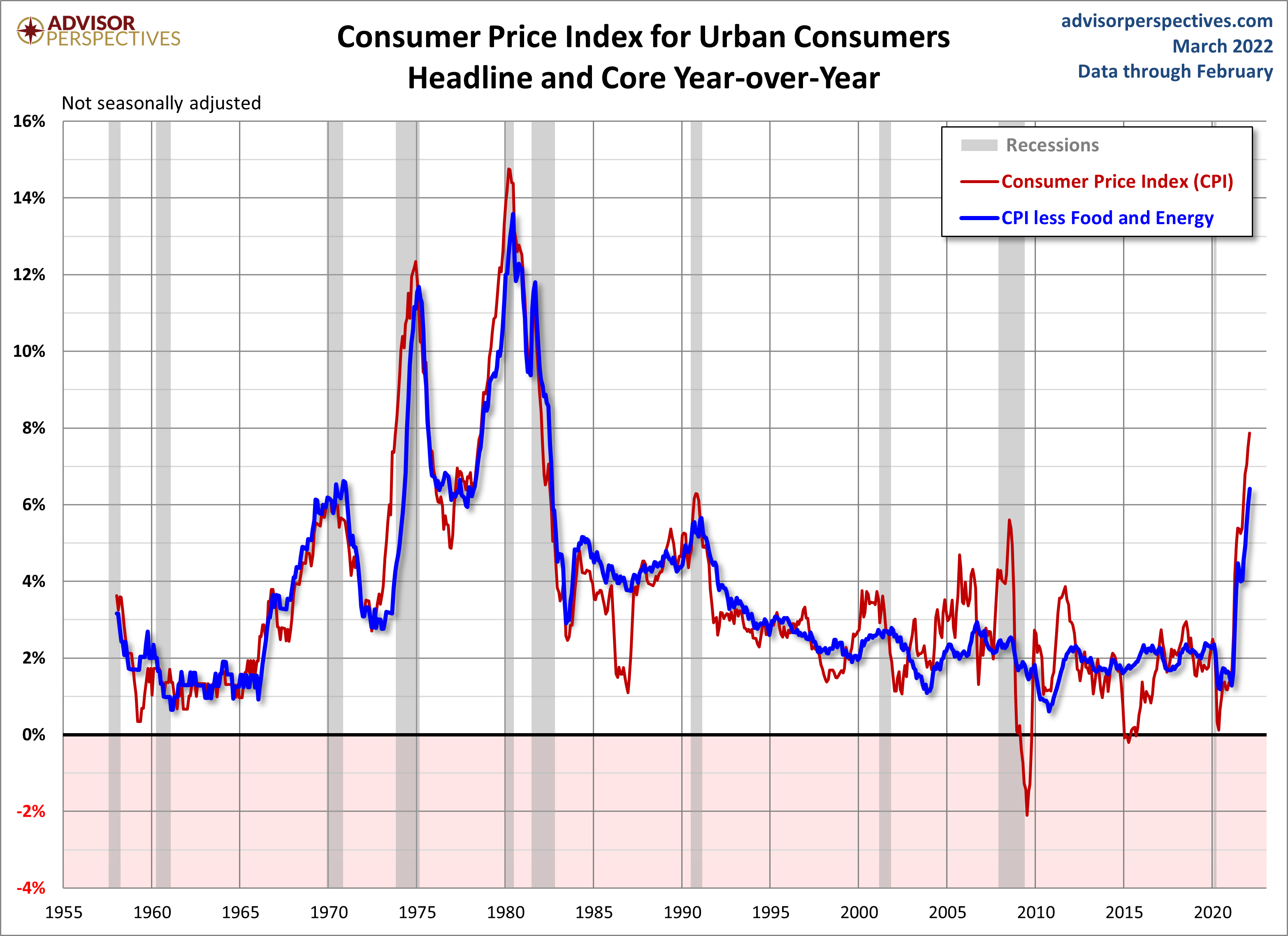
In the wake of the Great Recession, two percent has been the Fed's target for core inflation. However, at their December 2012 FOMC meeting, the inflation ceiling was raised to 2.5% while their accommodative measures (low Fed Funds Rate and quantitative easing) were in place. They have since reverted to the two percent target in their various FOMC documents.
Federal Reserve policy, which in recent history has focused on core inflation measured by the core PCE Price Index, will see that the more familiar core CPI is now at the PCE target range of 2 percent.

Comments
Log in or sign up to join the conversation.