

The latest data on consumer credit data for October confirmed the slowdown seen in September, as total debt increased by just $5.13 billion (below consensus estimates of $8.5 billion).
This is a clear regime shift lower from recent months when the monthly increase was in the $20/$30BN range.
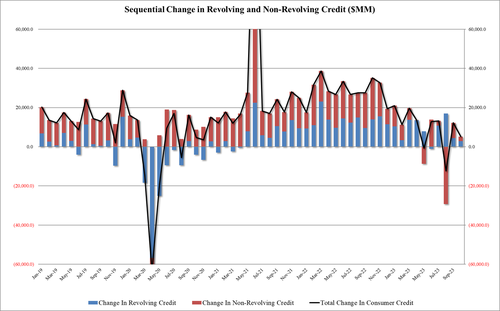
Looking at the composition, both revolving and non-revolving credit were weak.
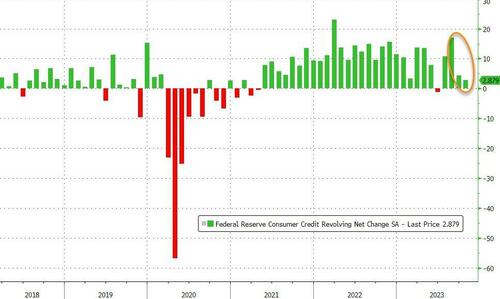
Starting with the former, in October, credit card debt rose by just $2.9 billion, which with the exception of June's freak negative revolving credit print, was the lowest monthly increase since April 2021 (amid the COVID lockdown crisis).
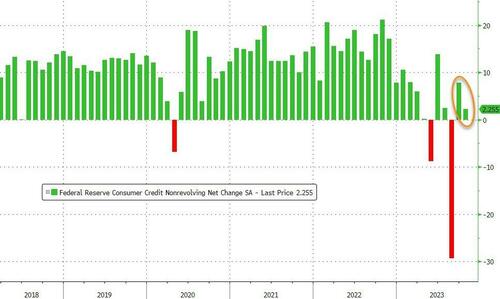
As for non-revolving credit, or student and auto loans, here too things have gotten bogged down, rising just $2.3 billion in October...
Of course, the slowdown in debt, and especially credit card debt, should not be a surprise since the average rate on credit cards across US financial institutions just hit a record high of 22.77%.
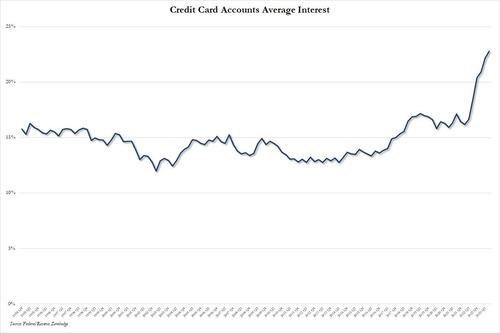
And with consumers increasingly reluctant to max out their credit cards due to record high rates, at a time when the personal savings rate in the US has collapsed back near multi-decade lows in recent months...
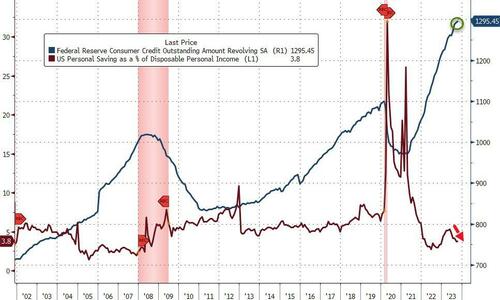
... it is now only a matter of time before US GDP prints deep negative now that that pillar supporting 70% of the US economy, consumer purchases, is about to crack.
More By This Author:
Fed's Bank Bailout Fund Explodes To Record High As Massive Money-Market Fund Inflows ContinueGameStop Shares Plunge 7% After Revealing Bizarre Plan To Allow CEO Ryan Cohen To Invest Company Cash In Equities
Jobless Claims Data Surges (And Falls) With Seasonal Hiring At Decade Lows



Comments
Log in or sign up to join the conversation.