

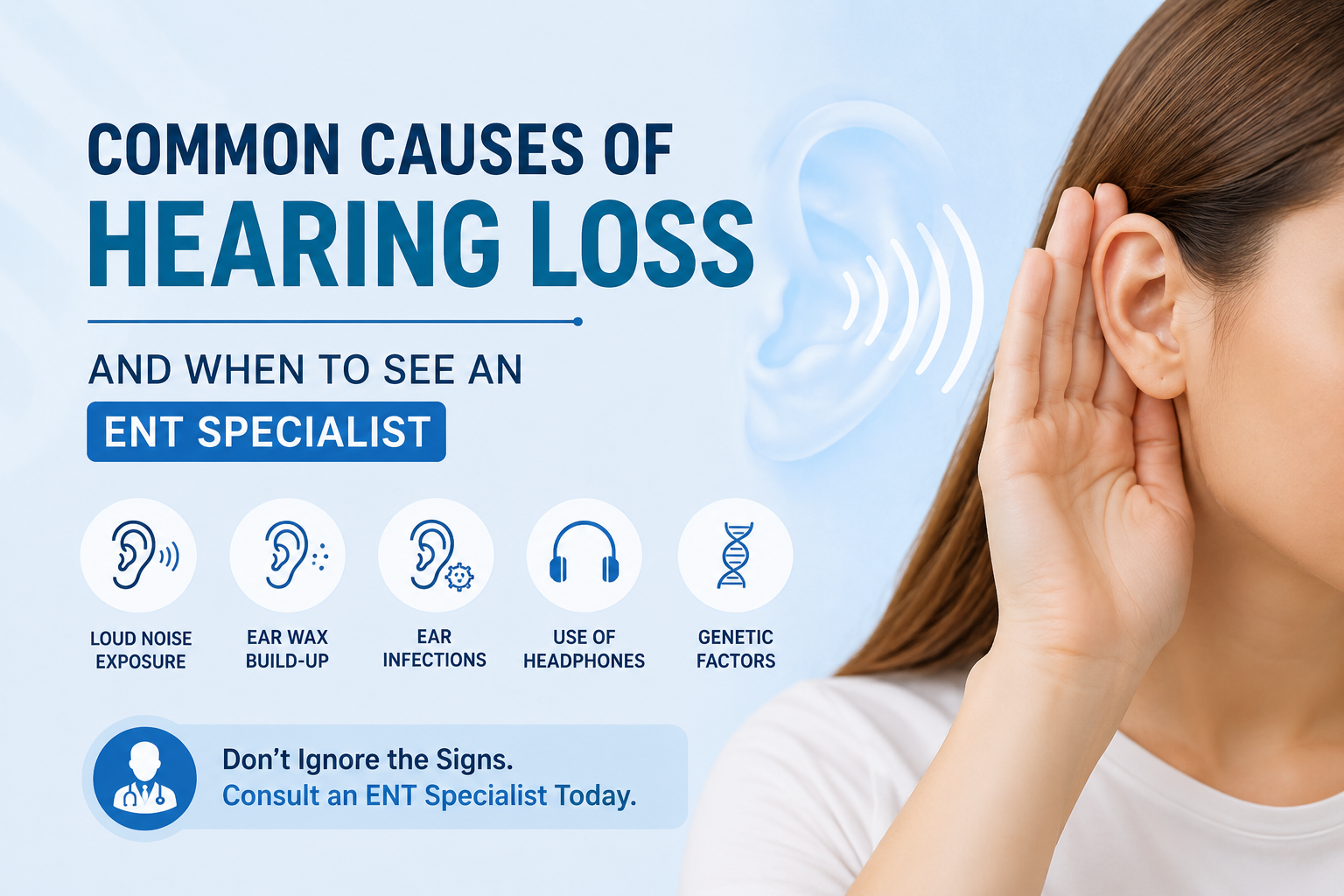
Hearing plays a vital role in our daily lives, helping us communicate, stay connected, and remain aware of our surroundings. However, hearing loss is a common health concern that can affect people of all ages. While it is often associated with aging, hearing problems can also result from infections, excessive noise exposure, injuries, or underlying medical conditions.
Recognizing the early signs of hearing loss and understanding its causes can help prevent further complications. In many cases, timely diagnosis and treatment can improve hearing or prevent the condition from worsening. In this article, we'll explore the common causes of hearing loss, its symptoms, available treatment options, and when it's time to consult an ENT specialist.
What Is Hearing Loss?
Hearing loss is the partial or complete inability to hear sounds in one or both ears. It can develop gradually over time or occur suddenly, depending on the underlying cause. Hearing loss may be temporary, such as when caused by earwax buildup or an ear infection, or permanent due to damage to the inner ear or auditory nerve.
The severity of hearing loss ranges from mild difficulty hearing conversations to profound hearing impairment that significantly affects communication and quality of life.
Common Symptoms of Hearing Loss
Many people overlook the early warning signs of hearing loss, assuming they are temporary or age-related. Common symptoms include:
Frequently asking others to repeat themselves.
Difficulty understanding conversations, especially in noisy environments.
Turning up the television or mobile phone volume higher than usual.
Ringing, buzzing, or humming sounds in the ears (tinnitus).
Feeling that people are mumbling when they speak.
Trouble hearing phone conversations clearly.
Difficulty following group discussions.
If these symptoms persist, it's important to seek professional evaluation rather than ignoring them.
Common Causes of Hearing Loss
Age-Related Hearing Loss (Presbycusis)
One of the most common causes of hearing loss is the natural aging process. As people grow older, the delicate hair cells inside the inner ear gradually deteriorate, making it harder to hear high-frequency sounds and understand speech. Age-related hearing loss usually develops slowly and affects both ears.
Exposure to Loud Noise
Regular exposure to loud sounds can permanently damage the sensitive structures inside the ear. People working in factories, construction sites, airports, or those who frequently attend concerts or listen to loud music through headphones are at higher risk. Even a single exposure to an extremely loud noise can sometimes cause sudden hearing damage.
Earwax Build-Up
Earwax helps protect the ear canal, but excessive wax accumulation can block sound waves from reaching the eardrum. This may lead to temporary hearing loss, ear fullness, or discomfort. Attempting to remove earwax using cotton swabs can push it deeper into the ear and worsen the problem.
Ear Infections
Middle ear infections are common in both children and adults. Fluid buildup behind the eardrum can temporarily affect hearing. If left untreated or if infections occur repeatedly, they may lead to more serious hearing problems.
Tinnitus
Tinnitus is characterized by ringing, buzzing, or hissing sounds in the ears without any external source. While tinnitus itself is not a disease, it is often associated with hearing loss, noise exposure, or certain ear disorders.
Genetic or Congenital Hearing Loss
Some individuals are born with hearing impairment due to inherited genetic conditions or complications during pregnancy or birth. Early detection is essential, particularly in children, to support speech and language development.
Ear or Head Injuries
Trauma to the head or ears can damage the eardrum, middle ear bones, or inner ear structures. Sudden hearing loss following an accident or injury should always be considered a medical emergency.
Certain Medications
Some medications, known as ototoxic drugs, may damage the inner ear. Certain antibiotics, chemotherapy medications, and high doses of specific pain relievers can increase the risk of hearing loss. Patients should always discuss potential side effects with their healthcare provider.
Chronic Health Conditions
Medical conditions such as diabetes, high blood pressure, autoimmune disorders, and cardiovascular diseases may reduce blood flow to the inner ear, increasing the risk of hearing impairment over time.
Types of Hearing Loss
Understanding the type of hearing loss helps determine the most appropriate treatment.
Conductive Hearing Loss
Conductive hearing loss occurs when sound cannot travel efficiently through the outer or middle ear. Common causes include earwax blockage, ear infections, or damage to the eardrum. Many cases are treatable with medication or minor procedures.
Sensorineural Hearing Loss
This type results from damage to the inner ear or auditory nerve. Aging, prolonged noise exposure, certain medications, and genetic factors are common causes. Although often permanent, hearing aids or cochlear implants can significantly improve hearing.
Mixed Hearing Loss
Mixed hearing loss combines both conductive and sensorineural hearing loss. Treatment depends on the specific causes contributing to each component.
Who Is at Higher Risk of Hearing Loss?
Certain individuals are more likely to develop hearing problems, including:
Older adults.
Factory and construction workers.
Musicians and event professionals.
Frequent headphone users.
People with diabetes or hypertension.
Smokers.
Individuals with recurring ear infections.
People with a family history of hearing loss.
Being aware of these risk factors allows for earlier screening and preventive care.
When Should You See an ENT Specialist?
Although occasional hearing difficulties may not always indicate a serious condition, some symptoms require prompt medical attention. You should consult an ENT specialist if you experience:
Sudden hearing loss.
Hearing loss in one ear.
Persistent ringing in the ears (tinnitus).
Ear pain or discomfort.
Ear discharge or bleeding.
Frequent ear infections.
Hearing problems lasting more than a few days.
Hearing loss accompanied by dizziness or balance issues.
Early diagnosis often leads to better treatment outcomes and helps prevent permanent hearing damage.
How ENT Specialists Diagnose Hearing Loss
An ENT specialist will perform a comprehensive evaluation to determine the cause of hearing loss. This may include:
Reviewing your medical history and symptoms.
Examining the ears using specialized instruments.
Conducting hearing tests such as audiometry.
Performing tympanometry to assess middle ear function.
Recommending imaging studies when necessary.
Accurate diagnosis helps develop a personalized treatment plan based on the underlying condition.
Treatment Options for Hearing Loss
Treatment depends on the cause and severity of hearing loss. Common options include:
Professional earwax removal for blockage.
Medications to treat infections or inflammation.
Hearing aids to improve hearing ability.
Cochlear implants for severe sensorineural hearing loss.
Surgical procedures for certain ear conditions.
Lifestyle modifications to protect remaining hearing.
Following the recommended treatment plan can significantly improve hearing and overall quality of life.
Tips to Prevent Hearing Loss
While not every case of hearing loss can be prevented, these healthy habits can reduce your risk:
Limit exposure to loud noise.
Wear ear protection in noisy workplaces.
Keep headphone volume below 60% and avoid prolonged listening.
Never insert sharp objects or cotton swabs into your ears.
Seek prompt treatment for ear infections.
Manage chronic conditions such as diabetes and hypertension.
Schedule regular hearing evaluations, especially if you're at higher risk.
Why Early Diagnosis Matters
Ignoring hearing loss can affect communication, relationships, work performance, and emotional well-being. It may also increase the risk of social isolation and cognitive decline in older adults.
Early diagnosis allows healthcare professionals to identify the underlying cause, begin appropriate treatment, preserve existing hearing, and improve long-term outcomes. Regular hearing assessments are particularly important for individuals with risk factors or recurring ear-related symptoms.
If you are experiencing persistent hearing difficulties, consulting an experienced ENT doctor in Gurgaon can help identify the root cause and ensure timely treatment. Expert evaluation, advanced diagnostic tools, and personalized care can make a significant difference in protecting your hearing and improving your overall quality of life.
Conclusion
Hearing loss is a common condition that can develop due to aging, excessive noise exposure, infections, earwax buildup, injuries, or underlying medical conditions. Recognizing the early symptoms and seeking medical advice without delay can prevent complications and improve treatment success.
Whether your hearing loss is temporary or permanent, professional evaluation is the first step toward effective management. If you or a loved one notices changes in hearing, persistent tinnitus, or recurring ear problems, don't ignore the signs. Timely consultation with an ENT specialist can help restore confidence, improve communication, and support better hearing health for years to come.
Comments
Log in or sign up to join the conversation.