

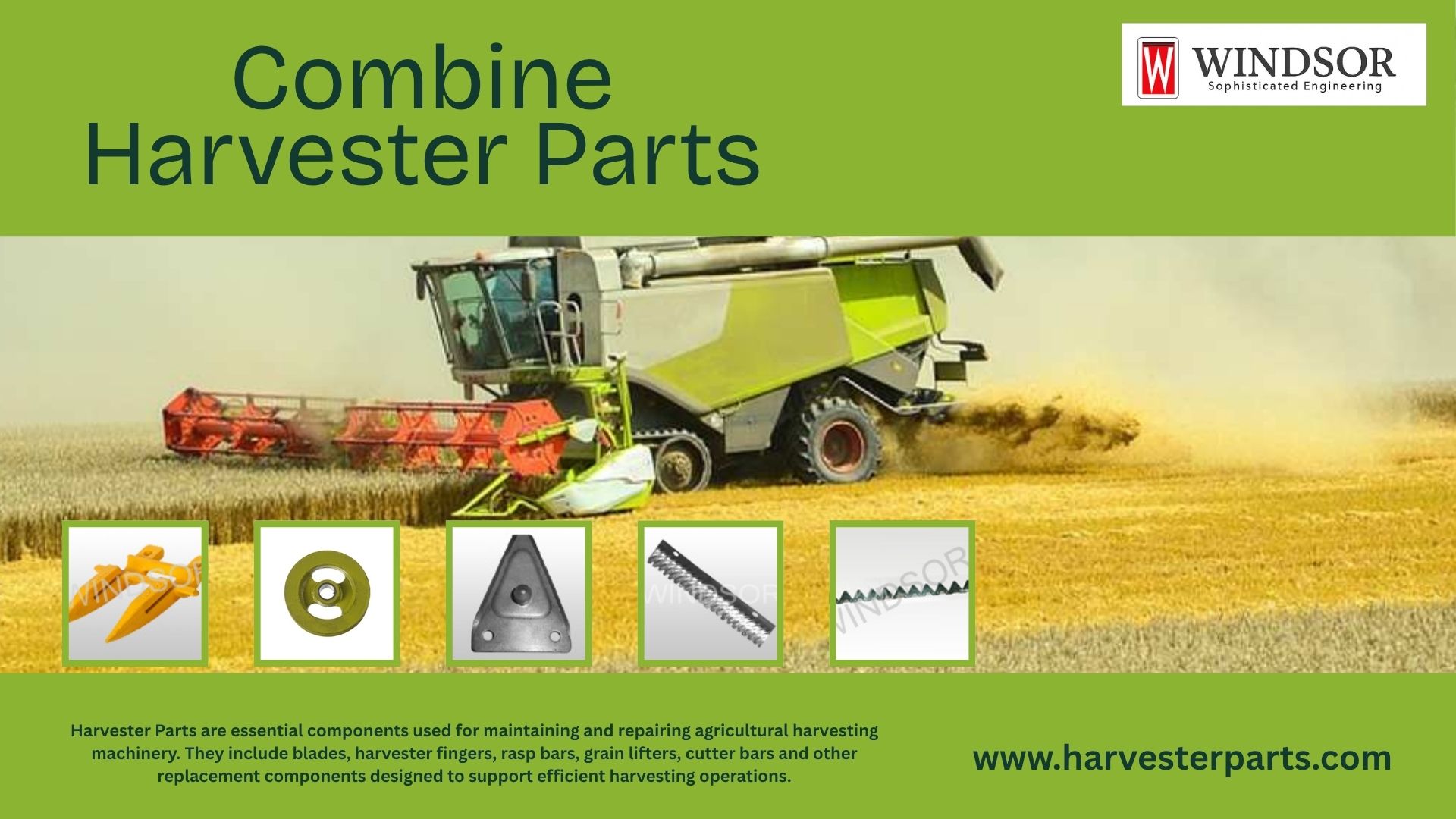
Modern harvesting depends on equipment that can operate efficiently through long and demanding field conditions. Among the most important considerations for agricultural machinery owners is selecting dependable replacement components. Combine Harvester Parts play a central role in maintaining cutting, feeding, threshing, and crop-handling functions. When the right components are selected and replaced at the appropriate time, operators can support machine performance, reduce unnecessary downtime, and keep harvesting work moving smoothly.
Understanding Combine Harvester Parts
A combine harvester contains many moving and wear-prone components. Each part performs a specific function, and even a small worn component can affect the performance of connected systems. Common Combine Harvester Parts include harvester fingers, cutter bars, blades, rasp bars, grain lifters, belts, bearings, and other replacement components. Choosing parts according to the machine model, dimensions, material, and application is important for achieving a suitable fit and dependable operation.
Why Quality Matters
Agricultural harvesting often takes place within a limited seasonal window. Equipment may work for extended hours under dust, vibration, crop residue, and changing field conditions. For this reason, replacement components need to provide suitable strength and functional consistency. Quality Combine Harvester Parts can help operators maintain machine performance while reducing the possibility of frequent replacements caused by unsuitable materials or incorrect dimensions.
Harvester Fingers and Cutting Components
Harvester fingers and cutting components are directly involved in crop collection and cutting operations. Their condition can influence feeding consistency and the overall harvesting process. Damaged or excessively worn components should be inspected and replaced according to equipment requirements.
When selecting Combine Harvester Parts, buyers should check dimensions, mounting points, material specifications, and compatibility with the intended machine. Correct component selection can make installation easier and help avoid unnecessary modifications during maintenance.
Rasp Bars and Threshing Performance
Rasp bars are important components in the threshing system. They work with other internal components to help separate grain from crop material. Because threshing components experience continuous mechanical action, regular inspection is useful. Properly selected Combine Harvester Parts can support consistent machine operation and help maintain the intended function of the threshing system.
Rasp bars may experience gradual wear because of repeated contact with crop material. Inspecting their condition before the harvesting season can help identify potential maintenance requirements early. Timely replacement can also help prevent worn components from affecting other parts of the threshing system.
Grain Lifters and Crop Feeding
Grain lifters and related feeding components help guide crop material through the harvesting process. Wear in these areas can affect crop movement and may contribute to uneven feeding. Replacing worn parts with suitable components can help maintain smooth operation.
Buyers should always compare the original component specifications with replacement Combine Harvester Parts before placing an order. Dimensions, mounting arrangements, machine compatibility, and intended application should be considered carefully.
Selecting the Right Components
Before purchasing replacement parts, it is useful to identify the exact machine model and part specification. Measurements, drawings, reference numbers, material requirements, and application details can help reduce the risk of ordering an unsuitable component.
Buyers should also consider the manufacturer’s production capabilities, quality-control process, packaging, and ability to support repeat requirements. For distributors and agricultural machinery businesses, consistent availability can be particularly important during peak harvesting periods.
A professional supplier should also be able to provide clear product information. Product dimensions, application details, photographs, specifications, and other technical information can help customers select the appropriate component more efficiently. This is especially useful for international buyers who may need to compare replacement components before placing an order.
Manufacturing and Quality Control
Reliable agricultural component manufacturing involves more than producing a part to a basic shape. Manufacturing processes should consider raw material selection, machining, forming, heat treatment where applicable, dimensional inspection, and finishing.
Windsor focuses on manufacturing agricultural machinery components for different harvesting requirements. A structured quality-control approach can help maintain consistency between production batches and support customer confidence.
Quality inspection can include checking dimensions, surface condition, component shape, mounting points, and other relevant specifications. Consistent production practices are valuable for customers who regularly purchase replacement components for agricultural machinery.
Supporting Maintenance Requirements
Regular maintenance is an important part of harvesting equipment management. Operators can inspect wear-prone components before and during the harvesting season and plan replacements where necessary. Keeping frequently used Combine Harvester Parts available can also reduce delays when unexpected wear occurs.
Proper installation is equally important because even a well-manufactured component may not perform correctly if it is incorrectly fitted. Maintenance teams should follow appropriate machine guidelines and ensure that replacement components are securely installed.
Preventive maintenance can also help agricultural businesses organize their spare-parts inventory. By identifying frequently replaced components and maintaining suitable stock, operators can respond more quickly when maintenance becomes necessary.
Benefits for Agricultural Businesses
Reliable replacement components can provide practical benefits for agricultural businesses. They can help maintenance teams respond to normal wear, support equipment availability, and simplify sourcing. A broad product range also allows distributors and machinery service businesses to meet different customer requirements.
For exporters and international buyers, consistent specifications and professional packaging can make sourcing more efficient. Clear communication between manufacturers, distributors, and buyers can further support accurate product selection and repeat purchasing.
Businesses can also benefit from working with manufacturers that understand agricultural machinery requirements. Long-term sourcing relationships may simplify procurement, improve product familiarity, and make it easier to plan replacement-part requirements for future harvesting seasons.
Importance of Product Compatibility
Compatibility is one of the most important considerations when sourcing replacement components. A part that looks similar may not necessarily have the correct dimensions or mounting arrangement for a particular machine.
Buyers should therefore verify machine details and product specifications before purchasing. Comparing measurements and reference information can reduce the risk of receiving an unsuitable component. This approach is particularly important for specialized agricultural machinery where individual components are designed for specific applications.
Conclusion
Choosing suitable replacement components is an important part of maintaining combine harvesting equipment. From cutting and feeding components to threshing and grain-handling parts, every component has a role in the overall harvesting process.
By checking compatibility, dimensions, material quality, manufacturing consistency, and application requirements, buyers can make more informed sourcing decisions. Reliable Combine Harvester Parts can support maintenance planning and help agricultural machinery remain ready for demanding seasonal work.
Windsor continues to manufacture agricultural machinery components with attention to quality, manufacturing consistency, and practical customer requirements. With the right maintenance approach and suitable replacement components, agricultural businesses can better prepare their harvesting equipment for efficient and dependable field operations.
Comments
Log in or sign up to join the conversation.