


Crypto markets have picked up heading into September. Bitcoin (BTC.X) has bounced around 30% from its recent lows and is pushing back toward $80,000. Resistance sits around $82,800, and whether Bitcoin can break through that level may decide where prices go next.
At the same time, stronger U.S. jobs data and rising energy prices have raised expectations for a Federal Reserve rate hike at its September 15 to 16 meeting. An upcoming inflation report could act as a catalyst for both Bitcoin and crypto-related stocks.
Three stocks stand out in this environment: Coinbase (COIN), Circle (CRCL) and Robinhood (HOOD).
Coinbase
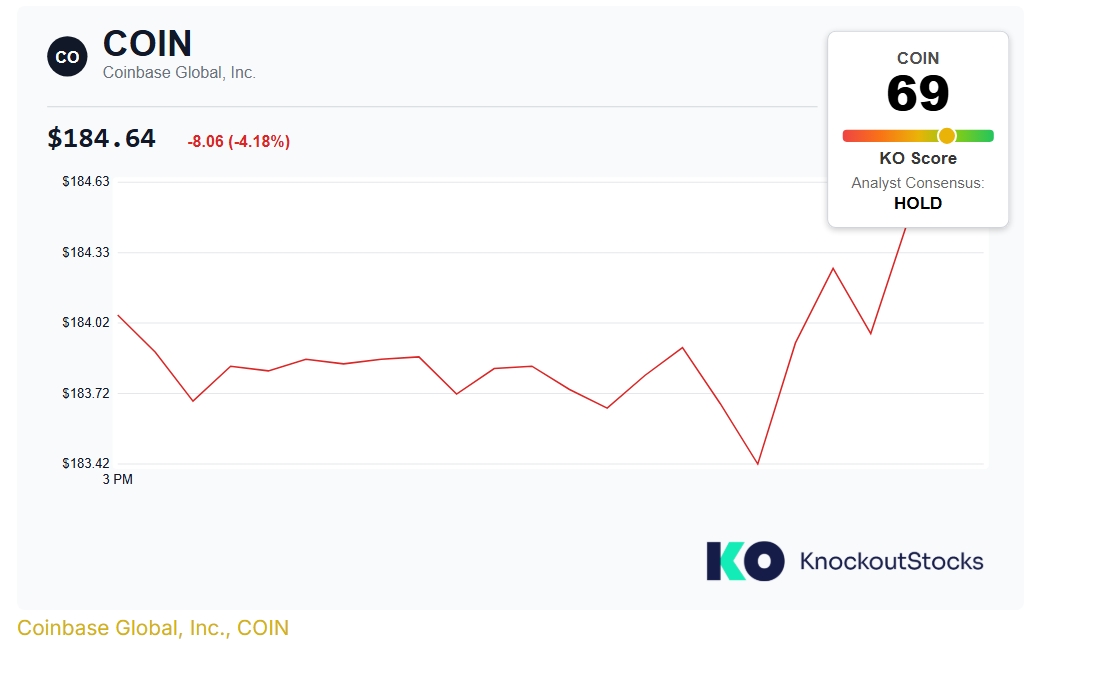
Coinbase is the largest U.S. crypto exchange by volume and remains a go-to name for investors wanting direct exposure to the crypto market.
The company captured a record 10.3% share of global crypto trading volume in Q2. That was up from 9.1% in Q1 and marked the third straight quarter of market share gains.
Coinbase also posted its 14th consecutive quarter of positive adjusted EBITDA.
The business is less reliant on Bitcoin than it used to be. Around 88% of net revenue now comes from sources other than Bitcoin spot trading. Subscription and services revenue reached $555 million in Q2.
Stablecoin activity is also growing. Average USDC held across Coinbase products hit an all-time high of $20 billion during the quarter.
If Bitcoin breaks above $82,800, higher trading volumes could give Coinbase another boost in the months ahead.
Circle
Circle takes a different approach. The company does not operate an exchange. Instead, it issues USDC, one of the largest dollar-backed stablecoins in the world.
USDC in circulation reached $73.3 billion in Q2, up 19% compared to the same period last year. On-chain transaction volume surged 151% to $14.8 trillion.
Circle brought in $701 million in total revenue and reserve income during the quarter. Adjusted EBITDA rose 8% to $143 million.
The company has a company-specific event on the horizon. Circle plans to launch the public mainnet of its Arc blockchain on September 16. Arc is built around stablecoin payments, programmable finance and tokenized real-world assets. More than 100 institutional and ecosystem builders are already involved.
The main risks for Circle are growing competition in the stablecoin space and its sensitivity to interest rate changes, since reserve income is a key part of how the company earns money.
Robinhood
Robinhood offers the most diversified business of the three. It covers equities, options, prediction markets and crypto under one roof.
The company posted record revenue of $1.31 billion in Q2, up 32% year over year. Diluted earnings per share rose 48% to $0.62. Net deposits hit a record $21.7 billion and Robinhood Gold subscribers climbed 39% to 4.8 million.
Crypto revenue actually fell 38% to $100 million during the quarter. But overall revenue still hit a record thanks to growth across other areas.
Equity trading volumes rose 85% and event-contract volumes jumped more than tenfold. That kind of breadth means Robinhood does not need a crypto rally to perform well, though it would benefit from one.
The near-term picture for all three stocks depends heavily on Bitcoin. A clean break above $82,800, combined with supportive inflation data, could push crypto-linked equities higher into the back half of September.



Comments
Log in or sign up to join the conversation.