

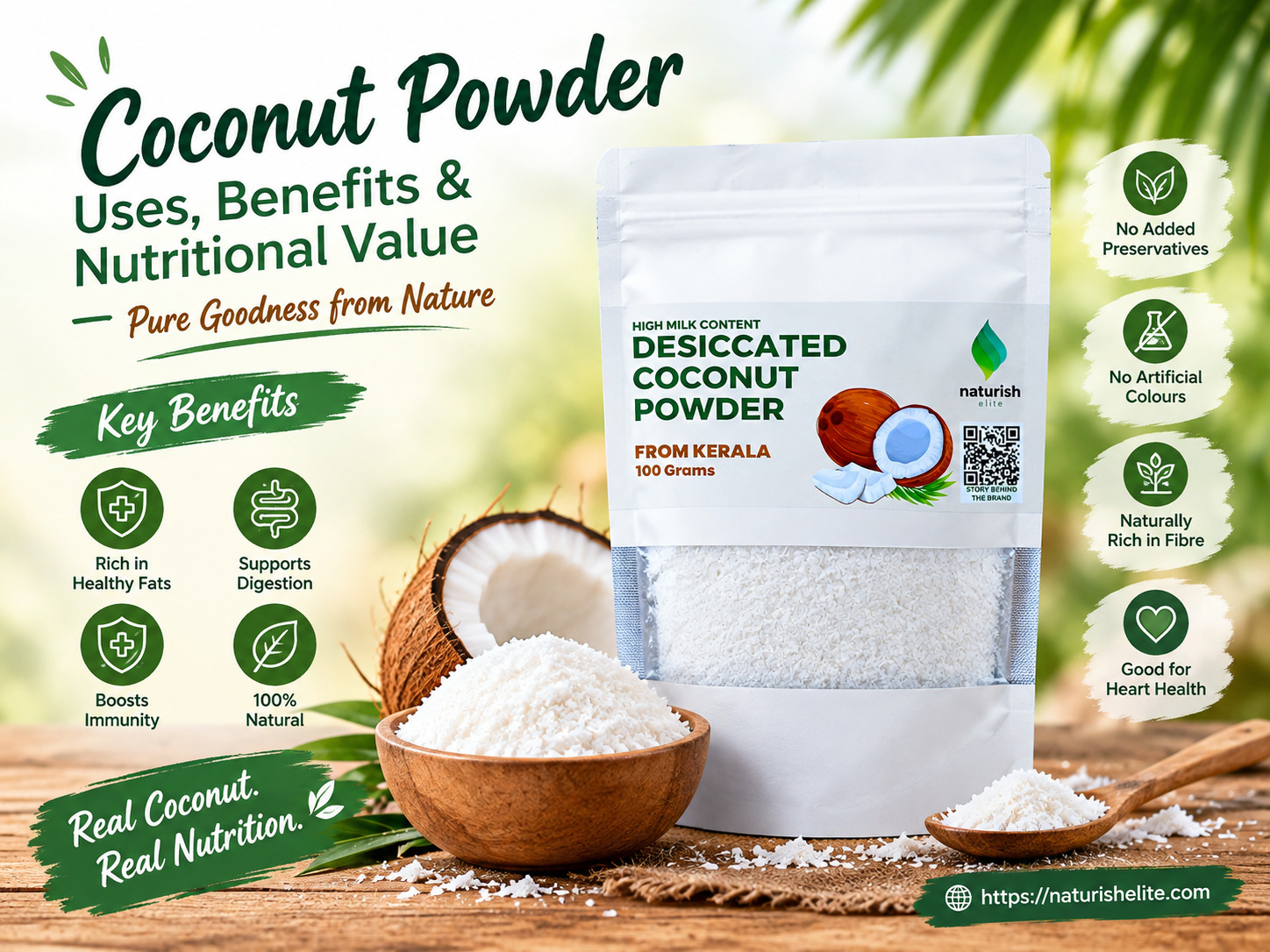
Coconut is a versatile ingredient used in cooking, baking, beverages, and traditional recipes. Desiccated coconut powder offers a convenient way to add the natural taste and texture of coconut to different dishes without using fresh coconut every time.
Depending on the processing method, coconut products can include coconut milk powder and desiccated coconut powder, each with different uses and characteristics.
For people looking for convenient coconut-based ingredients, understanding their nutritional value, uses, storage, and differences can make choosing the right product easier.
What Is Coconut Powder?
Coconut powder is made from processed coconut and is available in different forms depending on how the coconut is dried and prepared. It can be used in curries, desserts, smoothies, sauces, bakery products, and other recipes.
The texture and application can vary between regular coconut powder, coconut milk powder, and desiccated coconut powder. While some forms are designed to add coconut flavour and texture, others can be mixed with water to prepare coconut milk.
Common Uses of Coconut Powder
One of the main advantages of coconut powder is its convenience. It can be used in both sweet and savoury preparations.
Cooking and Curries
Coconut powder can add a mild coconut flavour and creamy texture to curries, gravies, soups, and sauces. It is particularly useful when fresh coconut is not readily available.
Baking and Desserts
It can be added to cakes, cookies, energy bites, ladoos, puddings, and other desserts. Desiccated coconut powder is especially useful when a dry coconut texture is required.
Smoothies and Beverages
Some coconut powders can be incorporated into smoothies and beverages for additional coconut flavour. Coconut milk powder can also be reconstituted with water and used as a convenient coconut milk alternative for suitable recipes.
Nutritional Value of Coconut Powder
Coconut contains naturally occurring fats, dietary fibre, and several minerals. However, the exact nutritional profile of coconut powder depends on the coconut used and the processing method.
Products with different fat levels can have noticeably different calorie and nutrient values. Therefore, it is important to check the product label for serving size, calories, fat, protein, carbohydrates, and fibre.
For consumers choosing organic coconut powder, checking the ingredient list and relevant product certifications can also help confirm what they are purchasing.
Coconut Powder vs Coconut Milk Powder
Although their names are similar, coconut powder and coconut milk powder are not always used in the same way.
Coconut powder is generally used to provide coconut flavour, texture, or dry coconut content in recipes. Coconut milk powder is formulated to be mixed with liquid and can be used to prepare coconut milk for cooking and beverages.
The better option depends on the recipe. Dry preparations may benefit from coconut powder, while recipes requiring a creamy coconut liquid may be more suitable for coconut milk powder.
Factors Affecting Coconut Powder Price
The coconut powder price can vary based on quality, processing method, packaging, quantity, and coconut content. Similarly, coconut milk powder price may differ depending on formulation, fat content, processing, and pack size.
Organic products may also have different pricing because of their production and certification requirements. When comparing products, price alone should not be the only consideration. Ingredient quality, purity, packaging, and intended use are also important.
How to Store Coconut Powder
Proper storage helps maintain the quality of coconut-based powders. Keep the product in a cool, dry place away from direct sunlight and moisture. After opening, use an airtight container if the original packaging does not provide sufficient protection.
Always use a clean, dry spoon when handling the powder and follow the storage instructions mentioned on the product packaging.
How to Choose the Right Coconut Powder
Choose the product according to your intended use. For baking and recipes requiring dry coconut texture, desiccated coconut powder can be suitable. For preparing coconut milk, coconut milk powder may be more practical.
If you prefer products made from organically sourced ingredients, look for organic coconut milk powder or organic coconut powder with clear ingredient information and appropriate certification details.
Conclusion
Naturish Elite offers coconut-based ingredients for consumers looking for convenient options for everyday cooking and recipes. Understanding the differences between coconut powder, coconut milk powder, and desiccated coconut powder can help you select the right ingredient according to your cooking needs.
With Naturish Elite, consumers can explore suitable coconut products while considering ingredients, quality, intended use, and storage requirements before making a choice.
Frequently Asked Questions
1. What is coconut powder used for?
Coconut powder can be used in curries, desserts, baking, smoothies, sauces, and various other recipes to add coconut flavour and texture.
2. Is coconut powder the same as desiccated coconut powder?
Not necessarily. The texture, processing method, moisture content, and intended use can differ between coconut powder and desiccated coconut powder.
3. Can coconut milk powder be used instead of coconut powder?
They may not always be interchangeable. Coconut milk powder is generally intended to be mixed with liquid, while coconut powder may be used directly in dry or cooked recipes.
4. What affects coconut powder price?
Quality, coconut content, processing method, packaging, pack size, and whether the product is organic can influence coconut powder price.
5. How should coconut powder be stored?
Store it in a cool, dry place away from moisture and sunlight. Once opened, keeping it properly sealed can help maintain its quality.
Comments
Log in or sign up to join the conversation.