

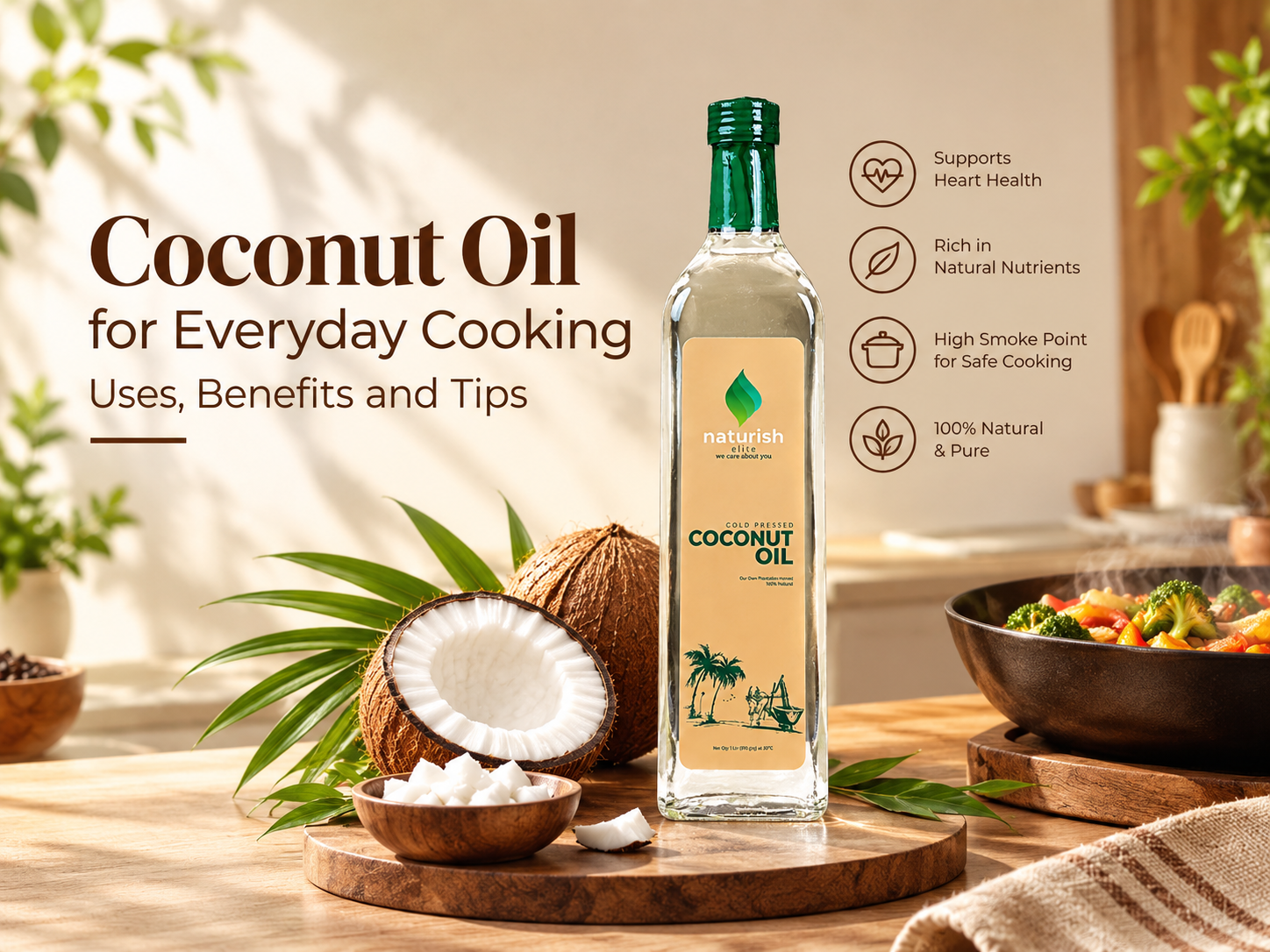
Coconut oil has been a familiar cooking ingredient in many Indian kitchens for generations. Its pleasant aroma, smooth texture, and ability to handle everyday cooking make it a practical choice for different recipes. From sautéing vegetables to preparing traditional dishes, coconut oil can add a distinctive taste while fitting easily into a balanced cooking routine.
For people looking for coconut oil for cooking in India, choosing a good-quality product is important. The oil's processing method, freshness, and purity can influence its flavour, texture, and overall cooking experience.
Why Use Coconut Oil for Everyday Cooking?
Coconut oil works well for several common cooking methods. It can be used for sautéing, shallow frying, tempering, and preparing curries. Its characteristic flavour can complement ingredients commonly used in Indian cuisine.
Another advantage is its versatility. A small quantity can be used to cook vegetables, lentils, rice dishes, and snacks. It can also be included in recipes where a mild coconut note is desirable.
The type of coconut oil you choose also matters. Virgin coconut oil is generally made from fresh coconut and undergoes less processing, which helps retain its natural characteristics.
Choosing Virgin Coconut Oil for Cooking
When selecting virgin coconut oil for cooking, check the product label and processing information. A quality oil should have a clean appearance, a pleasant natural aroma, and suitable packaging that helps protect it from heat, light, and moisture.
Virgin coconut oil can be useful when you want an oil with a more noticeable coconut character. It works particularly well in dishes where its natural flavour complements the ingredients.
For regular household use, consider your cooking style, preferred flavour, and the quantity required by your recipes before selecting a product.
Cooking Methods That Work Well With Coconut Oil
Coconut oil can be incorporated into different everyday cooking methods.
Sautéing: Use a small amount to cook vegetables, spices, or aromatics.
Tempering: Its distinctive flavour can work well with traditional tempering ingredients such as mustard seeds, curry leaves, and spices.
Shallow frying: Coconut oil can be used for preparing certain snacks and shallow-fried dishes.
Curries and gravies: It can add depth and a subtle coconut flavour to selected vegetable, seafood, and regional recipes.
Using an appropriate amount is important. Like other edible oils, coconut oil is calorie-dense, so portion control should remain part of a balanced diet.
Benefits of Coconut Oil for Cooking
The benefits of coconut oil for cooking are often discussed in relation to its composition and versatility. Coconut oil contains a high proportion of saturated fat, including medium-chain fatty acids. However, this does not mean it should be consumed without moderation.
Its main practical benefit in the kitchen is versatility. It can be used across several recipes without requiring multiple specialty oils for different preparations. Its characteristic taste can also enhance dishes where coconut flavour is appropriate.
The best choice of cooking oil depends on your overall dietary pattern, health needs, cooking methods, and personal preferences. Rotating different suitable oils can also help create variety in your diet.
How to Store Coconut Oil Properly
Proper storage helps maintain the oil's quality. Keep the container tightly closed and store it in a cool, dry place away from direct sunlight and excessive heat.
Coconut oil can naturally change from liquid to solid depending on room temperature. This is normal and does not necessarily indicate spoilage. Always use a clean, dry spoon when taking oil from the container to avoid introducing moisture or contaminants.
Tips for Using Coconut Oil in Daily Meals
Start with a moderate quantity and adjust according to the recipe. Coconut oil can be especially suitable for dishes where its natural flavour complements the ingredients.
If you are trying it for the first time, use it in simple preparations such as sautéed vegetables, tempering, or selected curries. This makes it easier to understand how its flavour works with your regular meals.
Also, avoid assuming that a single cooking oil is automatically the healthiest option for everyone. Your complete diet matters more than one ingredient.
Frequently Asked Questions
1. Can coconut oil be used for everyday cooking?
Yes, coconut oil can be used for several everyday cooking methods, including sautéing, tempering, shallow frying, and preparing selected curries and other dishes.
2. Is virgin coconut oil suitable for cooking?
Yes, virgin coconut oil can be used for cooking. It has a distinct natural coconut flavour and can work particularly well in recipes where that flavour complements the dish.
3. What are the benefits of coconut oil for cooking?
Coconut oil is versatile and can be used in various cooking methods. It also contains medium-chain fatty acids, although it is high in saturated fat and should therefore be consumed in moderation.
4. How should coconut oil be stored?
Store coconut oil in a tightly closed container in a cool, dry place away from direct sunlight and excessive heat. Use clean, dry utensils when handling it.
5. Why does coconut oil become solid?
Coconut oil naturally solidifies at cooler temperatures and becomes liquid when warmed. This change in texture is a normal characteristic of coconut oil.
Comments
Log in or sign up to join the conversation.