

Selecting the correct drilling tool is one of the most important decisions in CNC machining. The drill you choose directly affects hole accuracy, machining speed, tool life, and overall production costs. While both U drills and twist drills are commonly used across manufacturing industries, each tool serves different purposes depending on the machining application.
For high-volume production and precision machining, the U drill has become a preferred solution because of its indexable insert design and superior cutting performance. On the other hand, twist drills remain a reliable option for general drilling, maintenance work, and smaller production runs.
Understanding when to use one instead of the other can help manufacturers improve productivity while reducing machining costs. This guide explains the differences, advantages, and situations where each drill performs best.
Understanding a U Drill
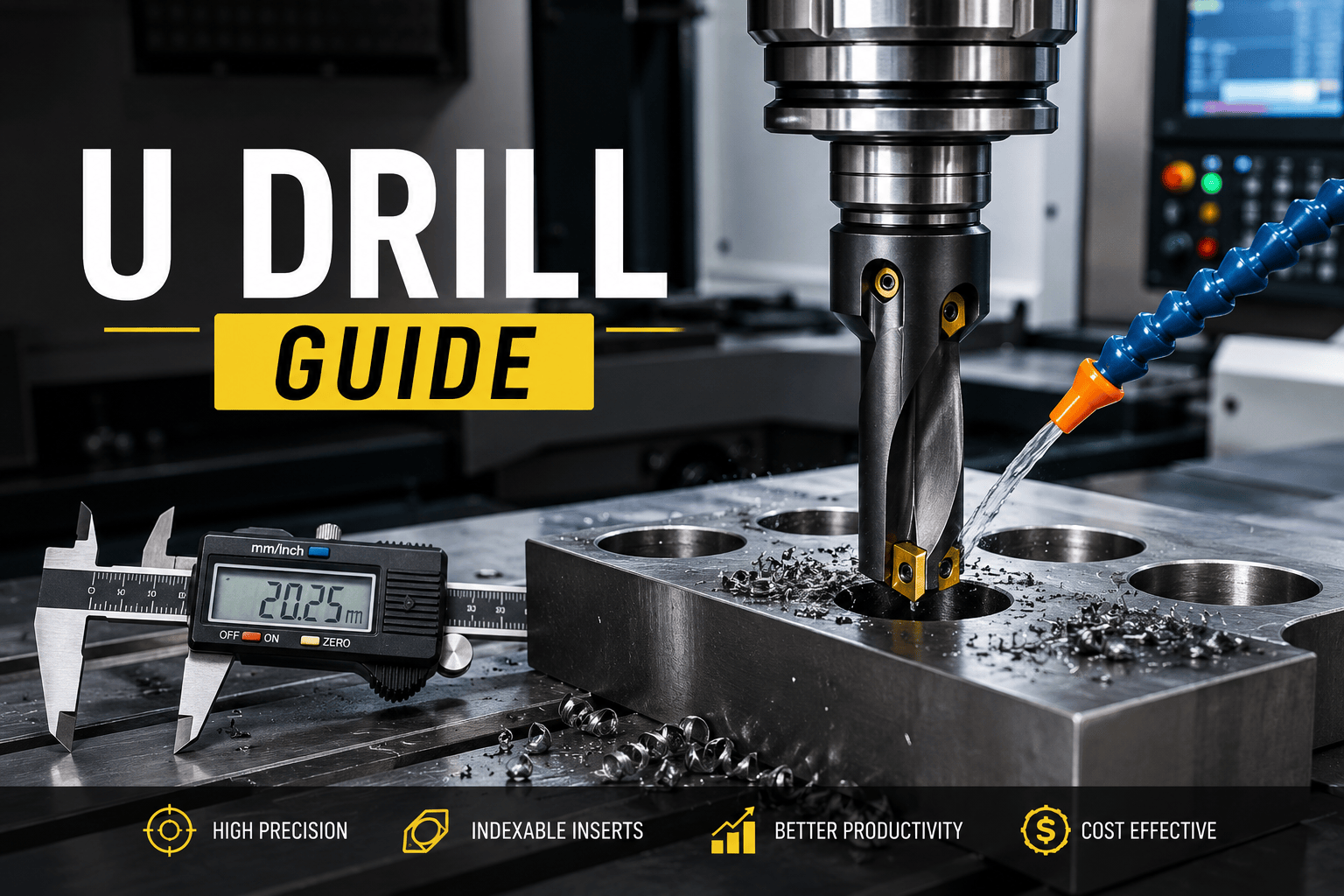
A u drill is an indexable drilling tool that uses replaceable carbide inserts mounted on a reusable drill body. Instead of replacing the complete drill after wear, only the inserts need replacement, making it an economical solution for continuous production.
Its construction typically includes:
Drill body
Central cutting insert
Peripheral cutting insert
Insert screws
Internal coolant channels
This design enables higher cutting speeds, better chip evacuation, and longer service life compared to traditional drilling tools.
What Is a Twist Drill?
A twist drill is a conventional drilling tool with helical flutes that remove chips during machining. It is available in high-speed steel (HSS) and solid carbide versions and is widely used for manual and CNC drilling operations.
Twist drills are ideal for:
Maintenance work
Low-volume production
Repair operations
Workshop applications
Small-diameter drilling
Although versatile, they generally require complete replacement or regrinding once the cutting edges become worn.
Key Differences Between U Drills and Twist Drills
Understanding the structural differences helps determine which tool is suitable for your machining requirements.
Feature | U Drill | Twist Drill |
Cutting Edge | Replaceable inserts | Solid cutting edge |
Tool Life | Long | Moderate |
Chip Evacuation | Excellent | Good |
Productivity | High | Medium |
Maintenance | Replace inserts only | Replace entire drill |
CNC Suitability | Excellent | Good |
When Should You Choose a U Drill?
There are several situations where a u drill provides better performance than a twist drill.
High-Volume Production
Manufacturers producing hundreds or thousands of components every day require tools that minimize downtime.
A U drill allows operators to replace worn inserts within minutes without changing the drill body, significantly reducing machine stoppage.
Faster Machining Cycles
When production speed is critical, indexable drilling systems outperform conventional drills.
Higher feed rates enable manufacturers to complete machining operations more quickly while maintaining hole quality.
Larger Hole Diameters
U drills are particularly effective for medium and large-diameter holes where productivity and stability are essential.
Difficult Materials
Materials such as:
Stainless steel
Alloy steel
Cast iron
Hardened steel
benefit from high-performance indexable drilling systems that offer superior wear resistance.
Importance of Choosing the Correct U Drill Size
Selecting the correct u drill size ensures better machining accuracy and longer insert life.
Factors to consider include:
Required hole diameter
Material thickness
Machine spindle capacity
Drilling depth
Production volume
Using the wrong drill diameter can increase vibration and reduce dimensional accuracy.
Why Use a U Drill Size Chart?
A u drill size chart helps machinists identify the correct drill dimensions and compatible inserts before machining begins.
Most charts include:
Drill diameter
Recommended insert size
Cutting speed
Feed rate
Maximum drilling depth
Using the correct size chart minimizes setup errors and improves machining consistency.
Selecting the Right U Drill Insert
The u drill insert plays a major role in machining performance.
Choosing the proper insert depends on:
Workpiece material
Insert coating
Cutting speed
Coolant availability
Surface finish requirements
Premium carbide inserts generally provide better wear resistance and higher productivity than standard grades.
CNC Compatibility
Modern CNC tools demand precision, repeatability, and high machining efficiency.
Because of their rigid design and replaceable inserts, U drills integrate perfectly with CNC machining centers, allowing manufacturers to achieve faster production without sacrificing quality.
Checking Hole Accuracy
After drilling, accurate measurement ensures that finished components meet engineering specifications.
A digital caliper vernier is commonly used to inspect:
Hole diameter
Internal dimensions
Component thickness
External measurements
Machined tolerances
Regular inspection improves quality control and reduces rejected parts.
Understanding U Drill Price and Long-Term Value
When selecting drilling tools, many buyers compare only the purchase cost. However, the u drill price should be evaluated based on its long-term value rather than its initial investment.
Although a U drill generally costs more than a standard twist drill, it offers several financial advantages:
Replaceable inserts instead of replacing the complete drill
Reduced machine downtime
Lower tooling costs over time
Higher production efficiency
Longer drill body life
Better cost per hole
For manufacturers involved in medium- or high-volume production, these benefits often outweigh the higher upfront cost.
When Is a Twist Drill the Better Choice?
While U drills are ideal for CNC production, there are situations where a twist drill is the more practical option.
A twist drill is recommended when:
Low-Volume Production
If only a small number of holes are required, a twist drill can complete the task efficiently without the higher investment of an indexable drill.
Manual Drilling
Portable drilling machines and hand-operated tools commonly use twist drills because of their simple design and wide availability.
Small Diameter Holes
For very small hole sizes, twist drills often provide better practicality and easier handling.
Budget-Conscious Operations
Small workshops or maintenance departments with limited budgets may find twist drills to be a more economical choice for occasional drilling tasks.
Industrial Applications
Both U drills and twist drills are widely used across different industries, depending on production needs.
Automotive Industry
Manufacturers use U drills for machining engine blocks, transmission housings, suspension components, and brake systems where speed and accuracy are essential.
Aerospace Industry
Aircraft manufacturers rely on precision drilling tools for lightweight alloys and structural components that require tight tolerances.
Mold and Die Manufacturing
Accurate drilling is essential before milling and finishing operations, making both drilling systems valuable depending on the application.
Heavy Engineering
Construction equipment, mining machinery, and industrial assemblies often require high-performance drilling solutions capable of handling tough materials.
General Engineering
Machine shops and fabrication units use both drilling tools for producing precision components across a variety of industrial applications.
Tips for Selecting the Right Drill
Before purchasing any drilling tool, consider the following:
Identify the workpiece material.
Select the correct drill diameter.
Match the tool with your CNC machine.
Choose suitable insert grades.
Ensure proper coolant availability.
Consider production volume and machining speed.
Evaluate long-term operating costs instead of only purchase price.
These factors help improve productivity while reducing machining expenses.
Maintenance Tips
Proper maintenance extends tool life and ensures consistent machining quality.
Follow these best practices:
Clean the drill body after use.
Inspect inserts before each machining cycle.
Replace worn inserts immediately.
Keep coolant passages free from blockage.
Tighten insert screws according to the manufacturer's recommendation.
Store tools in a clean and dry environment.
Routine maintenance minimizes downtime and improves machining efficiency.
Final Comparison
When deciding between a U drill and a twist drill, the choice depends on your production requirements.
Choose a U drill if you need:
High-speed CNC machining
Better chip evacuation
Higher productivity
Replaceable inserts
Lower long-term tooling costs
Consistent hole quality
Choose a twist drill if you need:
Manual drilling
Small production runs
Lower initial investment
General workshop applications
By understanding your machining goals, you can select the drilling solution that offers the best balance of performance, accuracy, and cost.
Conclusion
Choosing between a U drill and a twist drill depends on your machining application, production volume, and budget. For high-speed CNC machining and continuous production, U drills provide significant advantages through faster drilling, improved chip evacuation, longer tool life, and lower operating costs. Twist drills, however, remain an excellent choice for maintenance work, manual drilling, and low-volume manufacturing.
Before making a purchase, manufacturers should evaluate factors such as workpiece material, machine compatibility, drilling depth, insert quality, and long-term productivity. Selecting the right drilling tool not only improves machining efficiency but also reduces downtime and enhances overall product quality.
For businesses seeking dependable machining solutions, Jaibros offers a comprehensive range of precision machining products, including indexable drilling systems, carbide inserts, measuring instruments, and premium-quality CNC tools. With a focus on quality, innovation, and customer satisfaction, Jaibros helps manufacturers achieve greater precision, productivity, and long-term value in every machining operation.
Comments
Log in or sign up to join the conversation.