
Planning group transportation involves more than selecting a bus with enough seats. Understanding Charter Bus Weight Capacity helps ensure your group travels safely, comfortably, and efficiently. Whether you're organizing a corporate event, school field trip, wedding, sports tournament, church outing, airport transfer, or sightseeing tour, every charter bus has a maximum weight limit that includes passengers, luggage, fuel, and onboard equipment. This guide explains everything you need to know before booking your next trip.
What Is Charter Bus Weight Capacity?
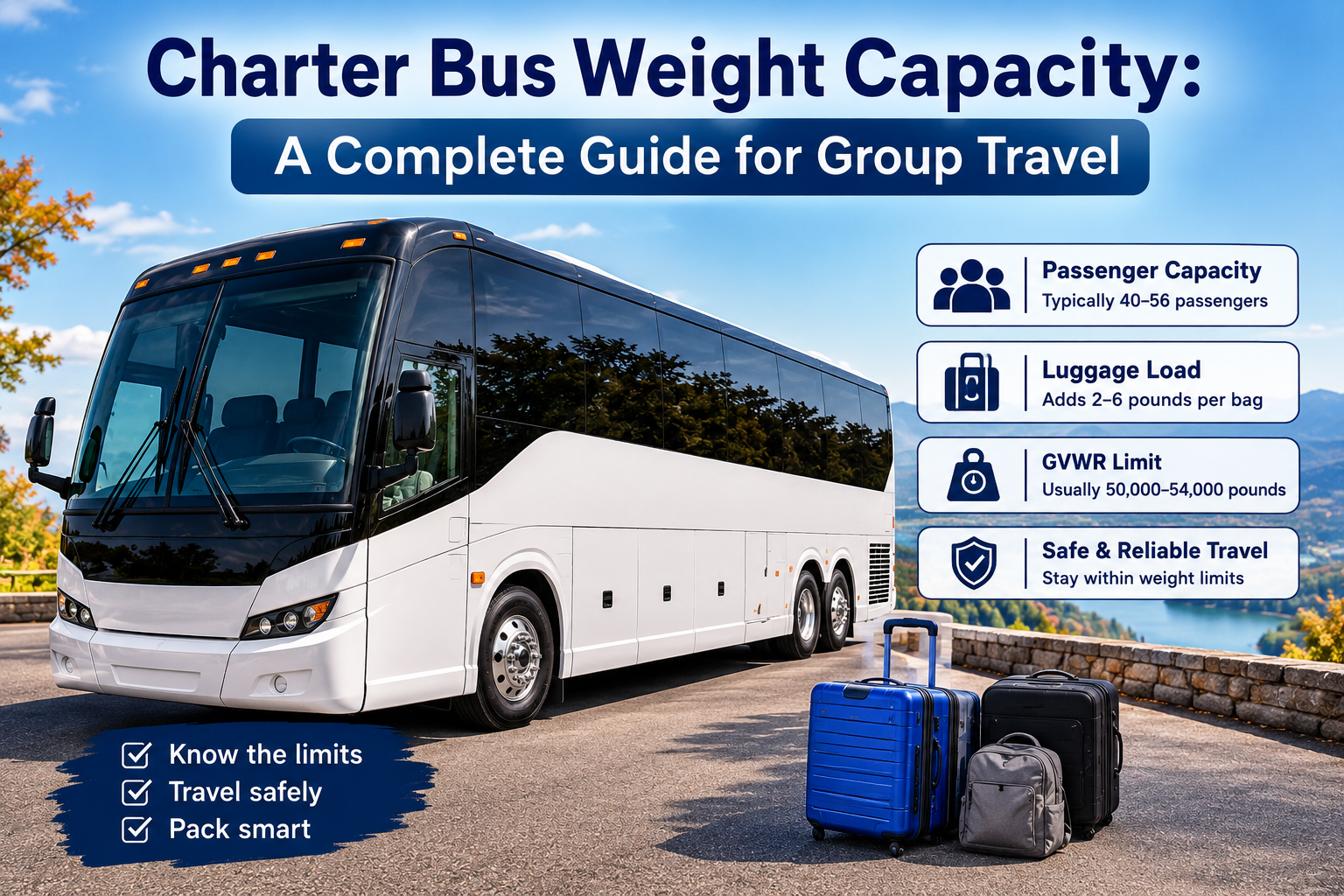
Charter Bus Weight Capacity is the maximum amount of weight a charter bus can safely carry. This includes the weight of passengers, luggage, personal belongings, onboard amenities, fuel, and any additional cargo.
A standard full-size charter bus typically weighs 25,000 to 33,000 pounds (11,300–15,000 kg) when empty. When fully loaded, the gross vehicle weight can reach approximately 50,000 pounds (22,700 kg), depending on the manufacturer, axle configuration, and legal operating limits.
Passenger Capacity and Vehicle Weight
Passenger count directly affects the total weight carried by a charter bus. Most full-size motorcoaches seat between 40 and 56 passengers, while minibuses generally accommodate 18 to 35 passengers.
The more passengers onboard, the greater the overall vehicle weight. Providing an accurate passenger count during booking helps your charter bus company assign the most suitable vehicle.
Luggage Also Counts Toward Weight Capacity
Passenger luggage is an important part of the total load. Suitcases, backpacks, duffel bags, coolers, sports equipment, musical instruments, and conference materials all increase the vehicle's weight.
Groups traveling on multi-day tours, airport transfers, cruises, or sporting events usually require more luggage space than local day-trip travelers. Sharing luggage estimates with your transportation provider helps ensure adequate storage capacity.
Oversized Equipment Requires Planning
Some groups travel with large or heavy equipment that needs additional space. Sports teams may carry athletic gear, construction crews transport tools, bands bring musical instruments, and trade show exhibitors often travel with display materials.
Always inform your charter bus company about oversized or unusually heavy items before confirming your reservation so the appropriate vehicle can be selected.
Why Weight Capacity Matters
Staying within approved Charter Bus Weight Capacity helps maintain safe braking, steering, suspension performance, and tire durability. Overloading a commercial vehicle may affect handling, increase mechanical wear, and reduce overall safety.
Professional charter bus providers carefully evaluate passenger numbers and luggage requirements before assigning a bus to ensure it operates within manufacturer guidelines.
How Charter Bus Companies Calculate Capacity
Transportation providers consider several factors when choosing the right bus, including:
Total number of passengers
Estimated luggage volume
Travel distance
Trip duration
Road conditions
Pickup and drop-off locations
Oversized equipment or special cargo
Providing complete travel details allows the company to recommend the safest and most efficient transportation solution.
Choosing the Right Charter Bus
Selecting the correct vehicle depends on both seating requirements and luggage capacity.
A full-size charter bus is typically the best option for large groups traveling with multiple suitcases or equipment because it offers spacious seating and large undercarriage luggage compartments.
For smaller groups with limited baggage, a minibus may provide a more economical and practical transportation option.
Tips for Staying Within Weight Limits
Before booking your trip, confirm your final passenger count and estimate the amount of luggage each traveler will bring.
If your itinerary changes or your group plans to transport additional equipment, notify the transportation company immediately. Early communication allows the provider to adjust your reservation if necessary.
Questions to Ask Before Booking
Before confirming your charter bus reservation, ask about:
Passenger seating capacity
Luggage storage limits
Oversized baggage policies
Accessibility features
Onboard amenities
Restrictions for heavy equipment
Additional storage options for large groups
These details help ensure your group has enough space while remaining within safe operating limits.
Final Thoughts
Understanding Charter Bus USA Weight Capacity is an important part of planning successful group transportation. Passenger numbers, luggage, fuel, and oversized equipment all contribute to the total weight carried by the vehicle, making accurate trip planning essential.
By selecting the right charter bus, providing complete travel information, and working with an experienced transportation provider, you can enjoy safe, comfortable, and reliable travel for any destination. Whether you're planning a local event or a cross-country journey, choosing the right vehicle ensures your group arrives safely and on schedule.
Comments
Log in or sign up to join the conversation.