

A good prosecutor aims to interrogate the witness with the goal of finding a hole in the story, by asking the same question in many different ways, until he gets a different story. This is what the market does daily, asking the same question, and looking for a different story.
Children from an early age are the best at this – asking "why?" until they get the answer they want. Sometimes they get stuck on the same fairy tale until it makes sense, and then they ask for a different story.
The Summer market believed in “Goldilocks” where the FOMC and other central banks were easy, where inflation was not a problem, where blow-ups in EM were idiosyncratic, where tariffs had no effect on growth. The global economy was not too-hot nor too-cold. However, this all seems to be changing in September, like the weather.
The FOMC removal of “accommodative” from its policy statement shifted the storyline of “Goldilocks” into something else. Just what that is was the key topic of debate for the September Track Idea dinner where a number of key portfolio managers, strategists and traders joined together to share their views on the markets, their best trading ideas, and their worst fears.
Out of the dinner we have the usual geopolitical list of concerns and questions including – 1) US Trade Policy– tariffs and sanctions; 2) Trump foreign policy– Iran, North Korea, China, Turkey, Venezuela, Russia; 3) EU politics– the Italian budget deficit (is 2.4% of GDP too much?!), German coalition (is Merkel at risk again?); 4) US Current Account and USD weakness – do rates matter? 5) Brexit– is there an election risk in 1Q 2019 with a Stalinist Corbyn, is there a deal delay possible and does the mean more uncertainty; 6) EM meltdown– are markets too sanguine over the risk for an extended downturn and a more difficult FX/capital outflow story. 7) Global Trust– is this the peak of western democracy and global convergence? 8) China and growth– is there a risk to growth apart from the US tariffs/global trade hit? Is Xi more vulnerable than reported? Is the US too optimistic about tariffs hurting China.

WTO downgrades outlook for global trade. Trade will continue to expand but at a more moderate pace than previously forecast. The WTO anticipates growth in merchandise trade volume of 3.9% in 2018, with trade expansion slowing further to 3.7% in 2019. The new forecast for 2018 is below the WTO's 12 April estimate of 4.4% but falls within the 3.1% to 5.5% growth range indicated at that time. Trade growth in 2018 is now most likely to fall within a range from 3.4% to 4.4%.

China and Oil. Since the start of the CNY Oil futures backed by gold, the role of gold, oil and USD correlations has changed. The first contracts settled this month without a hitch. The focus on CNY trade vs. USD trade is likely to heat up given Iran oil sanctions and the ongoing Russia issues with Ukraine and US election meddling. The risk of oil and China being a larger part of fragmentation of US foreign policy seems high. The Trump speeches and tweets tie the role of North Korea to China clearly and make the hope for future trade talks relate to this theme. The ongoing disputes over the South China Sea have heated up this week after the dinner and add to the view that China and its role as a large military presence in Asia isn’t going away.

EU politics: Does the Italian Budget at 2.4% of GDP bring enough confidence and growth to keep the government together? The risks for EUR are the long-tail ones about EU budget failure leading to an Italy pull-out of the EUR. There was a uniform opinion that Italian debt is too big to fail and too big to fix and that IMF won’t be part of the solution leaving this to Europe to figure out. These stories won’t go away but seem overblown. Many see the EU politics shifting towards a more expansive fiscal and federal like structure where Italy joins France and others in pushing for ESM issues to build out infrastructure. There was agreement at the dinner that the May 2019 EU elections are worth watching, though significant debate about what their outcome would mean for Italy, more fiscal leeway and the like.

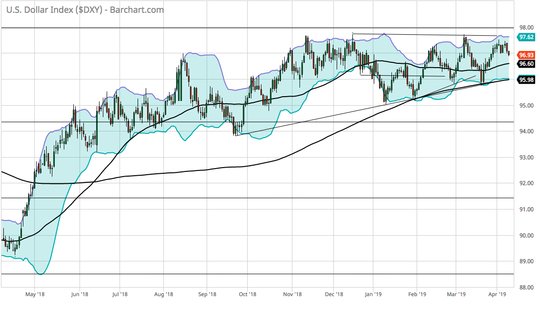
Does the US Current Account Deficit matter? The U.S. current-account deficit increased to $124.1 billion (preliminary) in the first quarter of 2018 from $116.1 billion (revised) in the fourth quarter of 2017. As a percentage of U.S. GDP, the deficit increased to 2.5% from 2.4%. The previously published current-account deficit for the fourth quarter was $128.2 billion. These are no where near the levels of the 2008 crisis and many pushed back on the C/A driving the USD lower. Rather, USD weakness was seen as a factor in FOMC views – that the Fed stops hiking, that the US mid-terms lead to a failed US government, that the Treasury/Trump push for a weaker USD. There were many in the room that bought into the view that the US is in a late business cycle rather than the one that is being priced after the dinner – with Services ISM at new record highs and FOMC Powell telling us the expansion is indefinite. Most saw 2% GDP at the end of 2019 rather and that the FOMC had limits to how much they could raise rates.

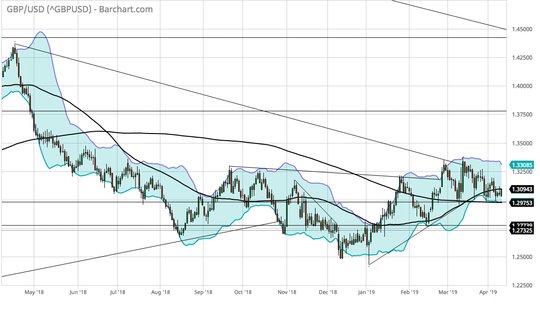
Brexit: Does this go away as an issue in 2019? There was a view in the room that until 2019 the Brexit story was untradeable. The noise of the politics and the talks have left the GBP/Gilt/FTSE numb. Many see the risk for an Article 50 extension (for at least another 6 months) as high. Others see PM May as masterful in her handling of the Tory party but unlikely to lead it into the next election. Though its not clear who else would want the job. The debate about Brexit leading to a larger economic problem in Europe was tied to the Italian budget discussion earlier and seen as an opportunity for larger EU reform. The biggest issue in Europe maybe in the Brexit risks for other outsiders – where Sweden, Norway, Eastern Europe all have interest in trading and no interest in the EUR.

Was that the bottom of EM assets? Rate hikes in Turkey and Argentina have made the cost of carry squash the momentum devaluation. The relative calm in September over Tariffs not hurting either US or China economies led to a view that EM was a value trade. There were many in the room that saw the 40% drop in EM FX as a broader sign of healthy adjustment – citing the RUB and Russia adjustments around the oil price drop as the playbook. The roles of C/A deficits, energy prices, political stability, global trade and growth, sustainable fiscal policy and the level of the broader USD were all seen as drivers for the present pain in emerging markets.

Is China slowing because of tariffs, deleveraging or something else? The Xi power questions were raised over the dinner given that unlike the US, where Trump and Congress face open elections and the markets price in their election openly, the Chinese political risks are opaque and can only be seen in a crisis moment. The move up in the CNY from 6.20 to 6.90 has happened in pace with other EM pain trades but the risk of a larger break on tariffs hurting growth more clearly was seen as a likely risk. The China PMI reports in September point to 6.0-6.3% 4Q growth – slow enough to cause concern but not so much as to question the Xi power or the risk to employment – where jobs = social contentment. There were many in the room that questioned all China data and saw little change in China.

The larger question about China and US trade war risks was in the thinking about how NAFTA becoming USMCA and Europe bending to a new deal would somehow lead to an easier China story. This was not the consensus of the room. Most saw that the China trade story was larger than just about imports/exports but in stopping or stalling the Made in China 2025 effort and the technology IP behind it. The 301 tariffs are far different than the steel and aluminum ones on Europe/Canada/Mexico and likely will be in play for a far longer time. Pricing in a retrenchment on the trade war was seen as difficult but clearly something that would be hitting the market and the global economy in 2019.
Best Trades: This was a dinner where risk taking was less obvious and many were comfortable in passive holdings rather than active trading. The headline risks on more political ugliness has made many gun shy for timing of trading. There was also less consensus on the short-medium term views.
- Short S&P500 (via 6M puts 5% OTM) this was the most controversial trade as a few others wanted to be long the S&P500 and ride it out to year-end. The timing of when to short was clearly in play, with the logic of 4Q trade related pain hitting. This trade has not yet made money despite the reversal Oct 4.
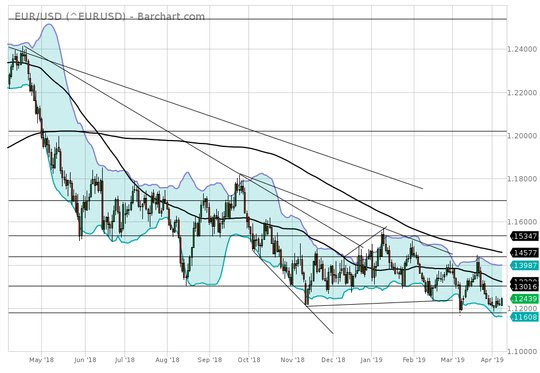
- Long EUR/Short USD with 1.23 target. This was a 1.15-1.18 breakout play with the logic of ECB tightening and FOMC becoming more dovish as data turns on tariffs driving. This was the worst performer in the week and clearly a timing issue.
- Long Private Equity in China. The view was that the unwinding of SOE buying of private companies would be an opportunity for investment bankers and PE funds.
- Long Oil. Target was $87 in Brent from $80 (Sep 27 dinner) This was the first place trade for the week even with the reversal Oct 4. There was some talk of $100 bbl oil though most didn’t see this sustainable
- Long CAD/Short JPY. This was the second place trade for the week post the dinner as the NAFTA transformation to USMCA led to a 1.2880 stopfest in USD/CAD and the BOC rate hike talk supported that move. The US rate move up to 3.20% and USD/JPY at 114 added to the story.
- Long Vol(particularly in Fixed Income and FX). This was the third place trade for the week with the blow up in US bonds the driver post Powell and ISM. The MOVE risks seem notable for a curve steepener. FX follows on rate spreads
- Long GBP/Short EUR and USD. This was a longer term play for a Brexit bounce as January 2019 was seen as bringing certainty into UK markets and risks for GBP higher back to 1.50 return.
Worst Fears: The list of fears was also different than other dinners in 2018 as geopolitical stories like Iran, North Korea, Russ were absent but more G10 political issues were present.
- EU Parliament goes radical – May 2019 election seen going to far-right and far-left – leaving key posts for EU in the wrong hands
- US Political Stalemate. Mid-term elections go to Dems, investigations hamper Trump and politics lead to a do-nothing-but-spend Government
- Italy Defaults. This was seen as unlikely – given the costs and savings profiles – but point was that Italy issues could get worse with EU pushing back on budget
- Stock Market Crash – the fear of a 10-20% correction was discussed and noted as difficult given the lack of monetary cushions
- Trump Tariffs lead to real war – the conflict with China gets worse
- Basis risk for USD turns. This played out a bit this week as Bunds have higher carry returns now with EUR basis trades reflecting the turn in year.
- EM continues to blow up – the risk of ARS and TRY was seen as ongoing
Conclusions: While we have had many idea dinners over the last 8 years, this was one of the more vocal ones where the debates about China, US, Europe, UK and EM were passionate and led to many different points of view. The markets are reflecting this and the increase in uncertainty is notable for the outlooks to 2019. Some were upbeat for the year ahead, others scared and expecting a much more difficult global story. The changing story theme of the evening plays out in this debate. Money is made where volatility provides the cover for a new trend and consensus. We aren’t there yet but many felt sure we would see it in the next month.
Comments
Log in or sign up to join the conversation.