

Among the powerful divine forms associated with Lord Vishnu, Chakrathalwar holds a special place in Hindu tradition. Known as the personification of the Sudarshana Chakra, the divine discus of Vishnu, Chakrathalwar represents protection, righteousness, divine power and the destruction of negative forces.
The Chakrathalwar form is particularly significant in South Indian Vaishnavite worship, where devotees seek the blessings of Sudarshana for protection, spiritual strength and the removal of obstacles. A traditionally crafted Chakrathalwar idol can therefore serve not only as a sacred object of worship but also as a representation of the powerful protective energy associated with Lord Vishnu.
Gold Plating Art Studio presents beautifully finished traditional religious idols inspired by India's rich heritage of temple sculpture and devotional art. A Chakrathalwar idol with an artistic gold finish can become a meaningful addition to pooja rooms, temples, spiritual spaces and religious collections.
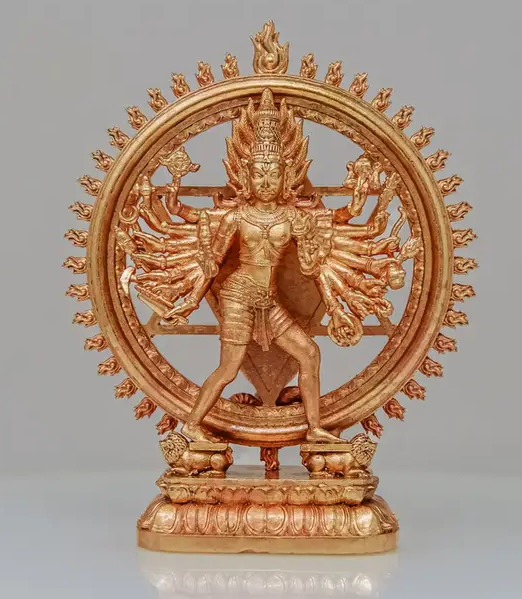
Who Is Chakrathalwar?
Chakrathalwar, also known as Sudarshana, is the divine manifestation of Lord Vishnu's Sudarshana Chakra. In Hindu iconography, Sudarshana is much more than a weapon. The Chakra is regarded as a powerful divine force representing Vishnu's ability to preserve cosmic order and overcome forces that threaten dharma.
The word "Sudarshana" is commonly understood through the Sanskrit terms su, meaning good or auspicious, and darshana, meaning vision or sight. The name therefore carries the idea of an auspicious or beautiful vision.
Chakrathalwar is worshipped as a powerful guardian and is particularly revered in several Vaishnavite temples throughout South India.
The Sudarshana Chakra of Lord Vishnu
The Sudarshana Chakra is one of the most recognizable attributes of Lord Vishnu. Along with the conch, mace and lotus, it forms part of Vishnu's traditional iconography.
The Chakra symbolizes divine authority and the power to establish righteousness. It is described in Hindu scriptures and traditions as a weapon capable of destroying evil and protecting devotees.
Rather than viewing it simply as a physical weapon, devotees understand the Sudarshana Chakra as an expression of divine consciousness, protection and cosmic order.
This deeper symbolism is one reason Chakrathalwar continues to have an important place in Hindu worship.
Chakrathalwar and Lord Vishnu
Lord Vishnu is traditionally regarded as the preserver of the universe within the Hindu concept of the divine Trimurti. Whenever righteousness is threatened, Vishnu is believed to manifest in different forms to restore balance.
The Sudarshana Chakra represents one of the principal powers through which Vishnu protects dharma.
Chakrathalwar therefore occupies a unique position: while many Hindu idols represent a particular deity or incarnation, Chakrathalwar represents one of Vishnu's most powerful divine energies.
The Symbolism of Chakrathalwar
A Chakrathalwar idol contains several layers of religious symbolism.
Protection
The most prominent meaning associated with Sudarshana is protection. The spinning Chakra is traditionally believed to destroy harmful and negative forces while safeguarding devotees who surrender themselves to the divine.
Destruction of Adharma
The Sudarshana Chakra is associated with the destruction of forces that oppose righteousness. It represents the triumph of dharma over adharma, truth over falsehood and divine order over chaos.
Spiritual Purification
Sudarshana worship is also associated with purification. In devotional traditions, prayers to Chakrathalwar are performed with the intention of removing negative influences and creating an atmosphere of spiritual clarity.
Divine Power
The circular form of the Chakra suggests continuous movement and limitless divine energy. It is therefore seen as a representation of Vishnu's eternal power and cosmic authority.
Chakrathalwar in South Indian Temple Tradition
Chakrathalwar has a particularly strong presence in South Indian Vaishnavite temple traditions. In many temples dedicated to Lord Vishnu and his various forms, Sudarshana is worshipped as an important protective deity.
Traditional temple sculptures and bronze idols of Chakrathalwar often display elaborate iconographic details. The deity may be depicted with multiple arms carrying different divine attributes, emphasizing the extraordinary power associated with Sudarshana.
The reverse side of certain traditional representations can also depict Narasimha, creating a powerful connection between Sudarshana and another fierce protective manifestation of Vishnu.
This distinctive iconography demonstrates how closely protection, divine justice and Vishnu's cosmic power are connected in South Indian religious art.
The Connection Between Chakrathalwar and Narasimha
One of the fascinating aspects of Sudarshana worship is its connection with Lord Narasimha.
Narasimha, the man-lion incarnation of Vishnu, is celebrated for protecting Prahlada and destroying the tyrant Hiranyakashipu. Both Narasimha and Sudarshana therefore embody the protective and powerful aspects of Vishnu.
In certain temple traditions, Chakrathalwar is represented with Narasimha on the reverse side. This creates a remarkable symbolic combination of two fierce manifestations of divine protection.
The Role of Chakrathalwar in Worship
Devotees may worship Chakrathalwar for several spiritual reasons. Prayers are traditionally offered seeking protection from negative influences, obstacles and difficulties.
Sudarshana worship can also form part of temple rituals and special religious ceremonies. In Vaishnavite traditions, rituals dedicated to the Chakra are performed with devotion and reverence.
The circular Chakra itself serves as a reminder of the eternal nature of divine power and the continuing struggle between righteousness and forces that disturb spiritual balance.
Chakrathalwar as a Symbol of Strength and Protection
A Chakrathalwar idol can symbolize:
Divine protection against negative influences
Courage and inner strength during difficult circumstances
Victory of dharma over adharma
Spiritual purification and positive energy
Devotion to Lord Vishnu and the Vaishnavite tradition
Preservation of righteousness and cosmic balance
Chakrathalwar in Traditional Indian Art
Indian temple art has always combined spirituality with exceptional craftsmanship. Sculptors traditionally paid close attention to posture, gestures, ornaments, weapons and proportions when creating sacred images.
Chakrathalwar is particularly interesting from an artistic perspective because the Chakra itself becomes an essential part of the deity's visual identity.
Traditional metal idols allow artisans to express these intricate details through carefully shaped forms, ornamentation and finishing techniques. The result is an idol that represents both religious devotion and the artistic heritage of Indian sculpture.
The Timeless Message of Sudarshana
The story and symbolism of Chakrathalwar extend beyond the idea of a divine weapon. Sudarshana represents the continuous movement of divine energy and the restoration of balance whenever righteousness is threatened.
Its symbolism encourages devotees to overcome fear, remain committed to dharma and seek spiritual clarity.
The rotating Chakra can also be understood as a reminder that life is constantly moving and changing, while principles such as truth, righteousness and devotion remain enduring foundations.
Conclusion
Chakrathalwar, the divine manifestation associated with Lord Vishnu's Sudarshana Chakra, represents protection, courage, spiritual purification and the victory of righteousness over negative forces. From ancient temple traditions to contemporary devotional spaces, the symbolism of Sudarshana continues to inspire devotees.
A traditionally crafted Chakrathalwar idol is more than a representation of a divine weapon. It reflects the timeless Hindu belief that divine power protects dharma, removes obstacles and restores balance.
Comments
Log in or sign up to join the conversation.