
If you've been researching brain health, stroke recovery, or memory support, you've probably tripped over the name Cerebrolysin. It sounds like something out of a sci-fi lab and honestly, it kind of is. But behind the complicated name is a medicine that's been around for decades and is still sparking plenty of conversation. Let's break it down without the jargon.
So, what actually is it?
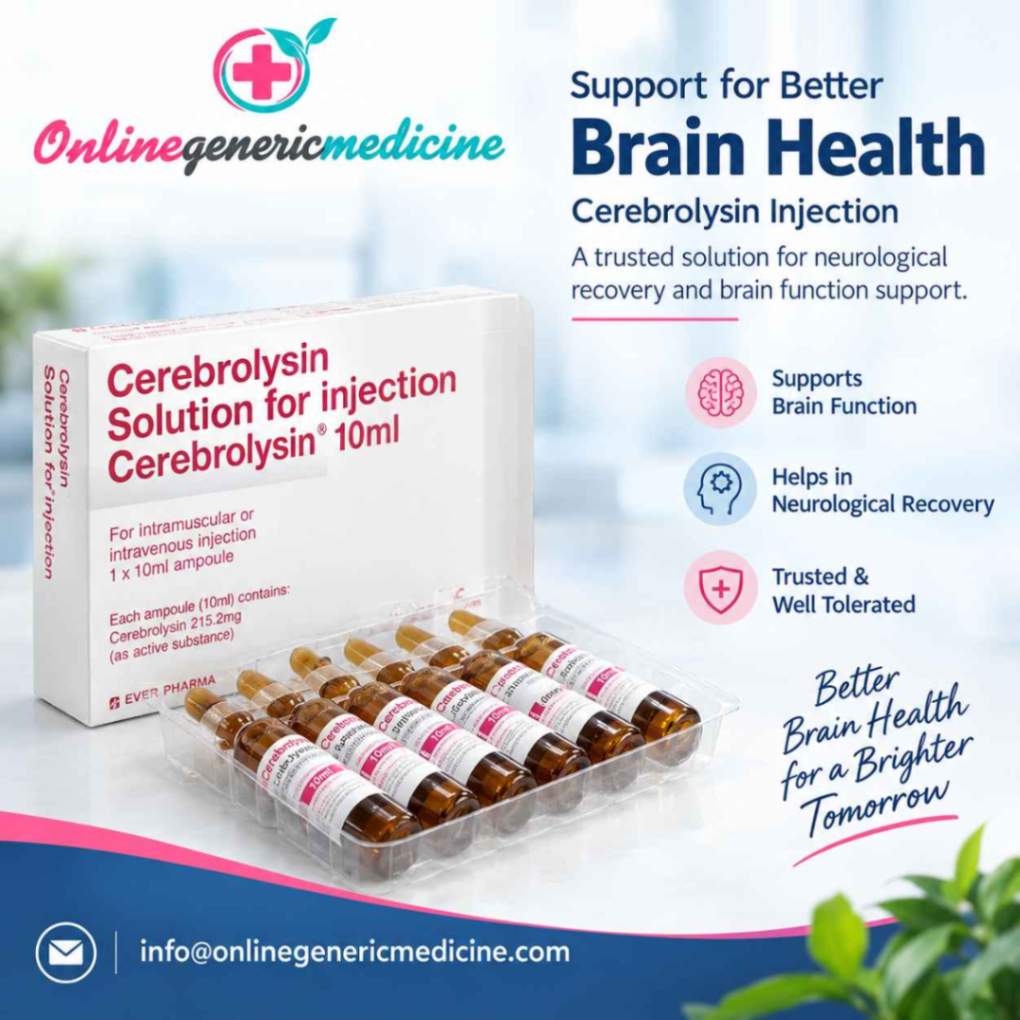
Cerebrolysin is a peptide preparation made from purified porcine (pig) brain proteins. In plain terms, it's a cocktail of small protein fragments that are thought to support the brain's own repair and protection systems. It's not a vitamin, not a "smart drug" it's a prescription injection used in neurology.
What is it used for?
Doctors most often turn to it for conditions where the brain needs a helping hand:
Dementia — including Alzheimer's disease and vascular dementia
Stroke recovery — to support the brain during healing
Traumatic brain injury — as part of rehabilitation
Cognitive decline — in some cases, to support mental function
The idea is that these peptides may help protect neurons, encourage repair, and support communication between brain cells.
How is it given?
It's not a pill you swallow. Cerebrolysin is given as an injection either into a muscle (intramuscular) or a vein (intravenous). The dose and how long you take it depend entirely on your condition and your doctor's judgment. This isn't something you self-prescribe.
What does the evidence actually say?
Here's where it gets honest. Cerebrolysin has been studied for years, and some research suggests benefits in certain neurological conditions. But results are mixed, and it isn't approved everywhere — in many countries it's used off-label or isn't available at all. That's a big reason the conversation around it is so divided.
Cerebrolysin is a fascinating, genuinely interesting medicine but it's also one you should never take lightly. It's a prescription drug with real effects and real side effects (dizziness, headaches, injection-site reactions are among the common ones). If you're curious about it, the right first step isn't Google — it's a conversation with a neurologist who knows your history.
Want to learn more about uses, dosage, side effects, and substitutes? Find detailed, easy-to-read information on Cerebrolysin Injection at Online Generic Medicine.
Comments
Log in or sign up to join the conversation.