
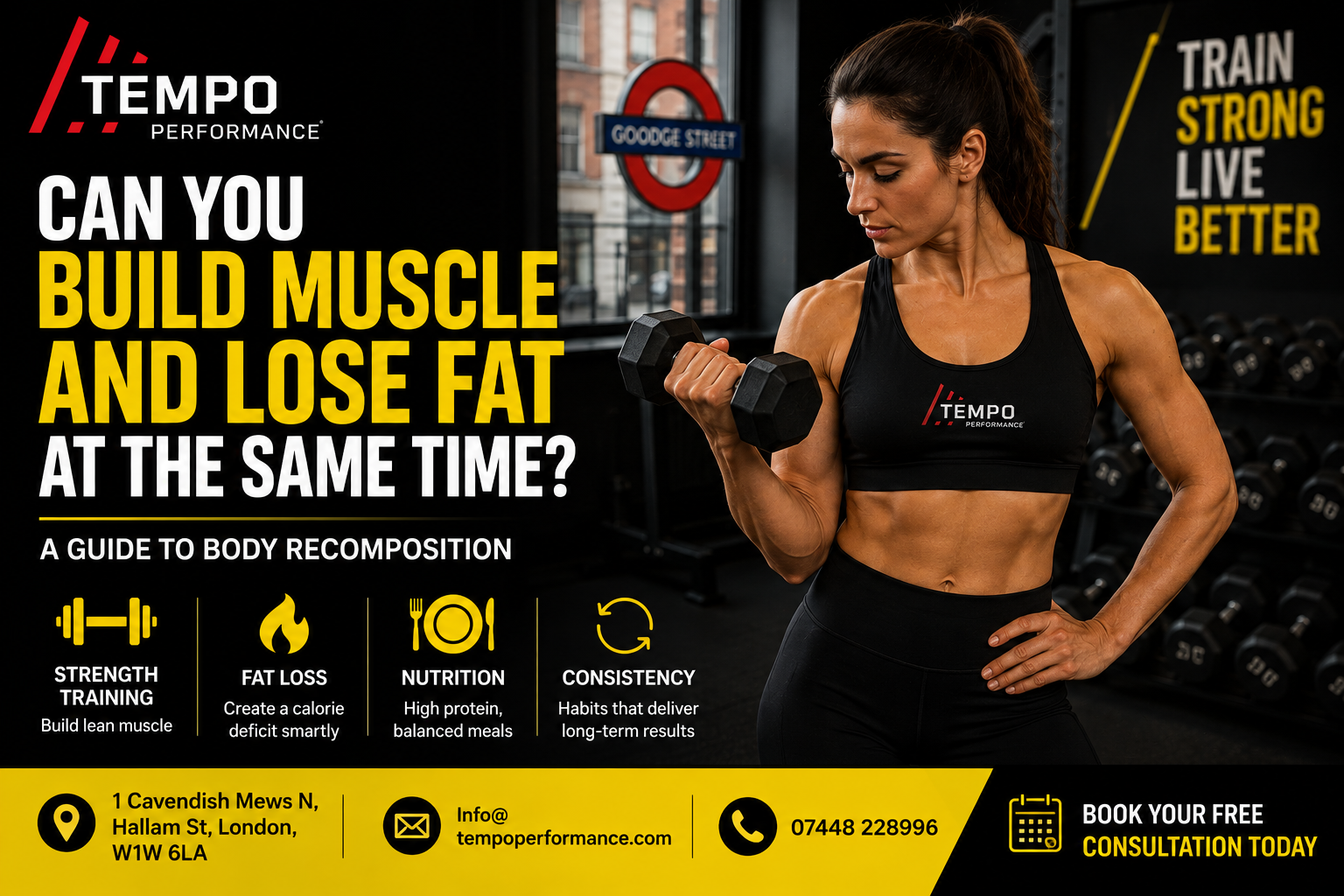
Building muscle while losing body fat can sound contradictory because muscle growth generally requires sufficient energy while fat loss requires an energy deficit. However, under the right circumstances, body recomposition can allow both processes to happen over the same period. Rather than focusing exclusively on making the number on the scales fall, the goal is to improve the proportion of lean muscle to body fat. A personal trainer Fitzrovia can help structure training, nutrition and recovery around this goal instead of relying on aggressive dieting or excessive cardio. For busy professionals in Fitzrovia, a carefully managed approach can also make improving body composition more realistic alongside work and everyday commitments.
What Is Body Recomposition?
Body recomposition is the process of reducing body fat while maintaining or increasing lean muscle mass. Unlike a traditional weight-loss approach, progress is not judged entirely by how many kilograms you lose each week. Someone can lose fat and gain muscle while their total body weight changes relatively slowly, which is why measurements, photographs, strength and how clothes fit can provide useful additional indicators. Successful recomposition generally depends on resistance training, sufficient protein, appropriate calorie intake, recovery and consistency. The objective is to change what your body is made of rather than simply becoming lighter.
Who Can Build Muscle and Lose Fat at the Same Time?
People who are relatively new to structured resistance training are often well positioned to experience body recomposition because their muscles have significant potential to adapt to a new training stimulus. Someone returning to strength training after a long break may also regain muscle while reducing body fat. People with higher levels of body fat can sometimes make progress in both directions when training and nutrition are managed appropriately. More experienced lifters may find simultaneous muscle gain and fat loss progressively harder because they are already closer to their muscular potential. Your starting point therefore matters when setting realistic expectations about the speed and extent of recomposition.
Strength Training Is the Foundation of Body Recomposition
If you want to build muscle while losing fat, resistance training needs to provide a strong enough stimulus for your body to retain and develop muscle tissue. This usually means prioritising movements that train the major muscle groups and gradually increasing the challenge as your ability improves. Progress can involve adding weight, completing additional repetitions, improving technique or increasing the quality of work performed within an appropriate training volume. A well-designed personalised training programme can organise these variables around your current ability, schedule and specific body-composition goals. For body recomposition, the quality and progression of your strength training generally matter more than simply trying to burn as many calories as possible.
Progressive Overload Matters More Than Random Hard Work
Muscles adapt when they are repeatedly given an appropriate reason to become stronger. Progressive overload provides that stimulus by gradually increasing training demands instead of repeating identical workouts indefinitely. This does not mean adding weight to every exercise during every session, because progression can also involve repetitions, range of motion, control and technique. The key is having a measurable training structure so you know whether your performance is genuinely improving over time. If you want to understand this approach further, How to Make Every Workout Count explains why purposeful training can be more valuable than simply accumulating gym sessions.
Do You Need a Calorie Deficit for Body Recomposition?
Losing body fat ultimately requires your body to use more stored energy over time, but the size of the calorie deficit matters when muscle retention or growth is also a priority. An aggressive deficit can make training harder, reduce recovery and increase the risk of losing lean mass alongside body fat. A smaller and more sustainable energy deficit may provide a better environment for body recomposition, particularly when combined with sufficient protein and progressive resistance training. Your calorie needs will vary according to body size, activity, training volume and individual goals, so copying somebody else's diet is rarely ideal. The objective is to create enough of an energy deficit to support fat loss without unnecessarily compromising performance and recovery.
Do You Need to Keep Eating Less to Lose Fat?
Eating progressively smaller amounts is not automatically the fastest or most sustainable way to improve body composition. Severe restriction can leave you tired, hungry and less capable of performing the resistance training needed to protect muscle. Instead, meals can be structured around appropriate portions, sufficient protein, nutrient-dense foods and an overall calorie intake that supports the intended rate of fat loss. Tempo Performance's guide Do You Need to Eat Less to Lose Body Fat? explores why effective fat loss requires more thought than simply cutting food as aggressively as possible. Sustainable body recomposition depends on nutrition that you can follow consistently while still training effectively.
Protein Plays a Major Role in Building and Maintaining Muscle
Protein provides amino acids that the body uses to repair and build muscle tissue following resistance training. When calories are restricted, consuming sufficient protein becomes particularly important because you are trying to maintain or increase muscle while reducing stored body fat. Rather than consuming most of your protein in one meal, spreading protein-containing foods throughout the day can make it easier to meet your overall intake. Suitable choices can include lean meat, fish, eggs, dairy products, tofu, legumes and other protein-rich foods according to your dietary preferences. A personalised diet plan can help organise nutrition around your training schedule, lifestyle and body-composition objective without relying on unnecessarily restrictive rules.
What Should You Eat Before Training?
Pre-workout nutrition should help you train effectively rather than leave you feeling heavy, hungry or low on energy. A meal containing carbohydrate and protein can be useful before resistance training, although the amount and timing depend on your preferences and how close the meal is to your session. Carbohydrates can support training performance, while protein contributes to the overall daily intake required for muscle repair and adaptation. If you are unsure about timing and food choices, what should you eat before a workout? provides practical guidance for planning meals around exercise. Better training performance can support body recomposition because productive strength sessions provide the stimulus needed to maintain and develop muscle.
Does Cardio Stop You From Building Muscle?
Cardiovascular exercise does not automatically prevent muscle growth and can be useful for general fitness, heart health and energy expenditure. Problems are more likely to arise when excessive cardio creates fatigue that interferes with strength performance, recovery or the ability to maintain sufficient nutrition. The appropriate amount therefore depends on your current fitness, training schedule, goals and recovery capacity. Walking and moderate cardiovascular work can often complement resistance training without turning every week into an endurance programme. For body recomposition, cardio should support the overall plan rather than replace the strength training responsible for maintaining and developing muscle.
Your Workout Does Not Need to Destroy You
Sweating heavily, feeling sore for several days or finishing every session completely exhausted does not prove that a workout was effective. Productive training should create enough stimulus to drive adaptation while still allowing you to recover and perform well in subsequent sessions. Constantly training to exhaustion can make progression harder, particularly when you are already eating fewer calories to reduce body fat. Does a Good Workout Have to Leave You Exhausted? explains why training quality should not be measured purely by how uncomfortable you feel afterwards. A structured body recomposition programme balances effort with recovery instead of treating exhaustion as the objective.
Recovery Can Determine Whether Your Plan Works
Muscle is not built simply by performing more exercises; adaptation occurs when your body has sufficient opportunity to recover from the training stimulus. Sleep quality, rest days, stress levels and overall nutrition can all influence your ability to perform consistently and maintain muscle during fat loss. Poor recovery can reduce training performance and make hunger, fatigue and motivation more difficult to manage. This is especially relevant for busy professionals trying to fit training around long working hours and demanding schedules. A personal trainer Fitzrovia can help structure training volume and frequency around your actual lifestyle rather than designing a programme that only works under perfect circumstances.
How Many Strength Sessions Do You Need Each Week?
You do not necessarily need to train six or seven days per week to achieve meaningful results. Many people can make progress with several well-structured resistance sessions each week, provided the major muscle groups receive sufficient training stimulus and progression. The ideal frequency depends on training experience, available time, recovery, exercise selection and the total amount of work completed across the week. Someone with a demanding work schedule may achieve better results from three consistent sessions than from an ambitious six-day plan they repeatedly miss. Consistency is particularly important for body recomposition because meaningful changes in muscle and body fat develop over weeks and months rather than individual workouts.
Why the Scales Can Be Misleading During Body Recomposition
Scale weight alone cannot tell you whether a change has come from body fat, muscle, water or other short-term fluctuations. If you are losing fat while gaining some muscle, your appearance and measurements may change even when body weight remains relatively stable. Waist measurements, progress photographs, clothing fit and improvements in strength can therefore provide useful additional information. Daily fluctuations in hydration, carbohydrate intake, sodium and digestion can also temporarily move scale weight without representing meaningful changes in body fat. Successful body recomposition requires looking at longer-term trends rather than allowing one morning's weigh-in to determine whether the programme is working.
How Long Does Body Recomposition Take?
Body recomposition is a gradual process, and noticeable changes generally require consistent training and nutrition over an extended period. Beginners and people returning to resistance training may initially progress faster than experienced trainees, although individual responses differ considerably. Genetics, sleep, nutrition, training history, starting body composition and adherence can all affect the rate of progress. Instead of expecting a dramatic transformation within a few weeks, it is more useful to assess trends across several months. A personal trainer Fitzrovia can monitor strength, measurements, training performance and other indicators to determine whether the programme needs adjusting.
Common Mistakes That Can Slow Your Progress
One common mistake is creating such a large calorie deficit that strength, energy and recovery deteriorate. Another is constantly changing workouts, which makes it difficult to measure progressive overload or determine whether exercises are actually producing results. Insufficient protein, poor sleep and excessive cardio can also make preserving or building muscle more difficult during a fat-loss phase. Some people focus almost entirely on calories burned during individual sessions rather than improving their strength and maintaining consistent daily habits. Effective body recomposition comes from coordinating training, nutrition and recovery rather than looking for one exercise or dietary shortcut.
Can a Personal Trainer Help With Body Recomposition?
Coaching can be particularly useful when you are unsure how much to eat, how frequently to train or whether your programme is progressing appropriately. A personal trainer Fitzrovia can structure resistance training around your starting point and adjust exercises, volume and progression as your performance changes. Coaching also provides accountability and helps identify situations where poor recovery, inconsistent nutrition or an unrealistic schedule is slowing progress. Instead of relying on generic workouts, the programme can be adapted around your goals, experience, injuries or limitations and available training time. This can make body recomposition more manageable for people who want a clear strategy rather than repeatedly switching between bulking and restrictive dieting.
Can You Really Lose Fat and Build Muscle at the Same Time?
Yes, building muscle while losing fat can be achievable, particularly for beginners, people returning to strength training and individuals with sufficient body fat to lose. The process requires an appropriate calorie intake, sufficient protein, progressive resistance training and enough recovery to support adaptation. More experienced lifters may need to accept slower progress or use dedicated muscle-gain and fat-loss phases as they approach their potential. Body recomposition should therefore be treated as a structured long-term process rather than a promise of rapid transformation. If you are based in Fitzrovia and want a training approach built around your body-composition goals, working with a personal trainer Fitzrovia can help you turn those goals into a practical and measurable programme.
Comments
Log in or sign up to join the conversation.