

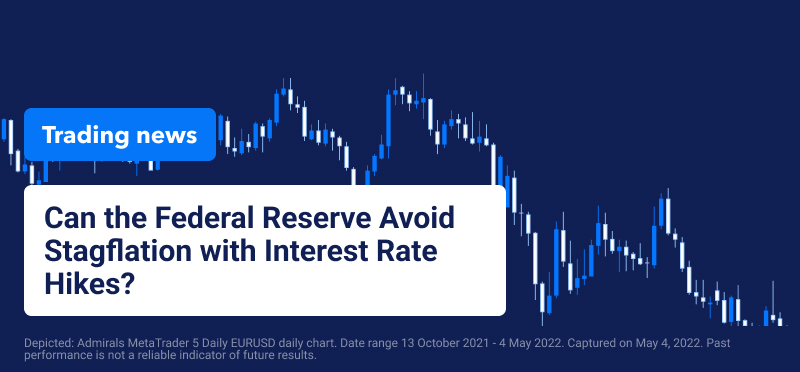
The US Federal Reserve faces economic headwinds during today’s interest rate decision with high inflation and lower growth leading to the risk of stagflation. The only thing missing from the stagflation scenario is high unemployment. So far this year, job growth in the US has been resilient and there will be more information about the health of the labor market with the ADP results today and the Non-Farm Payrolls figures released this Friday, May 6.
It appears that the monetary policymakers for the world’s largest economy have little choice but to keep raising interest rates to keep inflation in check. Will this course of action tamp down inflation enough to avoid stagflation or end up making the situation more difficult?
As the US and global economies recover from the pandemic downturn, inflation triggered by geopolitical events clouds the outlook. It’s clear that the Federal Reserve must raise interest rates, but the size of the increase is the big question. Too much, too fast could undermine confidence and investment in job creation and that would most likely lead to stagflation. A period of stagflation would impact the risks for US sovereign bonds, meaning that the Federal Reserve’s policy balances on a tightrope with a long drop below.
Today, USD traders are pricing in an interest rate hike of 0.5 percent to 0.75 percent from the current level of 0.5 percent. Any surprises would likely mean volatility for the USD which has followed an upward trend since the beginning of the year. The ISM Services PMI report for the US is also due out today, providing more clues as to the health of the economy.

Comments
Log in or sign up to join the conversation.