

Barron's this week had its semiannual "Big Money Poll" that included the following chart.
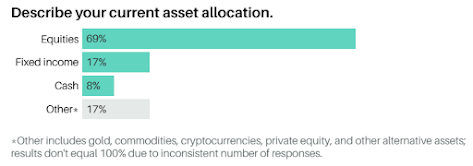
Avoiding or being underweight for a duration seems to be catching on. Part of the message from the chart is trying to find different ways, other than bonds, to try to manage or offset equity volatility. To that end, Man Group took a look at "equity market neutral as a more effective diversifier." By their work, market-neutral strategies do well during periods of higher inflation. They made a fundamental connection to higher costs for capital (higher interest rates). The argument wasn't that compelling but leave a comment if you think otherwise. Maybe market neutral does better, it's less about market neutral and more about bond prices dropping due to higher yields typically associated with higher price inflation.
While I did not take Man to say 60% equities/40% market neutral, let's see what that looks like. Similar to managed futures, if you want to go heavy into market neutral, diversify your diversifiers; there can be idiosyncratic risks with these strategies.
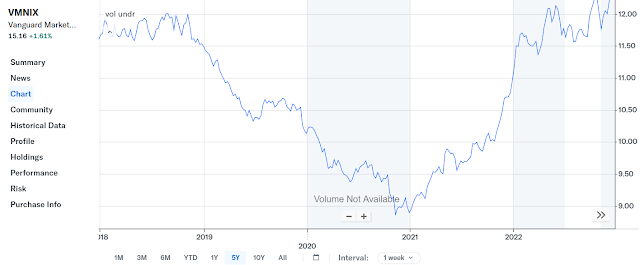
Vanguard Market Neutral (VMNIX) was anything but in the period charted.
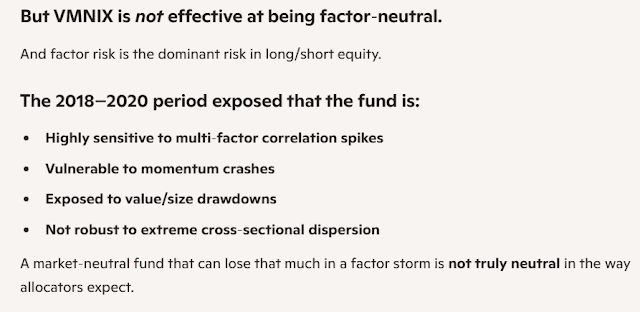
Here's part of the story from Copilot;
Here are four funds that have less violent histories.
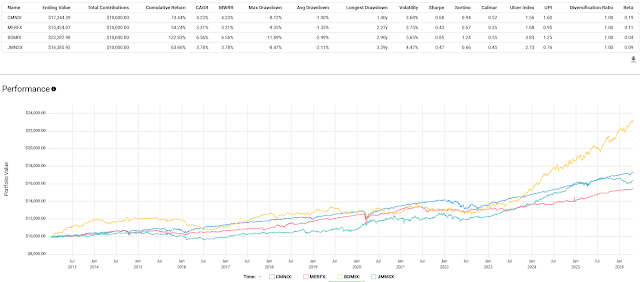
The Merger Fund (MERFX) is in my ownership universe. One fund that I excluded was AQR Market Neutral (QMNIX). It also looked very un-neutral at the same time as VMNIX.
Taking all four and weighting them each at 10% to create a 60/40 looks like the following;
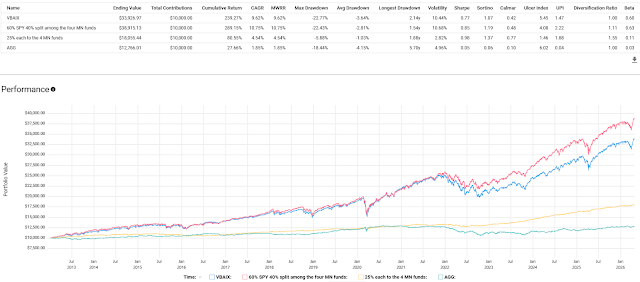
Portfolio 2 looks just like VBAIX until bonds with duration start to have problems in late 2021, then it pulls away, going down less in 2022, and has outperformed VBAIX by varying degrees every year since.
Hold on, though. The result for the Blackrock Global Equity Market Neutral Fund (BDMIX) seems to have a much better result than the others. That sort of outlier, even if it's good, should prompt a closer look. Why has it done so much better? Is it taking a risk for which there has been no consequence yet?
Copilot has thoughts.
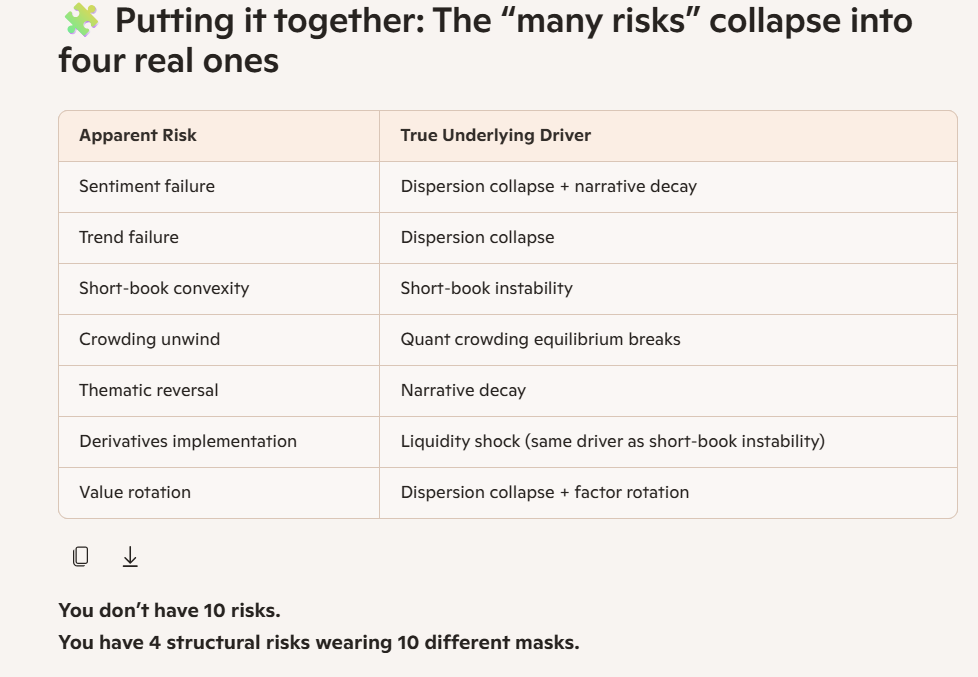
It really spat out a lot of information. I think this screen grab summarizes most of it. Maybe for a 10% portfolio weight, it's worth the risk or maybe the weighting to that one can be reduced somewhat, but part of the process for considering an alternative strategy is to take some time to understand the why behind the performance, not just look at the performance. Assuming Copilot has it right, getting to the bottom of a fund like this probably wasn't possible before AI. Copilot does similar things, looking across various managed futures funds to quickly isolate risk weightings and signal speed.

Comments
Log in or sign up to join the conversation.