

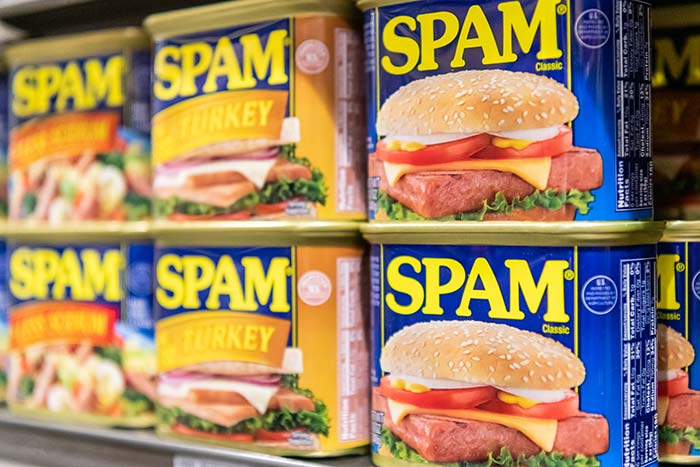
Hormel Foods (NYSE: HRL) is best known for Spam. Not the email kind − the meat in a can.
Aside from processed meats, Hormel also owns Skippy peanut butter, Planters peanuts, and Jennie-O turkey products.
Income investors may know Hormel for its tasty 5.8% dividend yield.
But is Hormel’s dividend as consistent as Spam?
Despite flat revenue in 2025, earnings and cash flow were sharply lower due to things like losses on equity investments, asset write-downs, and restructuring charges.
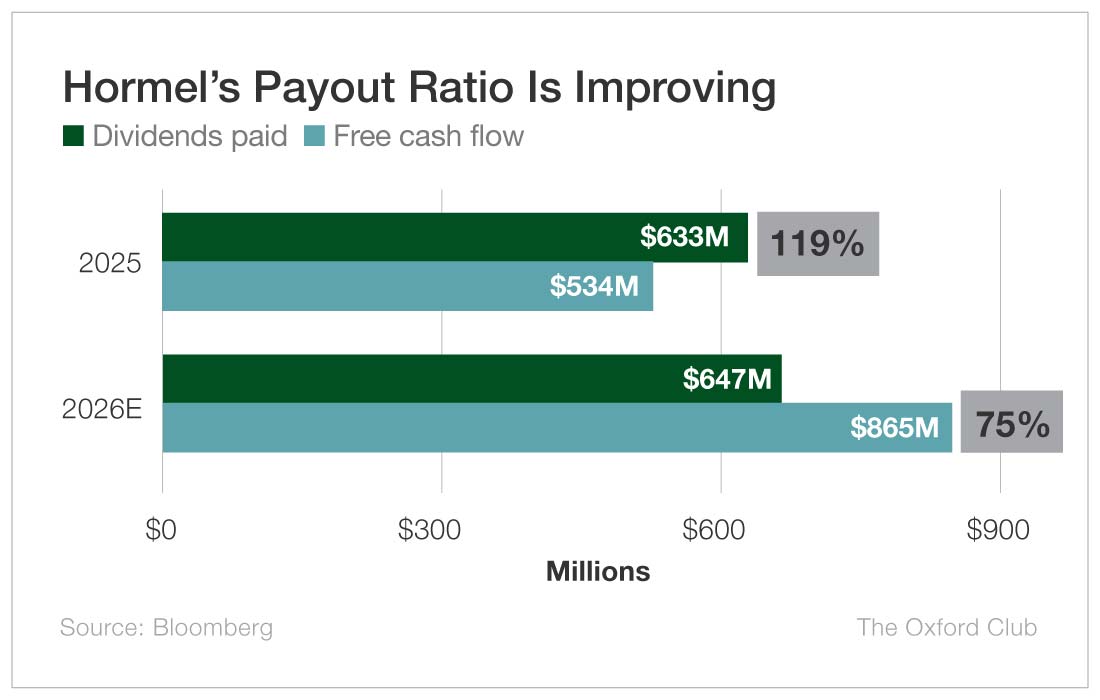
Free cash flow fell to $534 million last year, nearly half of the $1 billion total in 2024 and well below the $856 million from 2022.
That’s a problem, because Safety Net considers one- and three-year free cash flow growth in its grading of dividend safety.
Another negative is that last year, the company paid $633 million in dividends for a payout ratio of 119%.
In other words, it paid shareholders $1.19 for every $1 of free cash flow it generated. That’s not sustainable.
On a more positive note, free cash flow is forecast to grow again in 2026, to $865 million.
Hormel is projected to pay $647 million in dividends this year for a payout ratio of 75%, right at the limit of my comfort level. Anything at or below 75% is fine. Above it, and there is another downgrade.
Hormel has an impressive track record of raising its dividend. The company has boosted the payout to shareholders every year since it began paying dividends in 1989. That’s a 36-year commitment to annual increases.
That should not be ignored.
The sharply lower free cash flow numbers in 2025 cause the dividend safety rating to get a little banged up. But the fact that the company has raised the dividend through the dot-com crash, the global financial crisis, and the COVID-19 pandemic makes me believe that the dividend is not as weak as the safety rating indicates, particularly if Hormel grows free cash flow this year as expected.
And remember, the falling cash flow was due to one-time charges, not a deteriorating business.
Though the safety rating is only middle-of-the-road, I’m not particularly worried about Hormel’s dividend over the next 12 months.
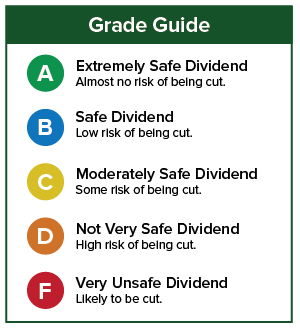
Dividend Safety Rating: C
Comments
Log in or sign up to join the conversation.