
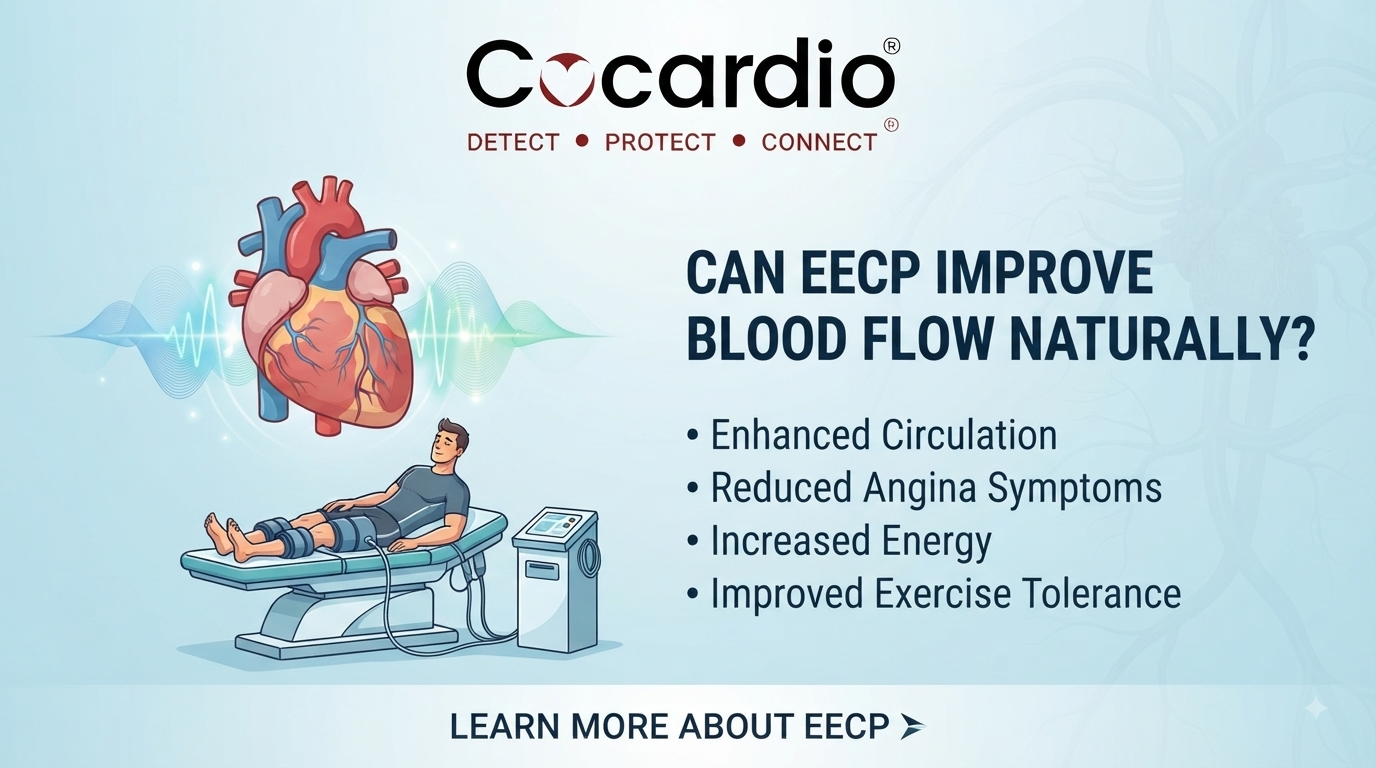
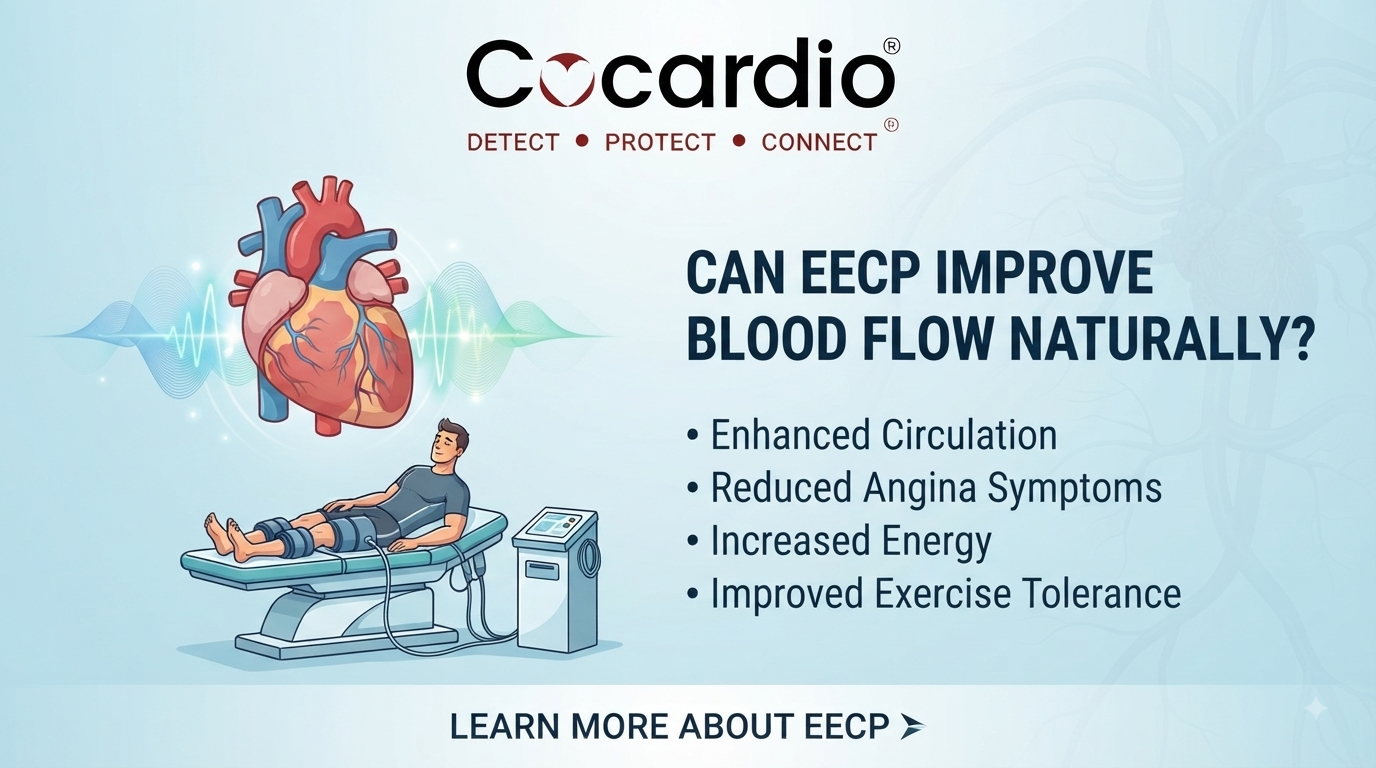
When blood flow to the heart becomes limited, everyday activities such as walking, climbing stairs, or exercising may become more difficult. People living with coronary artery disease may therefore look for noninvasive ways to support circulation alongside their established medical care. One option is EECP for coronary artery disease prevention, although EECP should more accurately be viewed as a circulation-focused therapy rather than a guaranteed method of preventing coronary artery disease. Enhanced External Counterpulsation uses precisely timed pressure around the lower body to influence circulation without surgery or an implanted device. Understanding what EECP can and cannot do is important before deciding whether it belongs in an individual heart-care plan.
What Is EECP Therapy?
Enhanced External Counterpulsation, commonly known as EECP, is a noninvasive therapy that uses inflatable cuffs placed around the lower body. The cuffs inflate and deflate in coordination with the heartbeat while the patient's cardiovascular activity is monitored. Inflation occurs during a specific part of the cardiac cycle to augment blood flow back toward the heart, followed by rapid deflation before the next heartbeat. No catheter, surgical incision, or implanted device is required during the procedure. This makes EECP fundamentally different from procedures such as coronary angioplasty, stenting, or bypass surgery.
Why Is EECP Described as Noninvasive?
EECP works externally, which means nothing is inserted into the arteries or heart. Patients remain awake during treatment while the cuffs repeatedly apply and release pressure around the legs and lower body. Because of this mechanism, people sometimes describe EECP as a more “natural” way to support circulation, although that wording should not imply that it is simply a lifestyle remedy. It is a structured medical therapy that requires appropriate screening and supervision. Anyone searching for EECP therapy near me should first determine whether the treatment is appropriate for their cardiovascular condition.
How Does EECP Affect Blood Flow?
EECP is designed to alter blood-flow dynamics during each heartbeat. When the cuffs inflate sequentially during diastole, they help move blood from the lower body toward the heart and increase diastolic pressure. Immediately before the heart contracts again, the cuffs rapidly deflate, which can reduce resistance against the next heartbeat. Repeating this process over multiple sessions exposes the vascular system to changes in blood flow and shear stress. Research has associated EECP with improvements in endothelial function, although the magnitude and clinical significance can vary between individuals.
What Is Endothelial Function?
The endothelium is the thin layer of cells lining the inside of blood vessels. Healthy endothelial function helps blood vessels respond appropriately to changes in blood flow and contributes to normal vascular regulation. Coronary artery disease and several cardiovascular risk factors can impair this function. Research has investigated whether EECP-induced changes in blood flow and shear stress can improve endothelial responses. This is one proposed mechanism through which EECP may provide cardiovascular benefits beyond the immediate effects occurring during a treatment session.
Can EECP Improve Circulation to the Heart?
EECP may help improve certain aspects of cardiovascular circulation in appropriately selected patients. Studies have reported improvements in endothelial function, exercise tolerance, and angina-related symptoms following a course of treatment. However, individual responses vary, and improved circulation should not be interpreted as proof that coronary blockages have disappeared. EECP does not mechanically open a narrowed coronary artery in the same way that angioplasty and stenting do. Its potential benefits are related to circulatory and vascular responses rather than physically removing plaque.
Does EECP Increase Blood Flow During Treatment?
The timing of cuff inflation is designed to increase pressure during diastole, when the coronary arteries receive much of their blood supply. This produces an immediate hemodynamic effect while the treatment is taking place. Repeated exposure may also influence vascular function over a complete treatment course. Researchers continue to investigate how these short-term and longer-term mechanisms contribute to symptom improvement. The effects should always be interpreted in the context of the patient's underlying cardiovascular disease.
What Does EECP Have to Do With Collateral Circulation?
Collateral circulation refers to alternative vascular pathways that can help supply tissue when normal blood flow is limited. The body can sometimes recruit or develop these pathways in response to cardiovascular demand and ischemia. EECP has been studied for its possible influence on mechanisms associated with collateral circulation and vascular adaptation. This has led to descriptions of the therapy as encouraging the body's existing circulatory capacity. However, patients should be cautious about interpreting this as a guarantee that EECP will create a complete “natural bypass.”
Can EECP Create New Blood Vessels?
The biology is more complicated than simply saying EECP grows new arteries. Repeated changes in shear stress may influence endothelial signaling and processes involved in vascular adaptation. Some research has examined factors related to angiogenesis and collateral development following EECP. These findings help explain why researchers remain interested in the therapy's longer-term circulatory effects. They do not mean that every patient will develop new vessels or that EECP can replace medically necessary coronary revascularization.
Can EECP Help People With Coronary Artery Disease?
People with stable coronary artery disease and persistent symptoms are among the populations in which EECP has been studied. Current cardiovascular guidance recognizes enhanced external counterpulsation as an option that may be considered for symptom relief in selected people with refractory angina when other treatment options are unavailable. A person considering EECP for coronary artery disease prevention should therefore understand that EECP is better established as a potential symptom-management therapy than as a stand-alone method for preventing CAD. Coronary disease still requires management of underlying risk factors and appropriate medical care. EECP should complement rather than replace those measures.
What Is Refractory Angina?
Refractory angina refers to persistent ischemic chest discomfort that continues despite appropriate medical management and when conventional revascularization options may be limited or unavailable. Symptoms can interfere significantly with walking, exercise, work, and quality of life. Before labeling symptoms as refractory angina, clinicians need to evaluate whether the discomfort is actually related to myocardial ischemia. Other cardiac and non-cardiac conditions can cause similar symptoms. Appropriate diagnosis therefore comes before deciding whether EECP should be considered.
Can EECP Improve Exercise Tolerance?
Research has reported improvements in exercise tolerance among some patients receiving EECP. If angina occurs less frequently or at higher levels of exertion, activities such as walking may become easier for certain patients. Improved exercise capacity can be meaningful because physical activity is an important component of cardiovascular health when medically appropriate. However, people with coronary artery disease should follow individualized exercise recommendations rather than suddenly increasing activity after treatment. Changes in exercise tolerance should be discussed with the healthcare team.
Why Does Exercise Capacity Matter?
Reduced exercise capacity can significantly affect independence and quality of life. Someone who experiences symptoms after a short walk may begin avoiding activity, which can contribute to further deconditioning. Improving symptom control may make appropriate physical activity easier to maintain. Exercise itself has established cardiovascular benefits when performed safely and according to medical guidance. EECP should therefore be considered within a broader cardiovascular plan rather than as an isolated solution.
Can EECP Reduce Angina?
Symptom relief is one of the primary reasons EECP has been used in people with refractory angina. Some patients report fewer angina episodes or improved ability to perform daily activities after completing treatment. This does not mean the underlying coronary disease has been cured. Symptoms and disease progression are related but distinct clinical issues. A patient who feels better still needs appropriate follow-up and cardiovascular risk management.
Feeling Better Does Not Mean Plaque Has Disappeared
This distinction is particularly important when discussing EECP for coronary artery disease prevention. EECP does not physically extract cholesterol deposits or clear plaque from coronary arteries. Symptom improvement may occur through changes in circulation, vascular function, cardiac workload, or other physiological mechanisms. Coronary atherosclerosis can remain present even when symptoms improve. Preventive cardiovascular care must therefore continue regardless of how a person responds to EECP.
Can EECP Reverse Heart Disease Naturally?
The phrase reverse heart disease naturally is commonly searched by people hoping to avoid invasive procedures or long-term cardiovascular complications. However, “reverse” can be misleading when applied broadly to coronary artery disease. EECP should not be promoted as a proven method for eliminating atherosclerotic plaque or curing heart disease. Cardiovascular risk can often be reduced through evidence-based medical treatment and lifestyle changes, while some disease markers may improve with intensive risk-factor management. The safest goal is improving cardiovascular health and reducing risk rather than promising complete reversal.
What Can Support Long-Term Heart Health?
Healthy eating, appropriate physical activity, smoking cessation, blood-pressure control, cholesterol management, diabetes care, sleep, and stress management can all contribute to cardiovascular health. The right combination depends on an individual's medical history and risk profile. Prescribed medications can also play a crucial role in reducing cardiovascular risk and should not be discontinued without medical guidance. EECP may complement these strategies for selected patients rather than replace them. Long-term cardiovascular care works best when multiple risk factors are addressed together.
Is EECP Drug-Free?
EECP itself does not require a drug to produce the external counterpulsation effect. That can make the treatment appealing to people interested in non-pharmacological approaches. However, being drug-free does not mean patients should stop their prescribed cardiovascular medications. Statins, antiplatelet therapies, blood-pressure medications, antianginal medications, and other treatments may remain important depending on the individual's condition. Any medication changes should be made only with the prescribing healthcare professional.
EECP Should Complement Standard Care
The strongest way to view eecp treatment is as one potential component of a broader cardiovascular strategy. It does not replace emergency treatment, diagnostic testing, medications, stenting, or bypass surgery when those interventions are clinically necessary. Patients should continue working with their cardiologist or primary care professional throughout treatment. Coordination is particularly important for people with complex coronary disease. Noninvasive care and conventional cardiovascular medicine do not need to be treated as competing approaches.
Who May Be a Candidate for EECP?
Potential candidates can include certain people with chronic stable or refractory angina who continue to experience symptoms despite appropriate treatment. Some may previously have undergone coronary stenting or bypass surgery, while others may have limited options for further revascularization. Medical history, blood pressure, heart rhythm, vascular health, valve function, and other factors can affect suitability. Candidate selection therefore requires an individualized assessment. Simply having coronary artery disease does not automatically mean EECP is appropriate.
Why Screening Matters Before Treatment
EECP creates repeated changes in blood pressure and circulation, so cardiovascular screening is important before beginning therapy. Certain medical conditions may make treatment unsuitable or require additional precautions. A responsible provider should review symptoms, medical history, current treatment, and relevant cardiovascular information before recommending therapy. This is especially important for patients with multiple cardiovascular diagnoses. Screening helps determine whether the potential benefits reasonably outweigh the risks.
What Happens During an EECP Session?
During a typical session, inflatable cuffs are placed around the patient's lower body and connected to specialized equipment. Monitoring allows cuff inflation and deflation to synchronize with the heartbeat. Patients remain awake, and there are no surgical incisions or catheter insertions. The pressure from the cuffs is noticeable and repeatedly cycles throughout the session. Treatment is normally delivered as a series of sessions rather than a single appointment.
How Long Is a Typical EECP Course?
A commonly studied EECP protocol involves approximately 35 hours of therapy delivered over several weeks. The exact schedule can vary according to clinical circumstances and provider protocols. Because treatment requires repeated visits, convenience can become an important practical factor. This is one reason people often search for EECP therapy near me when considering treatment. Patients should ask about the complete schedule before committing to a course.
How Quickly Can You Notice a Difference?
There is no universal point at which every patient begins noticing changes. Some people may report symptom improvements during the treatment course, while others may notice changes later or experience limited benefit. Cardiovascular condition, symptom severity, adherence, and individual physiology can all influence response. Providers should monitor meaningful outcomes rather than promise a particular timeline. Improvements in walking tolerance, angina frequency, or daily activity may be more useful measures than subjective impressions alone.
How Should Progress Be Tracked?
Patients can keep track of how frequently angina occurs, which activities trigger symptoms, and whether their ability to perform everyday tasks changes. Exercise tolerance may also provide useful information when assessed safely. Medication use and other cardiovascular measures may need monitoring by the medical team. Tracking symptoms consistently makes it easier to discuss whether treatment is providing meaningful benefit. Objective assessment is preferable to assuming every change is caused by EECP.
What Are the Potential Side Effects?
EECP is noninvasive, but noninvasive does not mean risk-free. Some patients can experience skin irritation, bruising, leg discomfort, muscle soreness, or fatigue from repeated cuff pressure. Other medical considerations depend on the patient's cardiovascular and vascular condition. Any unusual symptoms during treatment should be reported promptly. Appropriate screening and monitoring help reduce avoidable risks.
Is EECP Painful?
The cuff pressure can feel intense, particularly during early sessions, but treatment experience varies between individuals. Patients should communicate discomfort rather than assuming pain is expected or necessary for the therapy to work. Adjustments may sometimes improve comfort while maintaining treatment goals. Skin should also be monitored because repeated cuff pressure can cause irritation. A treatment team should explain what sensations are expected before the first session.
What Is the Difference Between EECP and a Stent?
A coronary stent is inserted through a catheter to physically open a narrowed section of an artery. EECP does not enter or mechanically open the coronary arteries. Instead, it uses external pressure synchronized with the heartbeat to influence circulation. These treatments therefore serve different clinical purposes and should not be treated as interchangeable. If a cardiologist recommends urgent or necessary revascularization, EECP should not be used simply to avoid the recommended procedure.
What Is the Difference Between EECP and Bypass Surgery?
Bypass surgery creates a new route for blood around severely narrowed or blocked coronary arteries using grafted blood vessels. EECP does not create a surgical graft and requires no chest incision. It may be considered for selected patients with refractory angina when additional treatment options are limited. This makes it potentially valuable in a specific clinical context rather than universally preferable to surgery. Treatment decisions should always reflect coronary anatomy, symptoms, risk, and medical guidance.
How Much Does EECP Cost?
EECP therapy cost can vary according to the provider, treatment course, clinical indication, and insurance coverage. Some patients may qualify for coverage under particular circumstances, while others may face different out-of-pocket costs. Insurance policies and medical-necessity requirements can also change. Patients should verify coverage directly with their insurer and treatment provider before beginning therapy. Asking for a clear estimate in advance can prevent unexpected financial concerns.
How Do You Choose an EECP Provider?
Start by looking for a provider that conducts appropriate screening and clearly explains both the potential benefits and limitations of treatment. Avoid claims that EECP guarantees the reversal of coronary artery disease, permanently clears blocked arteries, or eliminates the need for established cardiovascular treatment. When comparing eecp therapy centers, ask who evaluates candidacy, how treatment is monitored, and how the provider coordinates with existing cardiology care. Transparency about contraindications and realistic outcomes is just as important as convenience. Heart care should always be based on individual clinical circumstances.
Why Location Can Matter
EECP generally involves repeated appointments over several weeks, making travel time an important consideration. A nearby center can make completing the recommended course more practical. Patients in Encinitas and the greater San Diego area may therefore prioritize options that reduce repeated long-distance travel. Searching for EECP therapy near me can help identify local services, but proximity should never replace clinical quality as the main selection criterion. Appropriate screening and experienced care remain essential.
Can EECP Be Part of Coronary Artery Disease Prevention?
The wording around prevention requires care because EECP is not established as a stand-alone method for preventing coronary artery disease. EECP for coronary artery disease prevention may be a useful search phrase for people exploring noninvasive cardiovascular options, but proven prevention strategies still center on controlling major risk factors. Blood pressure, cholesterol, smoking, diabetes, nutrition, and physical activity deserve ongoing attention. Medications may also be essential depending on individual cardiovascular risk. EECP can potentially support symptom management and circulation in selected patients within this broader framework.
Prevention Starts Before Symptoms Become Severe
Coronary artery disease can progress for years before symptoms become obvious. Regular medical care can help identify elevated blood pressure, cholesterol abnormalities, diabetes, and other cardiovascular risk factors earlier. People with established coronary disease need ongoing follow-up even when they feel well. Lifestyle improvements are most valuable when maintained consistently rather than introduced only after symptoms worsen. Prevention is a long-term process rather than a single therapy.
Frequently Asked Questions
Does EECP Really Improve Blood Flow?
EECP is designed to alter blood-flow dynamics during treatment, and research has associated courses of EECP with improvements in vascular endothelial function and exercise tolerance in some patient groups. Individual clinical responses vary. Improved vascular function should not be interpreted as proof that coronary plaque has disappeared. The most appropriate outcomes to assess depend on why the patient is receiving treatment. A cardiovascular professional can help determine whether EECP is suitable.
Does EECP Clear Blocked Arteries?
No. EECP does not mechanically remove plaque or open a blocked coronary artery. Stenting and bypass surgery work through fundamentally different mechanisms. EECP may influence circulation, endothelial function, and symptoms in selected patients. Claims that it simply “cleans” the arteries should be treated cautiously. Coronary artery disease still requires evidence-based risk management.
Is EECP a Natural Treatment?
EECP is drug-free and noninvasive, but it is still a medical treatment delivered using specialized equipment. Calling it “natural” can therefore create the wrong impression. A more accurate description is a noninvasive external counterpulsation therapy that uses the body's circulatory responses rather than surgery or an implanted device. It should still be provided after appropriate clinical screening. Natural does not automatically mean safer or more effective.
Can EECP Replace Heart Medication?
No. Patients should not stop prescribed cardiovascular medication because they begin EECP. Medications may be treating cholesterol, blood pressure, angina, clotting risk, diabetes, or other important factors. EECP does not perform those same functions. Any medication change should be discussed with the prescribing clinician. Treatment works best when the complete cardiovascular plan is considered.
Can EECP Prevent a Heart Attack?
EECP should not be promoted as a guaranteed method of preventing heart attacks. Its guideline-recognized role is more specifically related to symptom relief for selected patients with refractory angina and limited other treatment options. Heart-attack prevention requires management of established cardiovascular risk factors and appropriate evidence-based treatment. Patients with coronary artery disease should continue regular medical follow-up. Feeling fewer symptoms does not necessarily mean cardiovascular risk has disappeared.
Exploring EECP in Encinitas
For people interested in circulation-focused, noninvasive cardiovascular support, CoCardio provides information about EECP for coronary artery disease prevention and External Counterpulsation services in Encinitas, California. CoCardio describes its approach as prevention-focused and designed to work alongside existing cardiology care rather than replace it. Patients can explore whether their symptoms, medical history, and cardiovascular circumstances make them potential candidates for treatment. If you have been searching for EECP therapy near me, a consultation can help clarify whether external counterpulsation is appropriate for your individual situation. Any decision should be made with realistic expectations about what EECP can and cannot accomplish.
Conclusion
EECP can influence blood flow without surgery, catheters, or implanted devices, which makes it an interesting option for selected people with chronic cardiovascular symptoms. Research suggests that repeated treatment may improve endothelial function, exercise tolerance, and angina symptoms in some patients, but results vary. EECP does not physically remove coronary plaque, guarantee new blood-vessel growth, or cure coronary artery disease. For people researching EECP for coronary artery disease prevention, the most accurate perspective is to consider EECP within a broader plan involving appropriate medical care, risk-factor management, and healthy lifestyle habits. A qualified cardiovascular professional can help determine whether this noninvasive therapy has an appropriate role in your individual care.
Medical Disclaimer
This article is provided for general educational and informational purposes only and is not medical advice, diagnosis, or treatment. EECP may not be appropriate for everyone, and individual outcomes can vary depending on cardiovascular health and other medical factors. Always consult a qualified healthcare professional or cardiologist before beginning EECP or changing medications, diet, exercise, or any existing treatment plan. Do not discontinue prescribed cardiovascular treatment based on information in this article. If you experience new or severe chest pain, difficulty breathing, fainting, or symptoms that could indicate a heart attack, call 911 or seek emergency medical care immediately.
Comments
Log in or sign up to join the conversation.