

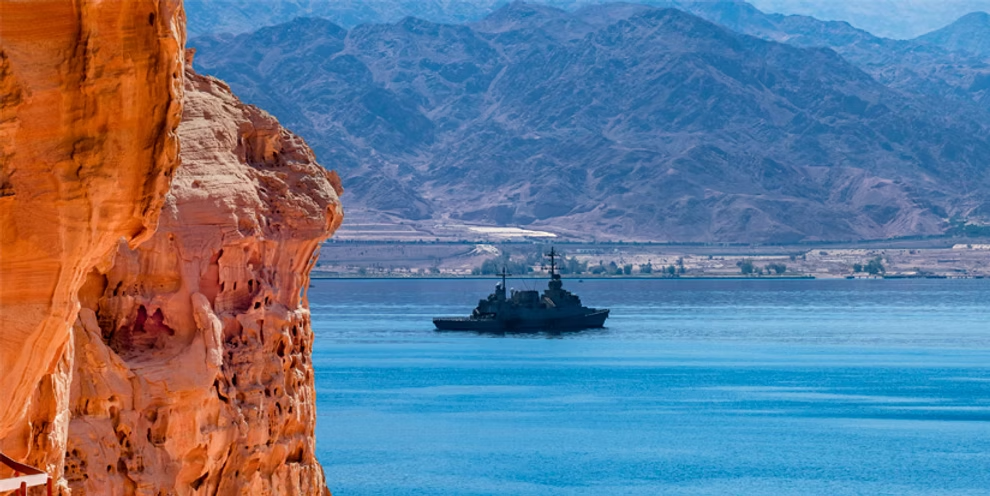
Shortly after Hamas’s brutal attack on Israel on October 7, 2023, a group of Yemeni militants who call themselves Ansar Allah, Helpers of Allah, launched attacks on Red Sea shipping in solidarity. Better known by the moniker “the Houthis,” which refers to the tribe from which much of their leadership is drawn, they successfully shut down most shipping traffic through the Bab el-Mandeb, an 18-mile-wide passage connecting the Red Sea to the Gulf of Aden and the Indian Ocean.
Foreshadowing what was to come in the more well-known Strait of Hormuz, neither the Biden nor Trump administration were able to bomb the Houthis into submission (though both tried). When the US-Iran war commenced earlier this year, shipping through the Bab el-Mandeb had still not reached its pre-October 7 levels.
The Situation
Yemen has long been a battleground for pawns involving both regional and global rivalries, and in that sense, what is happening in Yemen today is typical. Peace in Yemen would be an aberration, not a new outbreak of fighting. Most recently, violence in Yemen has pitted the Houthis—backed by Iran and part of its so-called axis of resistance—against the Saudis and, until recently, the Emiratis. (The UAE pulled its troops out of Yemen in January due to a still-running spat with Saudi Arabia, and the latter apparently never filled the vacuum left by the UAE withdrawal.)
The Houthis have voiced strong support for Iran during the US-Iran war and have even taken some potshots at shipping in the Red Sea, Saudi ports and refineries, and even a few rockets lobbed at Israel. But by and large, the Houthis have stayed on the sidelines. Unlike fellow axis of resistance members Hamas and Hezbollah, the Houthis appear not only to have retained their capabilities but to have increased them, reportedly with help from Iran’s IRGC. (There is no evidence to suggest China is directly aiding the Houthis, but Beijing has reportedly been in direct contact with them to assure safety of its ships through the Bab el-Mandeb.)
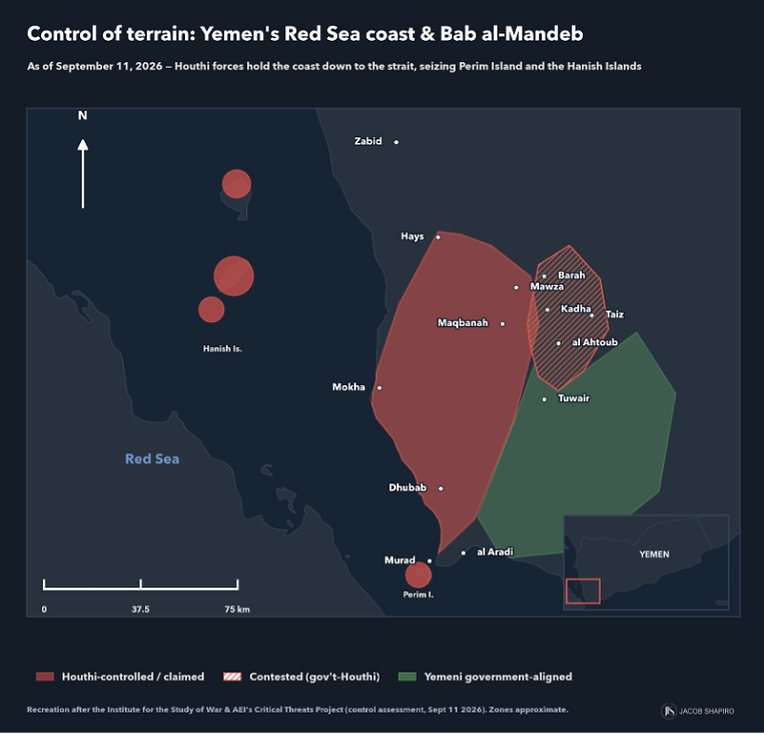
To wit: Houthi fighters seized the port of Mocha on September 10, then took Dhubab and the rest of Yemen’s Red Sea coast on September 11, along with Perim—the island that splits the strait—along with Zuqar and the Greater and Lesser Hanish islands. Simultaneously, Iranian-backed forces in Iraq struck Saudi Arabia’s East-West (Petroline) pipeline, the 1,200km line from Abqaiq to Yanbu that bypasses Hormuz, doing enough damage to force Riyadh to shut the pipeline as a precaution. It is not clear how much damage was done to the pipeline, but reports abound that the Saudis expect the pipeline will not be functional for three to five weeks.
One cannot help but wonder if the US might be able to speed up that timeline by entering the fray in Yemen against the Houthis, which President Trump reportedly refused to do despite urgent requests from Saudi leader Mohammed bin Salman (aka MbS). The Saudis may well feel betrayed considering they pumped a lot of oil when President Trump was first elected to keep prices low—at his request.
Indeed, the Saudis have been striking out on all sides in search of support. Unable to best the Houthis since 2014 and now embarrassed by the melting of its proxies on the ground in Yemen this past week, not even Pakistan (part of the newly signed Mecca Joint Defence Agreement) agreed to help, arguing that the pact does not cover “pre-existing conditions,” as if Saudi Arabia were in negotiation with a US health-care provider to cover cataracts surgery.
If the combined attempts of Saudi Arabia, Israel, and the United States are unable to prevent the Houthis from being able to threaten ships in the Bab el-Mandeb, the simple conclusion must be that no one possesses enough capability and will to stop them.
This is a significant escalation from Iran’s perspective, which has kept the Houthis in reserve for a moment of maximum urgency and/or leverage. The US-Iran ceasefire is in abeyance, and the US had successfully managed to increase the number of ships and the amount of oil getting out of the region in recent weeks. Markets have been sanguine about the long-term ability of Saudi Arabia and others to build infrastructure to circumvent the Strait of Hormuz in (relatively) short order. This created urgency for Iran to increase pressure.
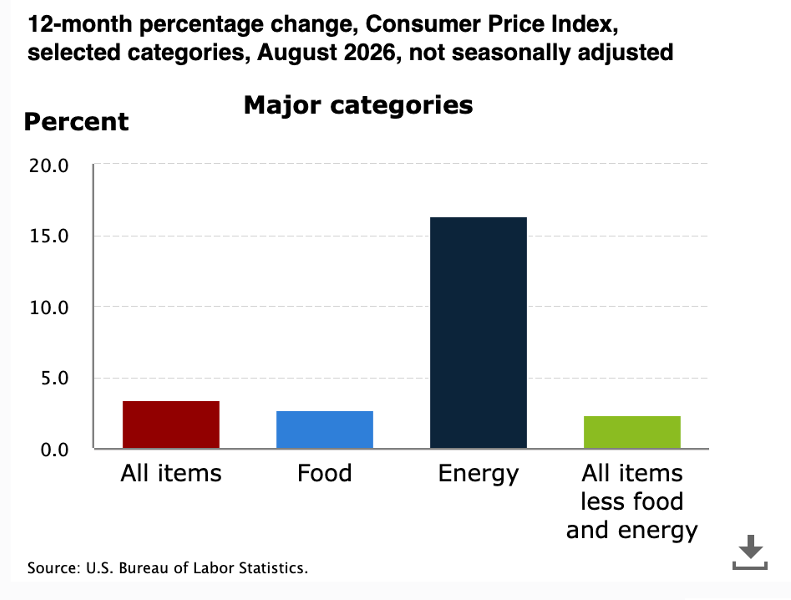
At the same time, the US is hurtling toward the midterms. The war is unpopular with Americans. Inflation is rising, up to 3.4% in August, with energy prices surging 16.3% (oil is up ~25% in the last month). And the US military is reportedly running low on munitions. All of which pressed Iran into pushing the Houthis to enter the fray. The risk is that what happened to Hamas and Hezbollah might happen to the Houthis. But Israel is too far away to pull that off, the Houthis aren’t using pagers, and Iran may be gambling that the US would have destroyed the Houthis already if it could.
Eyes are no longer turned toward Washington, Riyadh, or even Tehran but to Beijing. China has successfully kept oil prices low by curbing its imports of crude since the war began but has been slowly increasing its purchases in the last two months. Chinese President Xi Jinping has been touting a four-point peace plan for the region, which he reiterated at a recent BRICS summit. Xi’s plan is not a recipe for an end to the war. To the extent it is a “plan,” it is heavy on platitudes and short on definitive actions on China’s part. Even so, the simple fact is that higher oil, natural gas, and fertilizer prices and volatility in markets are negatives for China, even if it has enjoyed preferential access through the chokepoints now being dominated by Iran and its proxies.
Perhaps most telling of all is that the White House is suggesting the war with Iran may last to the end of President Trump’s term. In this, it may be correct. There will be no end to the conflict. Rather, this is the new normal: global commodities flows interdicted by militants, tolls at critical checkpoints, volatility in commodity markets, friction and instability in greater measure as local and global politics collide in places like Yemen.
For decades, these are not areas we have had to worry about, but if the US can’t get the Houthis to heel, and if China is uninterested in trying, it is best to accept that this is the way things are in a multipolar world—and that supply chains and alternative sources of supply will enjoy a premium as a result.
Map/Chart of the Week
Blind Spot
On Sunday, the WSJ reported that Canada was exploring whether to become an associate member of the EU. By Monday, Canadian Prime Minister Mark Carney had refuted the report, insisting that Canada is seeking a “unique alliance” with the European Union but is not looking to become a member. Meanwhile, the first ministers of Wales, Scotland, and Northern Ireland held a summit on Monday and declared that “Westminster’s time is coming to an end.” Notably, they met as leaders of their parties rather than in official capacities, and the legal path to referendums on independence for all is murky, to say nothing of the hard constraints. Still, they met.
It is easy to get bogged down in the details and politicking behind these moves. But the blind spot is in missing that something is rotten in the Anglosphere. The US, the UK, Canada, Australia, and New Zealand have since World War II maintained one of the closest alliances, if not the closest alliance, in history. Canada is openly questioning the value of that alliance due to the escalating trade war with the US, while the others are asking themselves the same questions other US allies are. Namely: Can the US be relied on? Does it still have the capabilities that formed the heart of the alliance?
This deserves deeper treatment, but for now, preserve, even in relative lack of consequence, one’s capacity for astonishment at these developments, which would have seemed farcical a decade ago.


Comments
Log in or sign up to join the conversation.