

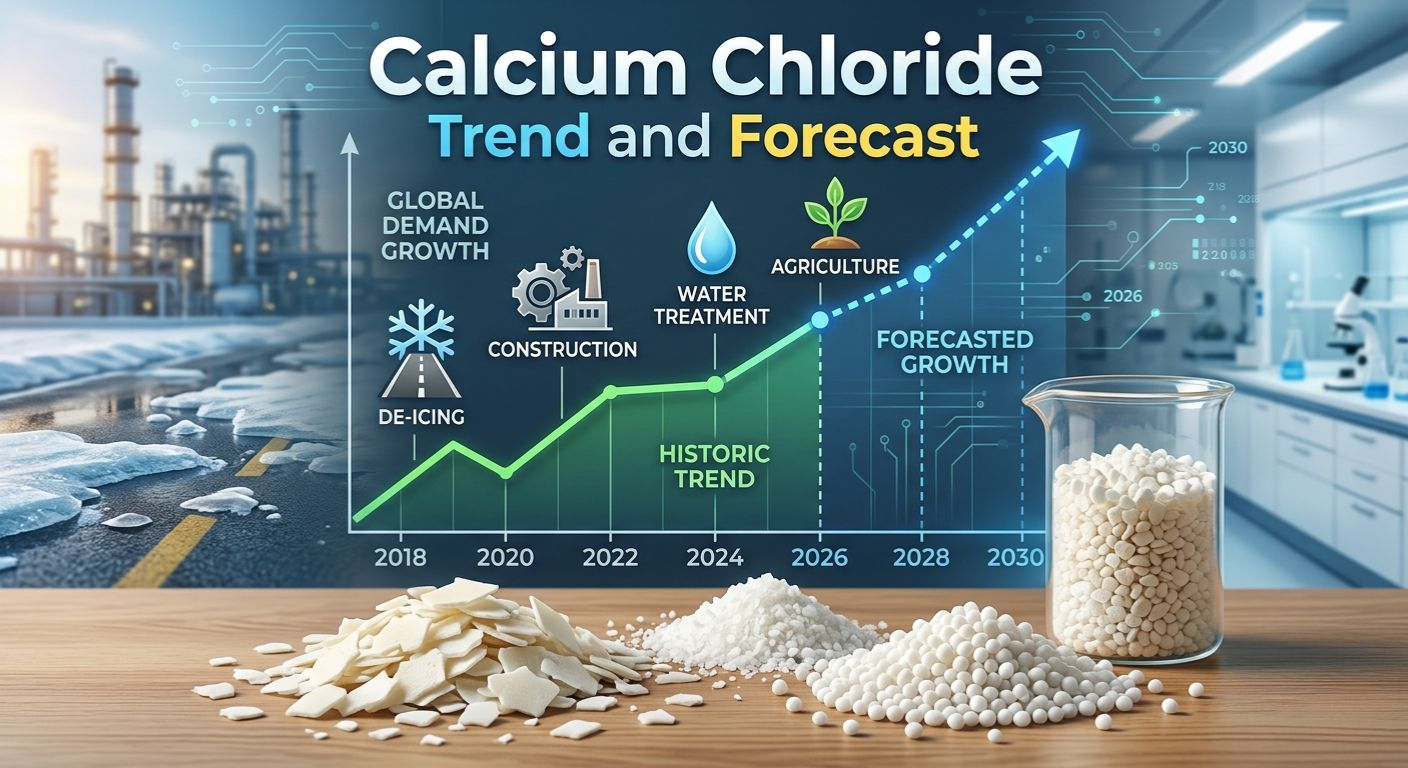
The global calcium chloride market witnessed a notable downturn in the fourth quarter of 2025, as prices declined across major regions including North America, Asia-Pacific (APAC), Europe, and South America. This trend reflects a combination of weak downstream demand, oversupply conditions, and subdued export activity.
Latest Calcium Chloride Price Trend: - https://www.chemanalyst.com/Pricing-data/calcium-chloride-1297
Calcium chloride, widely used in de-icing, construction, oil & gas drilling, dust control, and food processing, plays a crucial role in several industries. As a result, fluctuations in its pricing provide valuable insights into broader industrial and economic trends.
Global Calcium Chloride Market Overview
In Q4 2025, the calcium chloride market experienced consistent price declines globally, driven by:
Weak demand from construction and infrastructure sectors
Reduced export activities
Oversupply in key production hubs
Lower seasonal demand in some applications
Across regions, prices varied significantly depending on production costs, logistics, and demand intensity, but the overall trend remained bearish.
North America Calcium Chloride Price Trend
In the United States, calcium chloride prices declined modestly during Q4 2025.
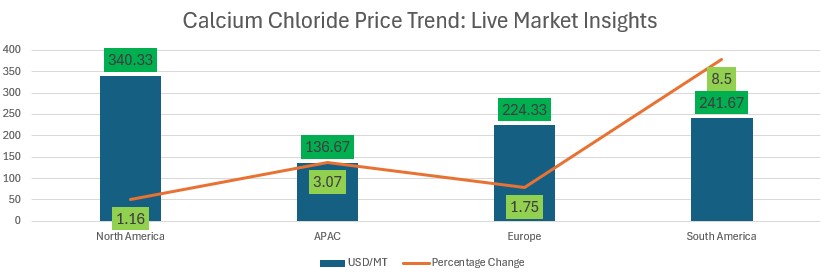
Price Change: Down by 1.16% quarter-over-quarter
Average Price: USD 340.33 per metric ton
Market Conditions: Balanced supply with weaker export demand
Key Factors Influencing Prices
Weak Export Demand
U.S. producers faced declining international demand, particularly from Latin America and Asia, limiting pricing power.Stable Domestic Supply
Production remained steady due to consistent availability of raw materials like limestone and hydrochloric acid.Seasonal Variations
Although calcium chloride is used in de-icing, milder winter conditions in parts of North America reduced demand spikes.
Read the Linkedin Article: - https://www.linkedin.com/pulse/calcium-chloride-price-trend-charts-index-regional-insights-singh-fh9cc/
Market Insight
Despite the decline, the U.S. market showed relative stability compared to other regions, supported by diversified applications and strong domestic consumption.
Asia-Pacific (APAC) Calcium Chloride Price Trend
The APAC region, particularly Japan, recorded a sharper decline in calcium chloride prices.
Price Change: Down by 3.07% quarter-over-quarter
Average Price: USD 136.67/MT (delivered Osaka)
Key Drivers
Weak Construction Sector
Slower infrastructure development in Japan reduced demand for calcium chloride in construction applications such as concrete acceleration.Declining Export Activity
Reduced trade flows and lower regional demand further pressured prices.Industrial Slowdown
A broader slowdown in industrial output contributed to reduced consumption.
Market Insight
APAC markets are highly sensitive to industrial output and export performance, making them more volatile. The sharper decline in Japan highlights the region’s dependency on external demand.
Europe Calcium Chloride Price Trend
In Europe, the Netherlands market reflected a moderate decline.
Price Change: Down by 1.75% quarter-over-quarter
Average Price: USD 224.33/MT (Rotterdam delivery)
Key Market Influences
Oversupply Conditions
Excess inventory in European warehouses led to downward pricing pressure.Weak Downstream Demand
Industries such as construction and oilfield services showed limited activity.Logistics and Trade Factors
Improved supply chain efficiency resulted in higher product availability.
Market Insight
Europe’s calcium chloride market was primarily affected by inventory buildup and limited consumption, leading to a soft pricing environment.
South America Calcium Chloride Price Trend
Brazil experienced the most significant price decline among all regions.
Price Change: Down by 8.5% quarter-over-quarter
Average Price: USD 241.67/MT
Key Drivers
Weak Downstream Demand
Reduced activity in construction and industrial sectors led to lower consumption.Oversupply Issues
High inventory levels intensified price competition among suppliers.Economic Challenges
Macroeconomic uncertainties in Brazil impacted procurement patterns.
Key Takeaways
Brazil saw the steepest decline, indicating severe demand-supply imbalance
Japan followed, reflecting industrial slowdown
North America remained relatively stable
Europe faced moderate pressure due to oversupply
Key Market Drivers Affecting Calcium Chloride Prices
Supply-Demand Imbalance
Oversupply in regions like Europe and South America significantly impacted pricing trends. At the same time, demand remained subdued across industries.
Construction Industry Slowdown
Calcium chloride is widely used in concrete acceleration and dust control, making it highly sensitive to construction activity. Sluggish infrastructure growth globally reduced demand.
Export Market Weakness
Reduced international trade flows limited opportunities for producers to maintain higher price levels.
Seasonal Demand Variations
While winter typically boosts demand due to de-icing applications, milder weather conditions in some regions dampened consumption.
Economic and Industrial Activity
Global economic uncertainties and reduced industrial output further contributed to declining demand.
Supply Chain and Production Insights
Calcium chloride production is primarily derived from:
Natural brine extraction
By-products of soda ash production
Reaction of limestone with hydrochloric acid
In Q4 2025, stable production levels combined with reduced demand led to excess inventory across multiple regions.
Additionally:
Improved logistics reduced supply bottlenecks
Lower energy cost volatility supported steady production
Inventory accumulation intensified pricing pressure
Future Outlook: Calcium Chloride Market 2026
Looking ahead, the calcium chloride market is expected to experience gradual stabilization, with potential for recovery driven by:
Positive Factors
Infrastructure development projects
Increased demand in oil & gas drilling
Seasonal demand recovery in winter months
Export market normalization
Potential Challenges
Continued oversupply in key regions
Economic uncertainties
Fluctuations in construction activity
Forecast Insight
Prices are likely to:
Stabilize in early 2026
Show moderate recovery in mid-to-late 2026
Remain region-dependent based on demand recovery pace
Strategic Recommendations for Industry Stakeholders
For Manufacturers
Optimize production to avoid excess inventory
Diversify export markets
Focus on value-added applications
For Buyers
Take advantage of lower prices for long-term contracts
Monitor regional supply-demand dynamics
Hedge against future price volatility
For Investors
Track infrastructure and construction trends
Analyze regional demand recovery signals
Focus on markets with balanced supply conditions
Conclusion
The calcium chloride price trend in Q4 2025 highlights a globally bearish market driven by weak demand, oversupply, and reduced export activity. While North America remained relatively stable, regions like Brazil and Japan experienced sharper declines due to economic and industrial challenges.
As the market moves into 2026, recovery will depend on demand revival, supply adjustments, and macroeconomic stability. Industry participants must adopt strategic approaches to navigate ongoing volatility and capitalize on emerging opportunities.
Contact US:
Email-Id: - [email protected]
Contact No: - +1 (332) 258-6602
Address: - 420 Lexington Avenue, Suite 300
New York, NY
United States, 10170
Comments
Log in or sign up to join the conversation.