

Condensation is a common but often overlooked factor in commercial and cafeteria kitchen environments. When warm, moisture-filled air comes into contact with a cooler surface, water vapour can turn into liquid droplets. In a busy cafeteria, repeated cooking, washing, steaming and hot-food handling can introduce significant moisture into the surrounding environment.
For this reason, Cafeteria Kitchen Equipment planning should consider not only cooking capacity and workflow but also humidity, steam movement, surface temperature, ventilation, insulation and drainage. Effective condensation control can help maintain cleaner work areas, protect equipment surfaces and support a more controlled kitchen environment.
What Causes Condensation in a Cafeteria Kitchen?
Condensation occurs when moist air reaches a surface that is sufficiently cooler than the surrounding air. The difference between air temperature and surface temperature is therefore important.
Common sources of moisture include:
Steam cooking equipment
Boiling and cooking processes
Dishwashing operations
Hot-water systems
Wet cleaning activities
Food preparation
Refrigeration areas
Poorly controlled ventilation
When moisture production is higher than the kitchen's ability to remove it, humid air can accumulate and increase the possibility of condensation.
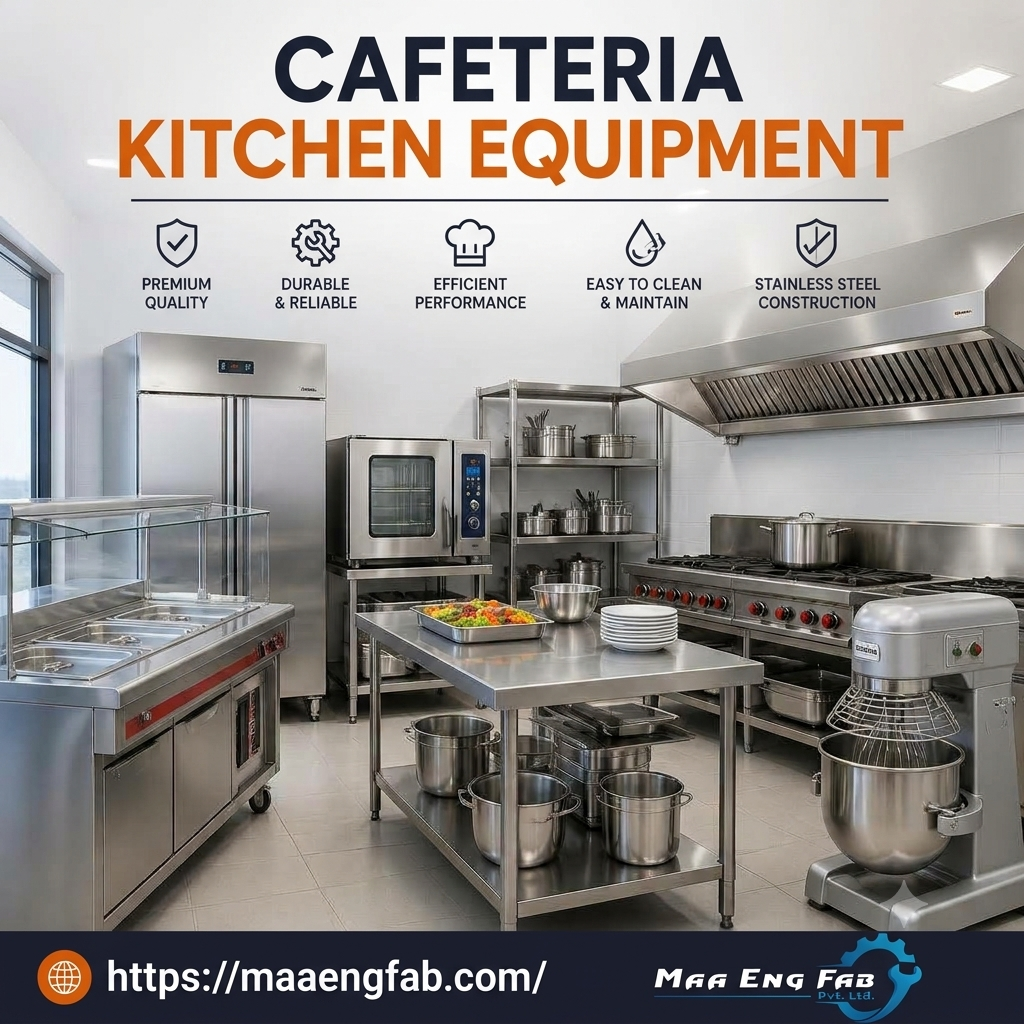
Why Condensation Control Matters for Cafeteria Kitchen Equipment
Persistent moisture can affect different kitchen components in different ways.
Metal surfaces may remain wet for extended periods, increasing the possibility of corrosion where materials, joints or protective finishes are vulnerable. Moisture can also accumulate around equipment bases, walls, ceilings and difficult-to-clean areas.
For Cafeteria Kitchen Equipment, condensation control should therefore be considered as part of hygiene, maintenance and equipment lifecycle planning.
A dry and properly ventilated environment can also make routine cleaning and inspection easier.
Humidity and Steam Management
Steam is one of the major moisture sources in a cafeteria kitchen. Steam-generating equipment can release large amounts of water vapour during operation.
If steam is not captured or removed efficiently, it may migrate toward cooler surfaces.
Humidity management begins with understanding where moisture is generated.
For example, steam-intensive equipment should be evaluated together with:
Exhaust hood position
Ventilation capacity
Air movement
Equipment spacing
Ceiling height
Nearby wall surfaces
Drainage arrangements
The objective is to move moisture away from sensitive surfaces and working areas rather than allowing it to spread throughout the kitchen.
Surface Temperature and Condensation
Surface temperature plays a major role in condensation formation.
A warm kitchen may still experience condensation if certain surfaces remain significantly cooler than the surrounding moist air. This can occur around cold storage equipment, chilled surfaces, poorly insulated structures or areas exposed to temperature differences.
When selecting and positioning Cafeteria Kitchen Equipment, planners should consider the relationship between:
Air temperature → Humidity → Surface temperature → Condensation risk
Understanding this relationship helps identify areas where moisture is likely to accumulate.
Role of Ventilation in Condensation Control
Ventilation helps remove excess heat, moisture and contaminated air from kitchen spaces. However, simply increasing airflow is not always the complete solution.
The airflow pattern should be appropriate for the equipment and cooking process.
An effective ventilation arrangement considers:
Moisture Source
Steam-producing equipment should be positioned where moisture can be captured effectively.
Exhaust Location
Exhaust hoods should be located appropriately above relevant cooking or steam-generating equipment.
Air Replacement
When air is exhausted, replacement air must also be considered to maintain a suitable airflow balance.
Air Movement
Strong uncontrolled air movement can interfere with cooking processes and may move steam toward other areas instead of directly toward the exhaust system.
Therefore, ventilation planning should be integrated with kitchen layout and equipment placement.
Equipment Placement and Condensation Risk
The location of equipment can influence how moisture travels through the kitchen.
Steam-producing appliances should not be placed in a way that directs moisture toward refrigeration equipment, electrical components or surfaces that are difficult to dry.
Similarly, equipment should have sufficient access for cleaning and inspection.
A practical cafeteria layout may separate areas such as:
Cooking
Steam generation
Preparation
Washing
Refrigeration
Storage
Food service
Logical zoning can help reduce unnecessary interaction between hot, humid and cold areas.
Insulation and Thermal Separation
Insulation can help control unwanted temperature transfer between surfaces and surrounding areas.
Where thermal separation is required, suitable insulation may help maintain more stable surface temperatures. This can be particularly relevant around hot-water systems, steam-related installations and temperature-sensitive areas.
However, insulation should be selected according to the application and installed correctly. Damaged, incomplete or poorly fitted insulation may reduce its intended performance.
For Cafeteria Kitchen Equipment, insulation should be considered alongside ventilation and surface design rather than treated as an independent solution.
Drainage and Moisture Removal
Condensation control does not end when moisture becomes liquid. The resulting water must also be removed effectively.
Poor drainage can allow water to remain around equipment bases, floors and cleaning areas.
A suitable drainage plan should consider:
Floor slope
Drain locations
Equipment discharge points
Cleaning water
Wash areas
Accessibility for cleaning
Prevention of standing water
Equipment bases and surrounding surfaces should be designed so that cleaning water and moisture do not remain trapped in inaccessible areas.
Material Selection and Surface Design
Material selection can influence how easily surfaces can be cleaned and maintained in humid environments.
Kitchen equipment commonly uses materials selected for durability, hygiene and resistance to the operating environment. However, performance also depends on fabrication quality, joints, welds, surface condition and maintenance.
Smooth and accessible surfaces can make moisture removal easier.
During equipment evaluation, buyers can consider:
Surface finish
Joint design
Weld quality
Accessibility
Corrosion resistance
Ease of cleaning
Moisture exposure
Maintenance requirements
These factors become particularly important in kitchens where steam and frequent washing are part of daily operations.
Condensation Around Refrigeration Equipment
Refrigeration areas require special attention because they naturally involve temperature differences.
Warm and humid kitchen air can interact with colder surfaces, potentially increasing condensation under certain conditions.
Refrigeration equipment should therefore be positioned with suitable clearance and airflow considerations. Door seals, insulation and drainage should also be inspected regularly.
Separating refrigeration zones from high-steam cooking areas can reduce unnecessary exposure to humid air.
Cleaning and Preventive Maintenance
Regular cleaning and maintenance are essential for controlling moisture-related problems.
Kitchen teams can routinely inspect:
Wet surfaces
Equipment joints
Drainage points
Exhaust filters
Ventilation components
Door seals
Insulation
Equipment bases
Areas behind and underneath equipment
Unusual moisture accumulation should not simply be wiped away repeatedly without identifying the underlying cause.
For example, recurring condensation may indicate inadequate ventilation, excessive steam release, temperature differences or an equipment placement issue.
Practical Condensation Control Checklist
Before finalizing a cafeteria kitchen design, operators and planners can review:
Where are the main sources of steam and moisture?
Is the exhaust system positioned correctly?
Is replacement air considered?
Are cold and high-steam areas appropriately separated?
Can equipment surfaces be easily cleaned and dried?
Is drainage adequate around wet work areas?
Are insulation requirements properly evaluated?
Is there enough maintenance access?
Are refrigeration units protected from unnecessary humidity?
Are recurring condensation points being monitored?
This approach helps connect kitchen equipment selection with practical environmental control.
How Condensation Control Supports Kitchen Hygiene
Moisture management is closely connected with cleaning and sanitation practices. Persistent dampness can make some surfaces more difficult to keep dry and clean.
A well-planned Cafeteria Kitchen Equipment arrangement allows staff to access surfaces, remove moisture and maintain drainage areas more effectively.
Condensation control should therefore be viewed as part of a wider hygiene strategy involving equipment design, cleaning procedures, ventilation, drainage and preventive maintenance.
Conclusion
Condensation control is an important consideration when planning and operating a cafeteria kitchen. Humidity, steam generation, surface temperature, ventilation, insulation and drainage all interact to determine how moisture behaves inside the kitchen.
Properly planned Cafeteria Kitchen Equipment should work within this environment rather than being selected independently from it. By identifying moisture sources, improving equipment placement, coordinating ventilation, maintaining suitable drainage and regularly inspecting equipment, cafeteria operators can create a more controlled and maintainable kitchen environment.
The most effective approach is to treat condensation management as part of complete kitchen planning. This helps connect equipment selection, hygiene, maintenance and long-term operational performance in a practical way.
Comments
Log in or sign up to join the conversation.