
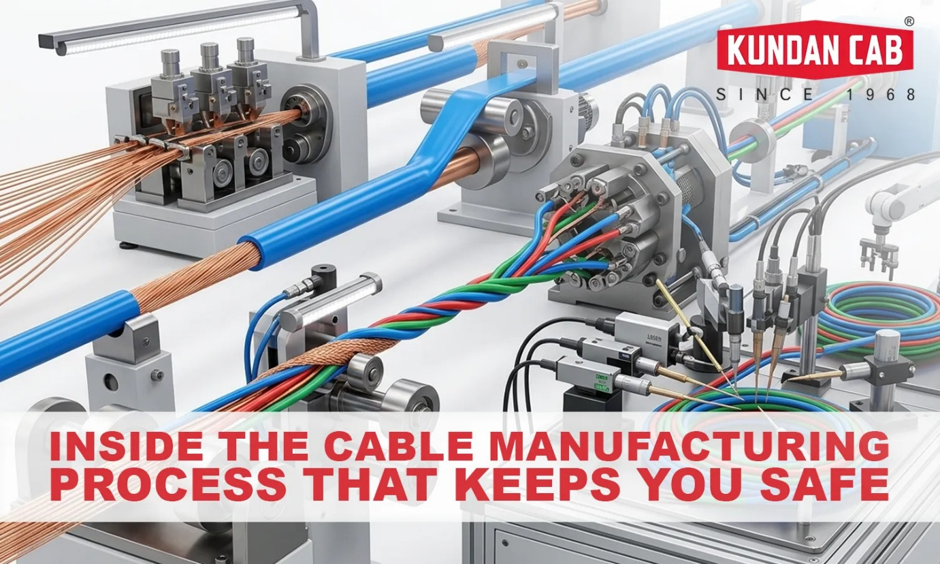
Electrical cables may look simple from the outside, but their manufacturing involves several carefully controlled stages. The cable manufacturing process typically includes conductor preparation, wire drawing, annealing, insulation, testing, and final packing.
The exact wire manufacturing process can vary depending on the type of conductor, insulation material, cable construction, voltage rating, and intended application. However, most electrical cables follow a systematic production process to achieve consistent electrical and mechanical performance.
What Is the Cable Manufacturing Process?
The cable manufacturing process is the series of steps used to convert raw conductive material and insulation materials into finished electrical wires and cables.
For copper cables, the process generally includes:
Copper rod preparation
Wire drawing
Annealing
Stranding, where required
Insulation extrusion
Cooling and inspection
Cable laying or assembly
Sheathing, where required
Electrical and physical testing
Final packing
Each stage contributes to the quality and performance of the finished cable.
Copper Wire Manufacturing Process
The copper wire manufacturing process generally starts with copper rod. The rod is passed through a series of dies during the wire drawing stage to reduce its diameter and achieve the required conductor size.
1. Copper Rod Preparation
High-quality copper rod is selected as the starting material. The material is checked according to the required production specifications before entering the drawing process.
2. Wire Drawing
During wire drawing, the copper rod passes through progressively smaller dies. This reduces the conductor diameter and produces copper wire of the required size.
The drawing process needs to be carefully controlled to maintain consistent dimensions and surface quality.
3. Annealing
Drawing can make copper harder and less flexible. Annealing involves controlled heating to restore suitable softness and improve the conductor's flexibility and electrical characteristics.
The resulting conductor can then be used for different wire and cable constructions.
Wire Production Process
The wire production process depends on whether the final product requires a solid conductor or a stranded conductor.
A solid wire may proceed directly to insulation after conductor preparation. For stranded products, individual fine wires are combined in a controlled arrangement to create the required conductor construction.
Stranding can improve flexibility and is commonly used in flexible electrical cables.
Cable Extrusion Process
One of the important stages in electrical cable production is the cable extrusion process.
During extrusion, insulation material is heated and pushed through an extrusion die around the conductor. This creates a continuous and uniform insulating layer around the wire.
Depending on the product, materials such as PVC or other specialised insulation compounds may be used.
After extrusion, the insulated wire is generally cooled so that the insulation maintains its required shape and dimensions.
Insulation Quality Checks
The insulation must provide adequate protection around the conductor. During production, manufacturers may monitor parameters such as:
Insulation thickness
Diameter
Surface appearance
Concentricity
Material quality
Spark or insulation integrity
These checks help identify manufacturing defects before the product moves to the next stage.
Electrical Cable Manufacturing
In electrical cable manufacturing, individual insulated conductors may need to be assembled depending on the cable design.
For a multi-core cable, multiple insulated conductors are laid together in a specified arrangement. Additional fillers, binders, screens, armour, or other layers may be incorporated depending on the cable's intended application.
A suitable outer sheath may then be applied to provide additional protection.
Cable Production Process for Different Cable Types
Not every cable follows exactly the same production route.
Single-Core Cable
A single-core cable generally consists of one conductor with insulation and may require an additional sheath depending on the application.
Multi-Core Cable
A multi-core cable requires several insulated conductors to be assembled together before applying the appropriate outer layers.
Flexible Cable
Flexible cables generally use stranded or fine-stranded conductors to provide the required flexibility.
Armoured Cable
Armoured cables include additional mechanical protection. Their manufacturing process therefore includes extra stages for applying the appropriate armour and protective layers.
Cable Manufacturing Plant
A modern cable manufacturing plant typically contains specialised equipment for different production stages.
Depending on the products manufactured, a plant may include:
Wire drawing machines
Annealing equipment
Stranding machines
Extrusion lines
Cable laying equipment
Sheathing lines
Testing equipment
Rewinding and coiling equipment
Packaging facilities
Production areas are generally organised so that materials can move efficiently from conductor preparation through insulation, assembly, testing, and packaging.
Testing During Cable Manufacturing
Testing is an essential part of the manufacturing process. Depending on the cable type and applicable standards, manufacturers may perform electrical, dimensional, mechanical, and other tests.
Common checks can include:
Conductor resistance
Conductor dimensions
Insulation thickness
High-voltage or dielectric tests where applicable
Insulation resistance
Visual inspection
Mechanical properties
Finished cable dimensions
Testing requirements vary according to the cable specification and applicable standards.
Quality Control in Cable Production
Quality control does not happen only at the end of production. It can be performed throughout the cable production process.
Raw materials can be inspected before production, while conductor dimensions and extrusion parameters can be monitored during manufacturing. Finished cables can then undergo final testing before being released.
This approach helps manufacturers identify production issues earlier and maintain consistency across batches.
From Raw Material to Finished Cable
The overall cable manufacturing process can be simplified as:
Copper rod → Wire drawing → Annealing → Stranding → Insulation extrusion → Cable assembly → Sheathing → Testing → Packing
Not every cable requires every stage. The actual sequence depends on the construction and specification of the final product.
Final Thoughts
The cable manufacturing process combines material preparation, precision manufacturing, insulation, assembly, and quality testing. In the wire manufacturing process, copper may be drawn and annealed before being converted into solid or stranded conductors.
The cable extrusion process then adds insulation around the conductor, while additional assembly and sheathing stages may be used for multi-core, flexible, or armoured cables.
Understanding how cables are manufactured gives buyers a better idea of why conductor quality, insulation, manufacturing controls, testing, and applicable standards matter when selecting electrical cables.
Comments
Log in or sign up to join the conversation.