

Learn how to choose the best U drill for CNC operations. Explore sizing, inserts, pricing, and buying tips to improve machining accuracy and productivity.
How to Choose the Right U Drill for Efficient CNC Machining
In modern manufacturing, drilling operations demand precision, speed, and consistency. Whether you're producing automotive components, aerospace parts, molds, or heavy engineering products, choosing the right drilling tool directly impacts productivity and machining costs. Among today's advanced drilling solutions, the U drill has become a preferred choice for CNC machining because of its high efficiency, replaceable inserts, and excellent hole quality.
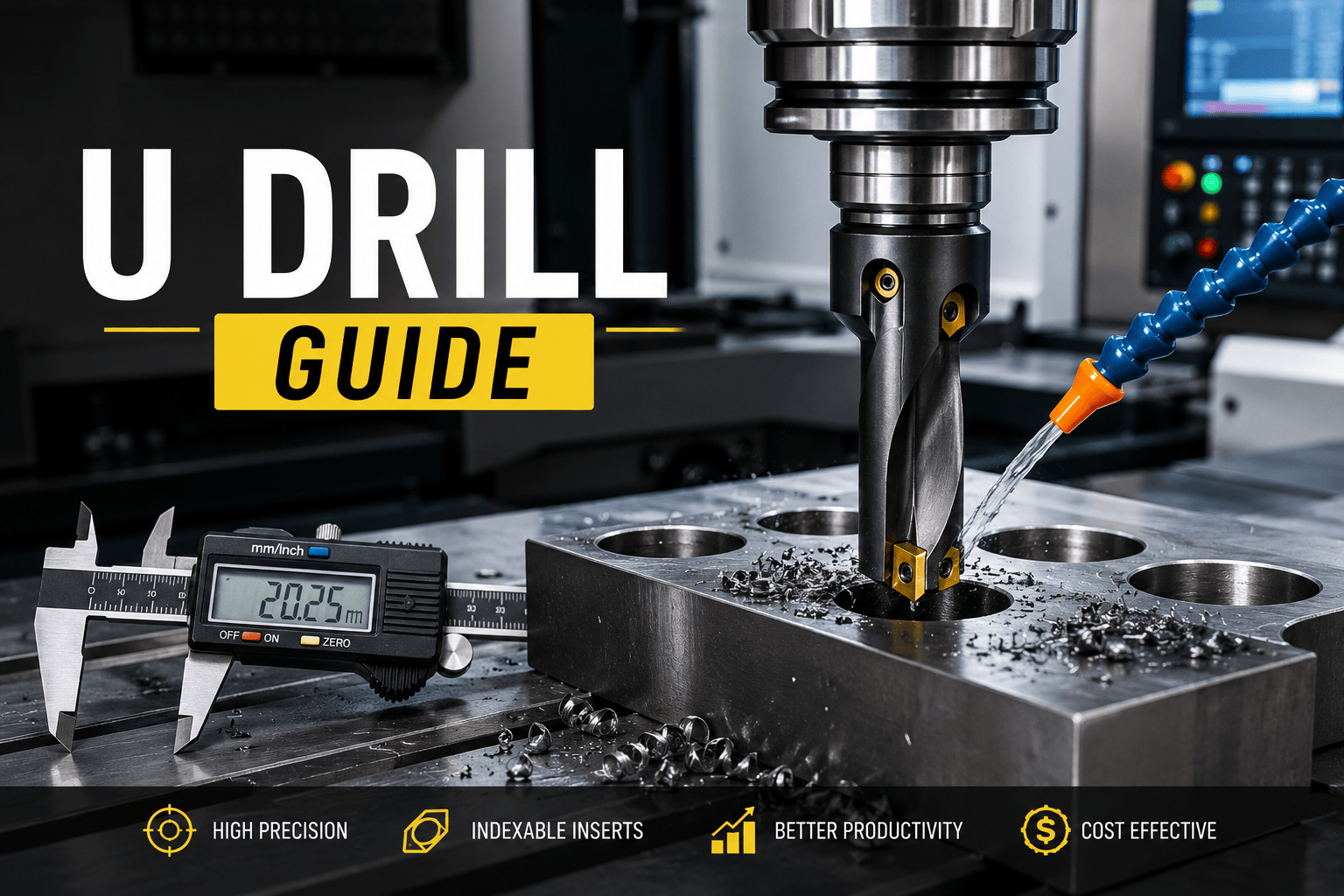
Unlike conventional drills, a U drill uses indexable inserts that can be replaced when worn instead of replacing the entire drill body. This design reduces tooling costs, minimizes downtime, and improves machining performance. However, selecting the right U drill requires careful evaluation of several factors, including workpiece material, drill diameter, insert grade, machine capability, and application.
What Is a U Drill?
A u drill is an indexable drilling tool designed for producing accurate holes at high cutting speeds. It consists of a reusable drill body fitted with replaceable carbide inserts. The central and peripheral inserts work together to deliver stable cutting performance, excellent chip evacuation, and longer tool life.
Compared to conventional twist drills, U drills are more economical for medium- and high-volume production because only the inserts require replacement after wear.
Why U Drills Are Popular in CNC Machining
Manufacturers prefer U drills because they improve machining efficiency while lowering operating costs.
Key advantages include:
Higher feed rates
Better chip evacuation
Improved dimensional accuracy
Reduced tool replacement costs
Excellent surface finish
Faster production cycles
These benefits make them ideal for CNC machining centers where productivity and consistency are essential.
Factors to Consider Before Buying a U Drill
Choosing the right drilling tool involves more than selecting the correct diameter. Several important factors determine machining performance.
1. Workpiece Material
The material being machined plays a significant role in tool selection.
Different insert grades are recommended for:
Carbon steel
Alloy steel
Stainless steel
Cast iron
Aluminum
Non-ferrous alloys
Matching the insert grade with the material improves cutting efficiency and extends insert life.
2. Select the Correct U Drill Size
Choosing the correct u drill size is one of the most important decisions during tool selection.
The drill diameter should match:
Required hole size
Component design
Machine spindle capacity
Drilling depth
Production requirements
Using an incorrect drill size can increase vibration, reduce accuracy, and shorten insert life.
Use a U Drill Size Chart
A u drill size chart helps operators quickly identify the appropriate drill diameter and compatible insert configuration.
Most size charts include:
Drill diameter
Compatible insert size
Maximum drilling depth
Recommended spindle speed
Feed rate
Consulting a size chart before machining improves setup accuracy and reduces production errors.
Choosing the Right U Drill Insert
The u drill insert is the cutting component responsible for machining performance. Selecting the right insert ensures higher productivity and better hole quality.
Consider the following factors:
Workpiece material
Insert coating
Cutting speed
Feed rate
Coolant availability
Premium carbide inserts generally provide better wear resistance and longer service life than standard grades.
Machine Compatibility
Not every drill is suitable for every machine. Before purchasing, confirm that the tool matches your CNC machine specifications.
Important considerations include:
Spindle taper
Maximum spindle speed
Machine rigidity
Coolant system
Tool holder compatibility
A properly matched drilling setup improves machining stability and minimizes tool wear.
Importance of Internal Coolant
Most modern U drills feature internal coolant channels that deliver coolant directly to the cutting edge.
Benefits include:
Reduced cutting temperature
Better chip evacuation
Improved surface finish
Longer insert life
Increased machining efficiency
Proper coolant delivery is especially important when drilling deep holes or machining difficult materials.
Measuring Hole Accuracy
After drilling, inspection ensures that components meet design specifications.
A digital caliper vernier is commonly used to measure:
Hole diameter
Component thickness
Internal dimensions
External dimensions
Depth measurements
Accurate measurement reduces rejected parts and helps maintain consistent quality throughout production.
Compatibility with CNC Tools
Modern CNC tools are designed to achieve high-speed, high-precision machining. U drills integrate seamlessly with CNC machining centers, making them suitable for both batch production and continuous manufacturing.
Their rigid construction and replaceable inserts allow manufacturers to maintain productivity while reducing machining costs and downtime.
Understanding U Drill Price
One of the first things buyers compare is the u drill price, but the purchase cost should never be the only deciding factor. A high-quality U drill may cost more initially, yet it often provides better value through increased productivity and lower maintenance expenses.
Several factors influence pricing, including:
Drill body material
Diameter and drilling capacity
Insert grade and coating
Brand reputation
Coolant channel design
Manufacturing quality
Instead of choosing the least expensive option, evaluate the overall cost per hole and the expected service life. A premium-quality tool often delivers greater long-term savings.
Common Mistakes to Avoid
Purchasing the wrong drilling tool can reduce machining efficiency and increase production costs. Avoid these common mistakes:
Selecting the Wrong Diameter
Using an incorrect drill diameter can affect hole accuracy, increase vibration, and shorten insert life.
Ignoring Machine Specifications
Always ensure the drill is compatible with your machine's spindle, holder, and power capacity.
Choosing the Wrong Insert Grade
Different workpiece materials require specific insert grades. Using the wrong insert can cause premature wear and poor surface finish.
Overlooking Coolant Requirements
Insufficient coolant flow increases heat generation and reduces tool life.
Buying Only Based on Price
The cheapest option may result in higher operating costs because of frequent insert replacement and lower machining efficiency.
Industrial Applications
U drills are widely used across multiple manufacturing industries because of their versatility and reliability.
Automotive Industry
Used for machining engine blocks, brake systems, transmission housings, and suspension components.
Aerospace Industry
Ideal for precision drilling in lightweight alloys and structural aircraft components.
Mold and Die Manufacturing
Suitable for creating accurate holes before finishing operations.
Heavy Engineering
Commonly used for construction equipment, mining machinery, and industrial assemblies.
General Engineering
Applied in fabrication, machinery production, and custom component manufacturing.
Maintenance Tips for Longer Tool Life
Regular maintenance helps maximize productivity and reduce unexpected downtime.
Follow these best practices:
Clean the drill body after each use.
Inspect inserts for wear before every machining cycle.
Replace damaged inserts immediately.
Keep coolant passages clean.
Tighten insert screws using the recommended torque.
Store tools in a dry and dust-free environment.
Preventive maintenance improves drilling consistency and extends the service life of the drill body.
Buying Checklist
Before purchasing a drilling tool, verify the following:
✔ Compatible with your CNC machine
✔ Correct drill diameter selected
✔ Suitable insert grade for the workpiece material
✔ Internal coolant capability
✔ Reliable manufacturer and supplier
✔ Easy availability of replacement inserts
✔ Good after-sales technical support
Using this checklist helps avoid costly purchasing mistakes and ensures better machining performance.
Future Trends in CNC Drilling
Manufacturing technology continues to evolve with advancements in tooling and automation.
Emerging developments include:
Smart tool monitoring systems
Advanced carbide coatings
AI-assisted machining optimization
Improved chip evacuation designs
Enhanced coolant delivery systems
High-performance insert geometries
These innovations are helping manufacturers improve productivity while reducing machining costs.
Conclusion
Selecting the right U drill is an important decision for any manufacturer aiming to improve CNC machining efficiency. By evaluating factors such as workpiece material, drill diameter, insert quality, machine compatibility, coolant delivery, and long-term operating costs, businesses can make a more informed investment.
Rather than focusing only on the initial purchase price, manufacturers should consider productivity, insert life, machining accuracy, and maintenance requirements. A well-chosen drilling solution helps reduce downtime, improve hole quality, and increase overall production efficiency.
For businesses looking for reliable industrial tooling solutions, Jaibros offers a comprehensive range of precision machining products, including indexable drilling systems, carbide inserts, measuring instruments, and high-quality CNC tools. With a strong commitment to quality, innovation, and customer satisfaction, Jaibros supports manufacturers with dependable tooling solutions that deliver precision, durability, and long-term value.
Comments
Log in or sign up to join the conversation.