

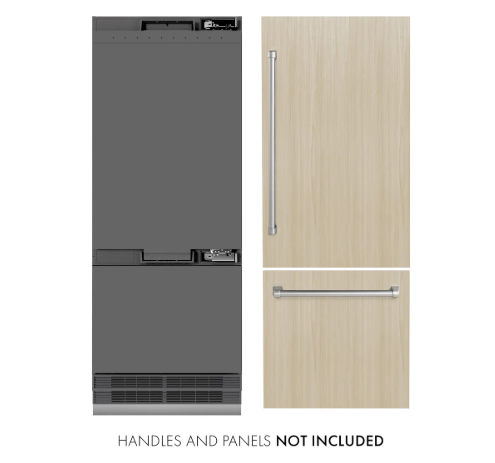
Built-in refrigerators are designed to fit neatly within kitchen cabinetry, creating a clean and streamlined look that works especially well in modern and open-plan homes. Choosing built in fridges is often about more than appearance, because these appliances also affect layout, storage access, ventilation planning, and the overall feel of the kitchen.
What Are Built In Fridges
Built-in fridges are refrigeration units made to sit flush or nearly flush with surrounding cabinetry rather than projecting outward like many freestanding models. This design helps create a custom kitchen appearance with straight lines, flat surfaces, and a more integrated visual flow.
In many kitchens, this style is preferred because it reduces visual bulk and can make the room feel more organized. While the terms built-in and integrated are sometimes used interchangeably, some sources note that integrated models are usually more fully concealed behind matching cabinet panels, while built-in units may still remain partially visible depending on the design.
Why Homeowners Choose Them
Integrated refrigerator
One of the biggest advantages of built-in fridges is their seamless appearance. Because they are designed for cabinetry integration, they support a more polished layout that fits well with contemporary kitchens, luxury remodels, and spaces where visual consistency matters.
Another reason they are popular is planning efficiency. Since these refrigerators are intended to work with cabinetry dimensions, they can support a more intentional kitchen workflow, especially when placed near prep zones, pantries, or wall ovens.
Many built-in models also include premium cooling features such as advanced temperature control, humidity management, and specialized storage organization. These features can help preserve ingredients more effectively, which is useful for households that store fresh produce, dairy, and meal-prep items regularly.
Important Space Considerations
Before selecting a built-in refrigerator, it is essential to think about dimensions and ventilation. Built-in and integrated refrigeration systems are often designed with shallow depth for a flush fit, and that means width may increase to compensate for storage space.
Ventilation is another important factor. A refrigerator installed inside or alongside cabinetry needs proper airflow to prevent overheating and support efficient operation, which is why purpose-built models are usually better suited to enclosed layouts than trying to adapt a standard fridge.
Storage capacity should also be evaluated carefully. Although built-in units can look larger and more premium from the outside, some expert sources note that they may offer less interior storage than freestanding refrigerators at a similar footprint because of their construction and shallow depth.
Design and Practical Trade-Offs
Panel-ready refrigerator kitchen
Built-in fridges offer strong visual appeal, but they also come with trade-offs that buyers should understand early in the planning stage. In many markets, they are noticeably more expensive than freestanding refrigerators, and installation can also involve added cabinetry or panel work.
Feature availability may differ too. Some built-in refrigerators include digital controls, freezer lighting, spillproof shelving, and ice makers, but certain convenience features found in standard refrigerators may be less common depending on the model and configuration.
There is also the question of flexibility. A freestanding appliance is generally easier to replace or move, while built-in refrigeration often requires more exact sizing and coordination with cabinetry, which can make future upgrades more complex.
How to Choose the Right Fit
A practical way to evaluate built-in fridges is to start with kitchen goals rather than appliance specs alone. If the priority is a sleek, uncluttered kitchen with cabinetry-aligned appliances, this style may be a strong fit.
It also helps to compare configuration options such as bottom-freezer, French-door, side-by-side, or column layouts based on how food is stored and accessed in daily life. Households that buy in bulk may need to pay extra attention to internal organization and usable volume, not just exterior dimensions.
Installation planning should never be an afterthought. Proper measurement, ventilation allowances, door swing clearance, and panel compatibility all play a role in how successfully built in fridges function within the kitchen over time.
Conclusion
Built-in fridges can be a smart choice for homeowners who want a refined kitchen layout, cabinetry-friendly appliance design, and a streamlined overall appearance. At the same time, the best decision comes from balancing design goals with storage needs, ventilation planning, and long-term practicality, especially when comparing built in fridges with other refrigerator styles.
Comments
Log in or sign up to join the conversation.