

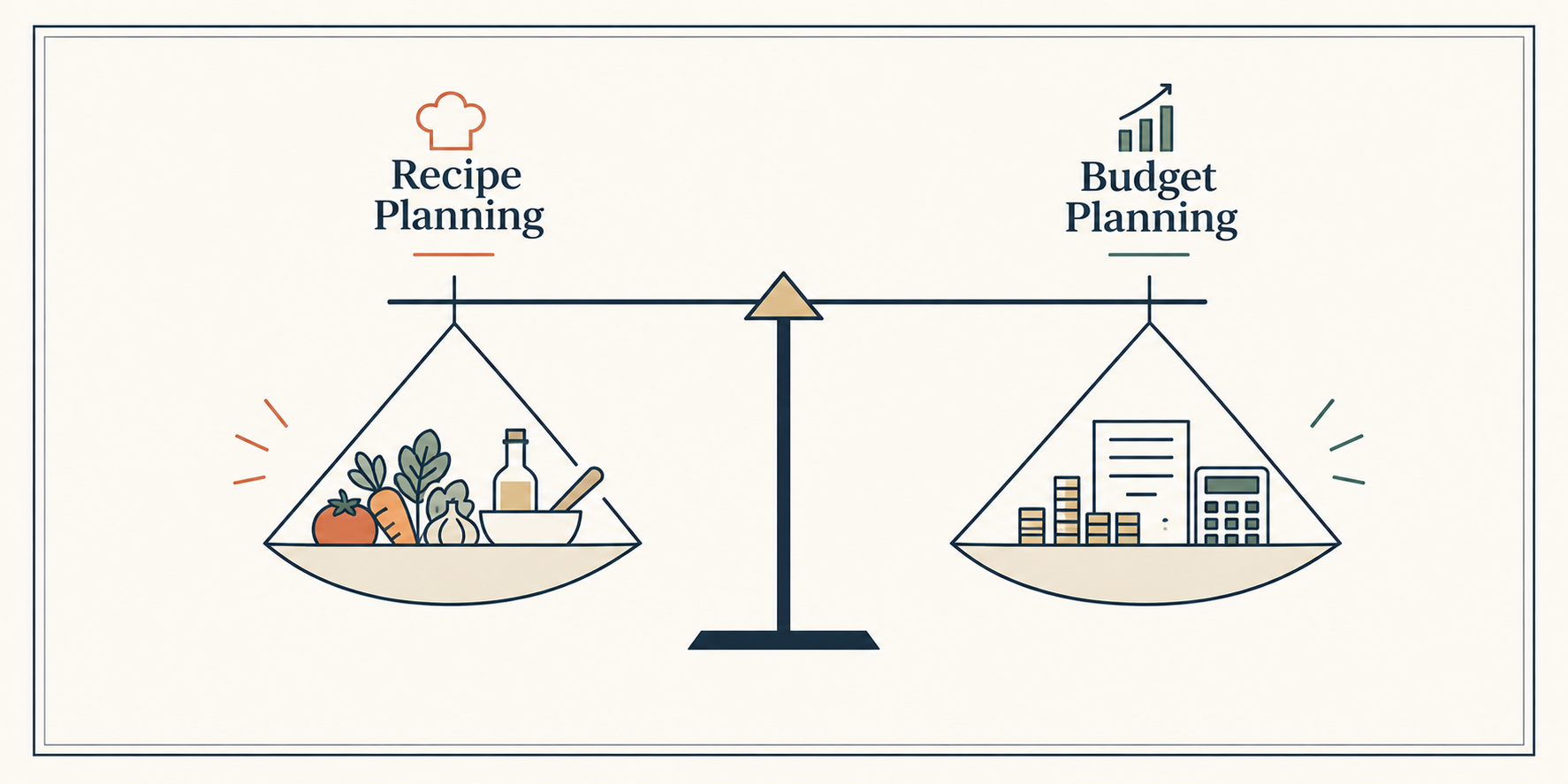
Why not approach your finances like a new recipe that you are putting together for the first time? Success is a result of that which is certain. A plan that does not include a backup is still in the realm of the uncertain. Think of when you are introduced to a new recipe. You look at the directions, make a list of what you need to purchase, and determine your budget, which includes what that will cost. Even for the very routine task of cooking, you do research, get your ingredients, and plan out the process. So why do we charge into financial decisions without the same thought put into them when it is perhaps the most important area of your life—your money? The fear of failure is what may cause you to not even try the recipe in the first place. But have you ever looked at what is the root of that fear? It is almost always from inexperience and lack of information. You think something will go wrong, but you have not put in the time to really get to know the process. Awareness without action will have you stuck in one place. Sure, you may have all the steps in your head, but if you don’t carry them out, then nothing will come of it. You don’t have to be an expert chef to prepare a delectable dish. All you need are the right directions and ingredients. The same can be said about budgeting. You don’t need a degree or complicated methods. Just directions, ingredients, and allocation.
From Pantry to Price Tag
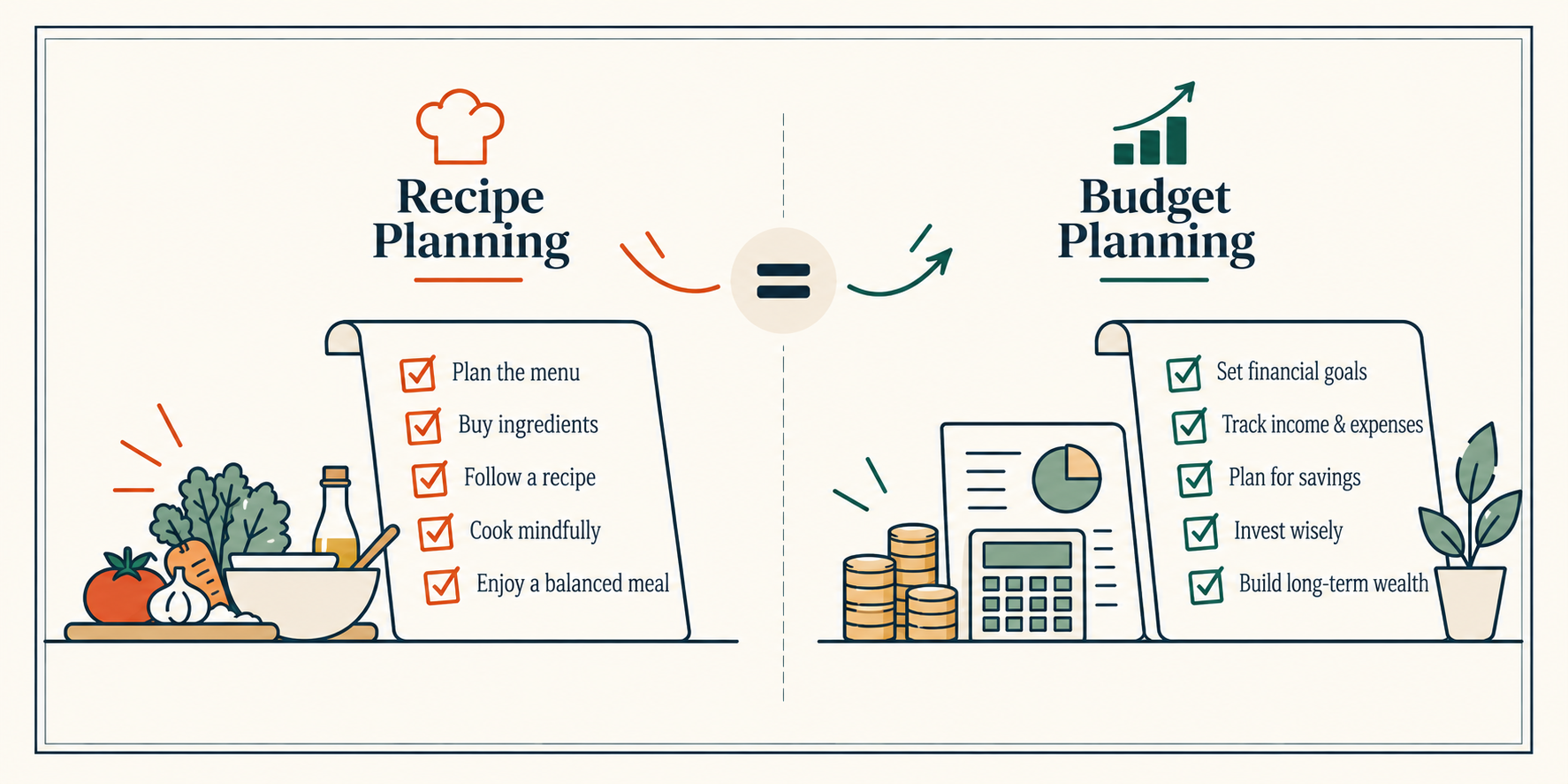
Planning ahead for what you will cook directly sets the stage for how it will turn out. First up are the instructions. Then you make your grocery list. Finally, in comes the budget, which is the most important. In this order, the budget has the most weight. The taste you desire is based on what you are able to put in that budget. Missing an ingredient often is a result of not having enough in the budget. One void can change the whole thing. Distinguishing between what you need and what you want is key here. Separating out which items go first helps things run more smoothly. When you rank which to do by how soon they are needed out of the gate, execution goes better. If a priority-based approach is what opens up the best options, why continue to rush or guess? Budget planning is key to the result. It is thought that a large budget is the ticket to success and that a small one is a fail. I won’t say that the size of the budget is irrelevant. It does. But how you put that budget to work matters far more. Thoughtful allocation often does better than just going for broke.
“You have a choice of which version of the recipe to try. The first requires expensive ingredients and special tools. The second does the same thing in a simpler, less expensive way. People would surely not prefer the first version. The second is the better version to go by.”
Most people commit the same mistake of selling themselves short a little too soon. A man should be in debt or selling his own things when his expenditure surpasses his income. However, a money-savvy person never finds himself in such a fix and rarely ends up in debt. The first reaction of a person who focuses on money—not rates—is to consider ways to increase what they have rather than reduce that amount. Have you ever observed that certain families often remain in poverty, while other families take wealth to another level? When your expenses are greater than your income, you save money. If you are in debt, you have a wider choice of jobs than you otherwise would. When most people see a money-related problem, their initial response is that they should cut spending. Fewer people see the potential opportunity, the other side of the coin, so to speak. This goes against the obvious answer that most people would give. When you analyze it, it makes sense. Don’t all businesses offer discounts and special offers? If you think the answer boils down to them loving us, you are partially correct. What if there is more than one reason behind those deals? One of the motivations behind those deals is us. The other motive for every discount is that it benefits the business as well. Organizations strive to maintain and improve profits to compete in the market, and, in business, temporary liabilities are used to create a permanent gain through discount-oriented deals to turn a temporary down period into a lasting gain. Likewise, in personal finance, the temporary liabilities are deliberately managed. Furthermore, instead of making payments and paying off loans, the people in this sphere commonly take out new loans to pay off previous ones, creating an illusion that the debts had been turned into profits. You must have noticed that the rich are always trying to augment their money, while the poor are merely looking for ways to tighten their pockets. The contrast does not lie in the scale but in what is placed on each side of it and how carefully you maintain that balance.
Turning Liability into a Working Asset
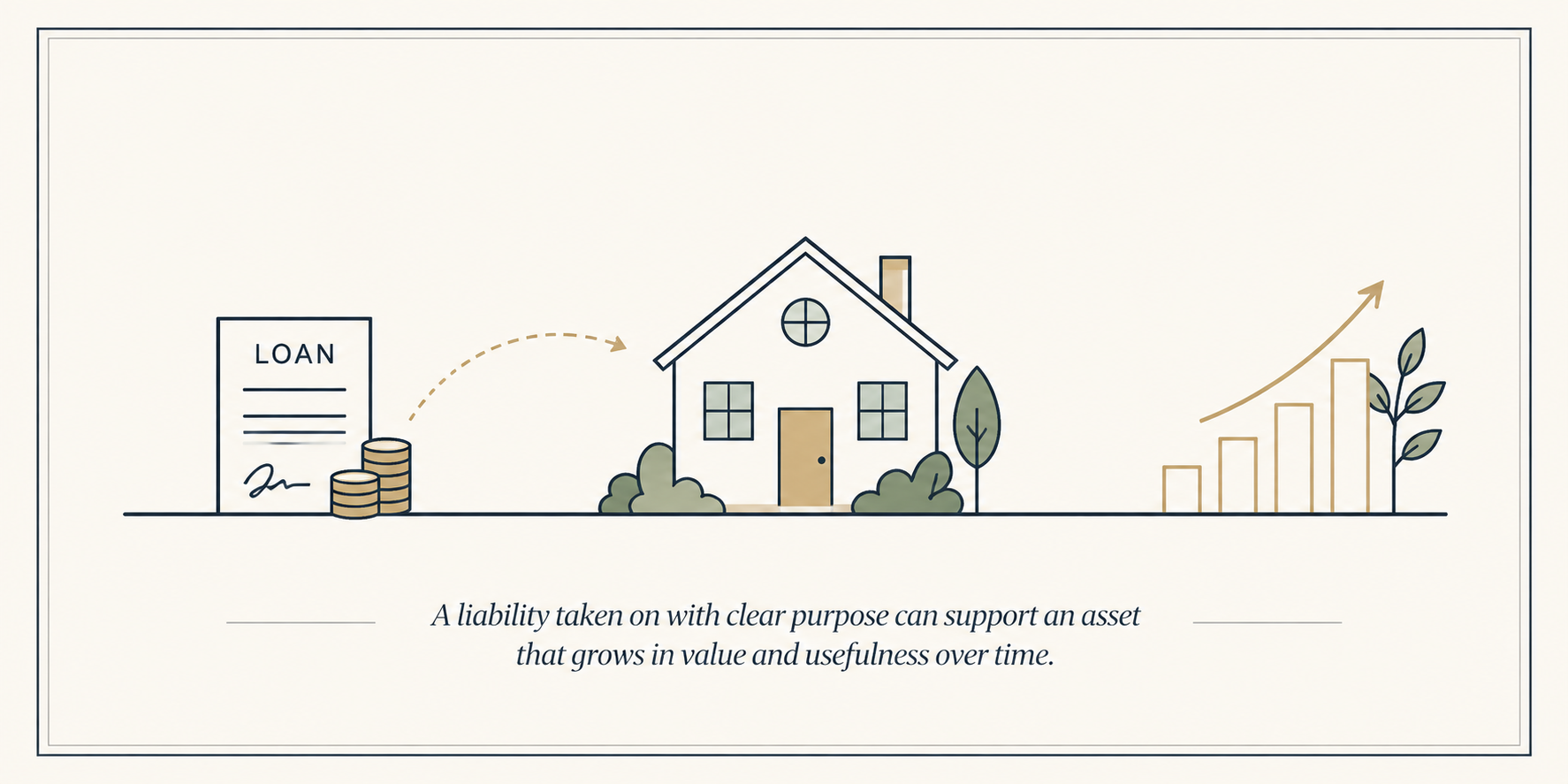
How does one turn a liability into an asset? A simple concept to interpret, but many fails to implement. One who sees an opportunity in the idea sees more than one who is only willing to accept the challenge. Once you’ve learned how to respond to a threat, it transforms into a tool. Think of a loan of money to buy property. One will use the income from the job to pay for the payments on the debt. This is a liability, as the individual must make payments. However, the property is an asset. The liability is used to secure an asset that provides its own income. The income from the property can then go towards the monthly payments. When the property is sold for more than the initial purchase price, the owner not only recovers their initial investment, but they also profit as well. Another asset can be traded for the security of another. The transformation continues. A liability used for the right reasons supports the creation and growth of an asset.
This option is available but is underutilized for the simple reason that the opportunities are right in front of people. The opportunities are there. The only obstacle that stands between most people and the use of these opportunities is the way through which they see the money. When something is foreign, the natural reaction is the rejection. By widening the view, it changes the response.
A Practical Path Anyone Can Follow
Planning the budget is no different than planning a new recipe. There is no need for the process to be perfect from the moment it begins. Study the recipe to see what the process generally is. Then, write down the necessary ingredients just as if one were to write down a necessary grocery list. Instead of assigning values to the ingredients, assign quantities to the things required for the financial recipe. Like the results of the first tasting of the new recipe, the results of the described feedback process are also remarkable on several small points. The process itself is simple but gives quite a significant result. It highlights the importance of identifying both the areas of opportunities and the areas that should be abandoned. Likewise, it allows the recognition of the opportunities to invest the available money and the potential to add to the existing resources for future needs. Whoever has learned to cook knows the importance of the opportunities and the areas where they have to improvise. Whoever perceives the fear of failure when preparing a new dish in the same way as the fear of failure when learning to cook realizes that the situation is not so dramatic: everything depends on the approach to the process.

Comments
Log in or sign up to join the conversation.