

The global Bronze Price market has entered a dynamic phase in 2026, shaped by shifting industrial demand, raw material costs, inflationary pressures, and macroeconomic uncertainty. Bronze, an alloy primarily made of copper and tin, remains an essential industrial material used in construction, electrical components, marine equipment, automotive manufacturing, industrial machinery, and decorative applications.
According to ChemAnalyst Bronze Price: - https://www.chemanalyst.com/Pricing-data/bronze-2333
As economies continue investing in infrastructure modernization and manufacturing expansion, bronze demand has shown regional divergence. While North America and Europe experienced upward pricing pressure due to stronger demand and constrained supply, Asia-Pacific saw price weakness, particularly in China, because of reduced copper consumption and weaker industrial sentiment.
Global Bronze Market Overview
The bronze market remains closely linked to the performance of global metals markets, especially copper and tin. Since bronze production depends heavily on these base metals, fluctuations in feedstock costs directly impact bronze pricing.
Key industries driving bronze consumption include:
Construction and infrastructure
Automotive and aerospace
Marine engineering
Industrial machinery
Electrical and electronics
Art, sculpture, and decorative manufacturing
Global industrial production recovery following supply chain normalization has improved demand in developed economies. However, economic slowdown in parts of Asia has created uneven demand patterns.
Key Factors Affecting Bronze Price
Several macroeconomic and industry-specific variables influence bronze pricing:
Copper and tin price volatility
Mining output and raw material availability
Energy and transportation costs
Manufacturing activity
Infrastructure spending
Labor and operating costs
Inflation and interest rates
When copper prices rise, bronze production costs generally increase, creating upward pressure on bronze prices worldwide.
North America Bronze Price Analysis
United States Bronze Price Trend in Q1 2026
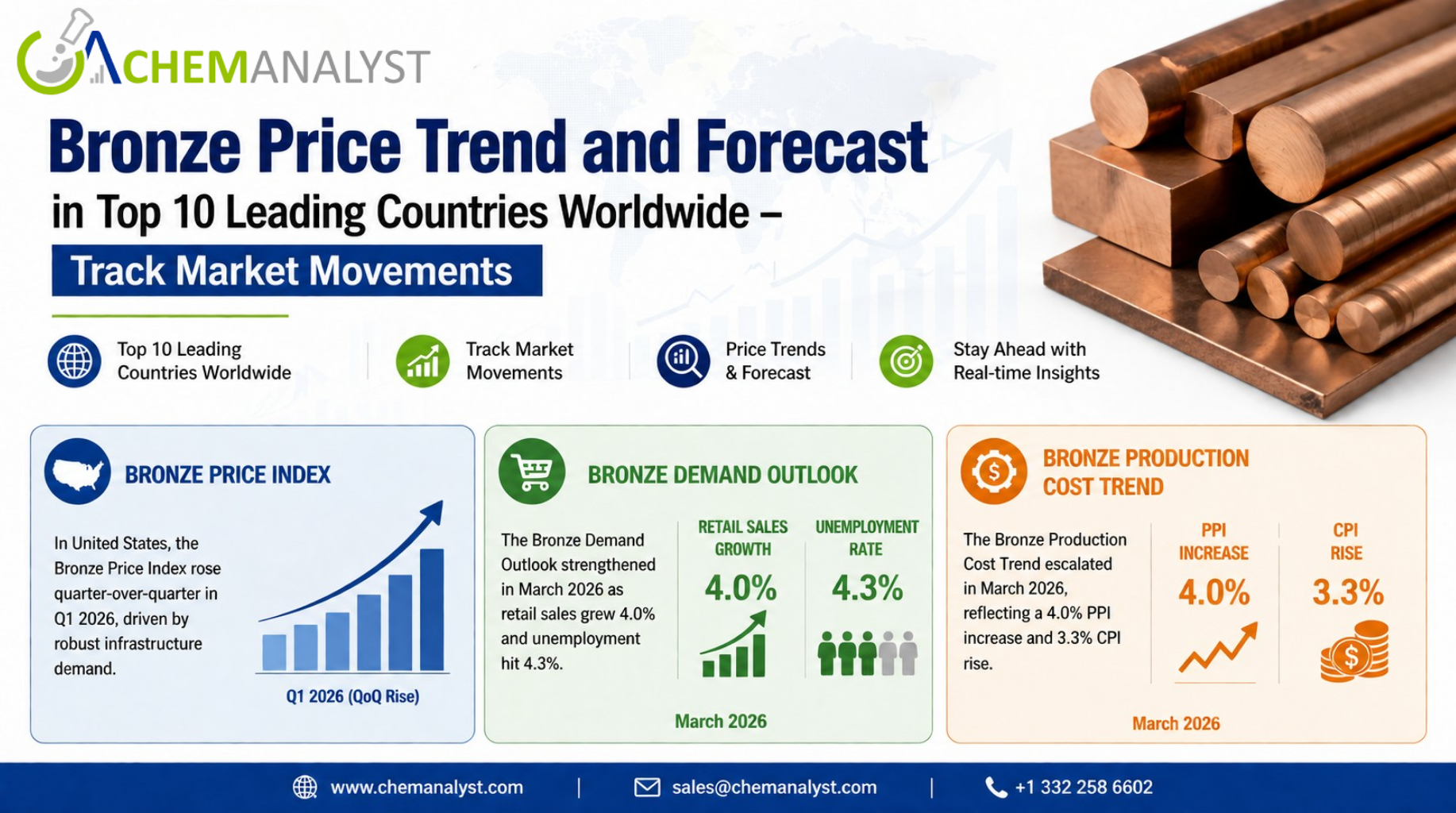
In the United States, the Bronze Price Index increased quarter-over-quarter during Q1 2026. This upward movement was primarily supported by strong infrastructure demand and improved economic activity.
Large-scale federal and private infrastructure projects boosted demand for bronze-intensive applications such as:
Bearings
Bushings
Industrial fittings
Construction hardware
Electrical components
The strengthening construction sector significantly contributed to rising bronze consumption.
Economic Indicators Supporting Bronze Demand
The Bronze Demand Outlook in the U.S. improved notably in March 2026 due to favorable macroeconomic indicators.
Important economic metrics included:
Retail sales growth: 4.0%
Unemployment rate: 4.3%
Higher retail spending reflected stronger economic momentum, encouraging industrial production and capital investment. Lower unemployment also strengthened business confidence, leading manufacturers to increase procurement of industrial metals.
Read the LinkedIn Article: - https://www.linkedin.com/pulse/bronze-price-analysis-2026-latest-market-trends-drivers-kishan-singh-l5nmc/
Supply-Side Factors
Supply-side challenges also contributed to rising prices. Key constraints included:
Elevated transportation costs
Higher energy prices
Tight copper availability
Increased labor costs
Bronze producers faced margin pressure as operational expenses rose, pushing market prices higher.
North America Market Outlook
The North American bronze market is expected to remain bullish in the near term due to:
Infrastructure expansion
Manufacturing resilience
Increased industrial procurement
Stable construction activity
If copper supply tightens further, bronze prices may continue their upward trajectory through 2026.
APAC Bronze Price Analysis
China Bronze Price Trend in Q1 2026
Unlike North America, China experienced a decline in the Bronze Price Index during Q1 2026.
The primary reason behind this price drop was weaker copper demand, which reduced pressure on bronze manufacturing costs and softened market sentiment.
China remains one of the world’s largest producers and consumers of bronze due to its large manufacturing ecosystem. Therefore, shifts in Chinese industrial activity strongly influence global bronze pricing.
Weakening Consumer Confidence
The Bronze Demand Outlook in China weakened during Q1 2026.
A major indicator of declining economic confidence was the consumer confidence index, which fell to 91.6 in February 2026.
Lower consumer confidence often leads to:
Reduced manufacturing orders
Slower industrial production
Lower capital expenditure
Weak commodity purchasing
This created weaker downstream demand across several bronze-consuming industries.
Industrial Slowdown and Copper Weakness
Copper demand stagnated due to slower activity in:
Real estate construction
Manufacturing exports
Industrial equipment production
Since copper is bronze’s primary component, reduced copper demand translated into weaker bronze pricing.
Manufacturers also adjusted inventories downward to avoid excess stock accumulation, putting additional downward pressure on prices.
APAC Market Outlook
The Asia-Pacific bronze market remains mixed.
Potential upside risks include:
Government stimulus measures
Infrastructure spending
Export recovery
Manufacturing rebound
However, sustained economic weakness in China could continue weighing on regional bronze prices.
Europe Bronze Price Analysis
Germany Bronze Price Trend in Q1 2026
In Germany, the Bronze Price Index rose quarter-over-quarter during Q1 2026.
This increase was largely attributed to tightening feedstock supply and rising industrial operating costs.
Germany remains Europe’s manufacturing powerhouse, with strong demand from:
Automotive production
Machinery manufacturing
Precision engineering
Industrial automation
These sectors maintain stable demand for bronze-based components.
Rising Production Costs
The Bronze Production Cost Trend increased significantly in Germany.
One major inflation indicator was the 2.7% CPI recorded in March 2026, which raised industrial operating expenses.
Higher inflation affected:
Labor costs
Electricity expenses
Raw material transportation
Equipment maintenance
Industrial services
As manufacturers absorbed these higher costs, bronze prices moved upward.
Feedstock Constraints
Feedstock shortages created additional pricing pressure.
European manufacturers faced challenges including:
Reduced metal imports
Higher logistics costs
Supply chain disruptions
Raw material procurement delays
Limited availability of copper and alloying materials caused tighter supply conditions.
Europe Market Outlook
Europe’s bronze market is likely to remain firm if inflationary pressure persists.
Important bullish drivers include:
Energy cost volatility
Industrial demand resilience
Supply chain bottlenecks
Raw material scarcity
Unless feedstock availability improves, bronze prices in Europe may stay elevated.
Bronze Production Cost Structure
Understanding bronze production costs helps explain price fluctuations.
Major cost components include:
Raw Materials (Largest Cost Component)
Bronze typically consists of:
Copper (major component)
Tin
Aluminum (in specialty bronze)
Silicon or phosphorus (in specialty alloys)
Raw materials account for the majority of total production costs.
Energy Costs
Bronze production requires significant energy for:
Melting
Alloying
Casting
Rolling
Finishing
Electricity and fuel prices therefore heavily impact final bronze pricing.
Labor and Manufacturing Costs
Labor expenses vary by region and include:
Skilled metallurgical labor
Equipment operators
Maintenance personnel
Quality control staff
Regions with rising wages often experience higher bronze prices.
Logistics and Distribution
Transportation costs include:
Raw material imports
Port charges
Warehousing
Inland freight
Global shipping volatility continues to influence bronze pricing.
Key Demand Drivers for Bronze in 2026
Several emerging trends support long-term bronze demand.
Infrastructure Development
Governments worldwide are investing heavily in:
Bridges
Rail systems
Utilities
Public transport
Water systems
These projects increase bronze consumption.
Renewable Energy Expansion
Bronze components are widely used in:
Wind turbines
Power systems
Electrical connectors
Grid infrastructure
Green energy investment is becoming a major growth catalyst.
Industrial Automation
Automation increases demand for precision bronze components used in machinery and robotics.
This trend is especially strong in developed markets.
Bronze Price Forecast 2026–2027
The global Bronze Price Forecast suggests moderate upward pressure through late 2026, though regional divergence will remain.
Bullish Factors
Potential factors supporting higher prices include:
Rising copper prices
Strong infrastructure spending
Supply shortages
Inflationary pressure
Higher manufacturing costs
Bearish Factors
Potential downside risks include:
Economic slowdown
Weak industrial output
Lower construction activity
Reduced metal demand
Inventory liquidation
Forecast Summary
North America: Moderately bullish
Europe: Bullish to stable
APAC: Neutral to bearish
Overall, global bronze prices are expected to remain volatile but supported by structural industrial demand.
Conclusion
The Bronze Price Trend in 2026 reflects a complex balance between industrial demand, raw material costs, inflation, and regional economic performance.
The United States recorded price gains due to robust infrastructure spending and stronger economic indicators. Germany also saw rising prices as inflation and feedstock constraints pushed production costs higher. In contrast, China experienced declining bronze prices amid weak copper demand and reduced consumer confidence.
As global industrial activity evolves, bronze prices will continue responding to macroeconomic shifts, supply chain dynamics, and commodity market fluctuations. Companies involved in procurement, manufacturing, and trading should closely monitor these indicators to manage cost risks and identify strategic opportunities in the bronze market.
Contact -
Address:
420 Lexington Avenue, Suite 300
New York, NY 10170
United States
Phone: +1 332 258 6602
Website: www.chemanalyst.com
LinkedIn: https://www.linkedin.com/company/chemanalyst/
X (Twitter): https://x.com/chemanalysts
Facebook: https://www.facebook.com/ChemAnalysts/
Comments
Log in or sign up to join the conversation.