

Discover what a boring tool is, how it works, its main types, CNC applications, and tips for choosing the right tool for precise machining.
Boring Tool: Types, Working, Uses & Selection Tips
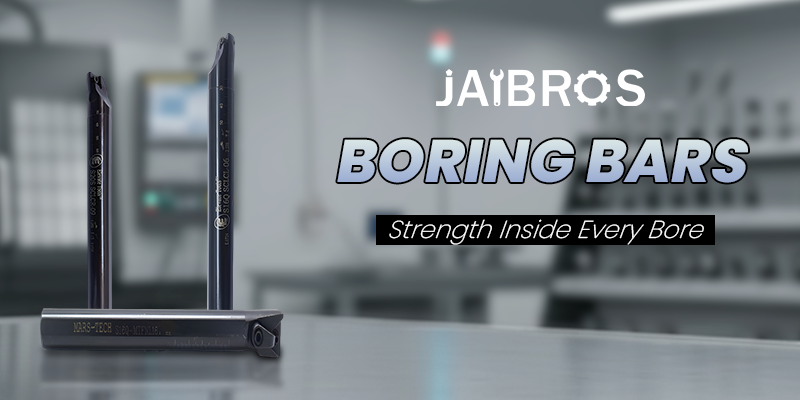
A boring bar is a cutting tool used in machining to enlarge or improve an existing hole with high accuracy. Unlike drilling, which creates a hole from solid material, boring is generally performed after a hole has already been made. It helps machinists achieve the required diameter, alignment, surface finish, and dimensional accuracy. This makes boring an important operation in CNC machining, especially when precision is critical.
What Is a Boring Tool?
A boring tool is made to take material out from the inside of a hole. The exact setup depends on the tool design, but it can run on CNC lathes, machining centers, and other machine tools.
The boring bar carries a cutting insert. As the tool feeds through the hole, the insert removes a set amount of material. Since the cutting edge runs within the part, you need the right tool choice and a solid machine setup. This helps limit chatter and supports good accuracy.
With a CNC boring tool, you can do both roughing and finishing. Rough boring removes more stock first. Finishing is for reaching the final hole size and the needed surface finish.
How Does a Boring Tool Work?
The basic process is straightforward:
An initial hole is created using a drill or another cutting process.
The boring tool is inserted into the existing hole.
The cutting edge contacts the internal wall.
Material is gradually removed as the tool moves along the required path.
The final hole reaches the specified diameter and finish.
A boring bar can often be adjusted or selected according to the required hole diameter, depth, workpiece material, and machining conditions.
Types of Boring Tools
Different boring tools are available for different machining requirements. Some common types include:
Single-Point Boring Tools
These use one main cutting edge and are commonly used when accurate control of the hole diameter is required. They are suitable for precision boring and finishing applications.
Rough Boring Tools
These are designed to remove larger amounts of material efficiently before finishing. They are useful when an existing hole needs significant enlargement.
Fine Boring Tools
Fine boring tools are used when tighter dimensional tolerances and improved surface finish are required. They are often used for finishing operations where accuracy is important.
Adjustable Boring Tools
Adjustable designs allow machinists to make precise diameter adjustments. This can be useful when a specific final hole size needs to be achieved.
Boring vs Drilling: What Is the Difference?
Drilling and boring are both used to produce holes, but they perform different functions.
Drilling normally creates the initial hole in solid material. A drill has its own cutting geometry for entering the workpiece and producing a new hole.
Boring, on the other hand, works primarily on an existing hole. It enlarges the hole and can improve its dimensional accuracy, alignment, and surface finish.
For example, a manufacturer may first drill a hole and then use a boring tool for CNC machining to bring that hole closer to the required final dimensions.
Choosing the Right Boring Tool for CNC Machining
Selecting the right tool depends on several factors.
Workpiece Material
Consider whether you are machining steel, stainless steel, cast iron, aluminum, or another material. Tool material and insert geometry should match the workpiece.
Hole Diameter and Depth
The required diameter and hole depth influence the tool size and design. Deep holes may require a suitable tool length and rigid setup.
Required Accuracy
If the application requires tight dimensional control, choose a tool designed for precision boring. Tool runout, machine rigidity, and setup accuracy also affect the final result.
Cutting Conditions
Spindle speed, feed rate, depth of cut, and coolant can influence tool performance. Always follow the manufacturer's recommended cutting parameters where available.
Why Tool Rigidity Matters
Internal machining can be sensitive to vibration because the tool extends into the workpiece. Excessive tool overhang can increase deflection and cause chatter, poor surface finish, or dimensional errors.
Using a rigid boring bar, minimizing unnecessary tool extension, and maintaining a stable machine setup can help improve machining consistency.
For demanding applications, CNC boring tools should be selected according to the machine, workpiece, hole geometry, and required tolerance rather than only the tool price.
Applications of Boring Tools
A boring tool for CNC machining can be used in many industries where accurate internal holes are required. Common applications include:
Automotive components
Aerospace parts
Hydraulic components
Industrial machinery
Engine components
Gear housings
Bearing seats
General precision machining
These applications may require different tool geometries and cutting conditions depending on the component and material.
Tips for Better Boring Performance
To achieve consistent results, machinists should:
Keep the tool securely clamped.
Minimize tool overhang.
Use suitable cutting parameters.
Check insert condition regularly.
Use appropriate coolant or lubrication when required.
Monitor vibration and chatter.
Measure the finished hole accurately.
Replace worn inserts when necessary.
Proper setup is especially important because even a high-quality boring bar can produce inconsistent results if the machine setup is unstable.
Conclusion
A boring tool is an important solution for accurately enlarging and finishing existing holes in CNC machining. From roughing operations to precision finishing, different boring tools are available for different requirements. Choosing the correct tool depends on factors such as workpiece material, hole diameter, depth, tolerance, tool rigidity, and cutting conditions.
For precision applications, the right CNC boring tool combined with proper setup and machining parameters can help produce consistent hole dimensions and surface quality. Understanding how each tool works makes it easier to select the appropriate boring tool for CNC applications and achieve reliable machining results.
Comments
Log in or sign up to join the conversation.