


Treasury Secretary Scott Bessent is playing a dangerous game. By tempting the bond market to effectively test his resolve, he’s putting his own credibility, and that of his agency, on the line. His strategy could ultimately draw in the Federal Reserve, which may soon be pressed to tighten monetary policy to counteract the blowback from a bond market that continues to push Treasury yields higher.
Nearly a month ago, Bessent announced that the Treasury Department would double the size of its standard government buyback program. On Wednesday, Treasury upped the ante to $6 billion in an effort to cap, if not lower, the recent rise in yields. So far, the bond market has dismissed the effort and instead continued to push yields higher.
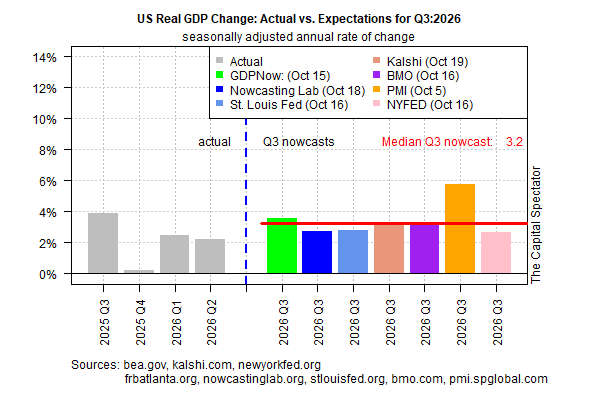
The 10-year yield rose to 4.84%, its highest level since October 2023. Yes, some of the increase can be attributed to a resilient US economy. Yet the administration’s preference for taunting the bond market and claiming that “the yields don’t reflect the underlying fundamentals” while shunning meaningful spending and tax-policy reform to control the government’s ballooning debt could be laying the groundwork for a crisis.
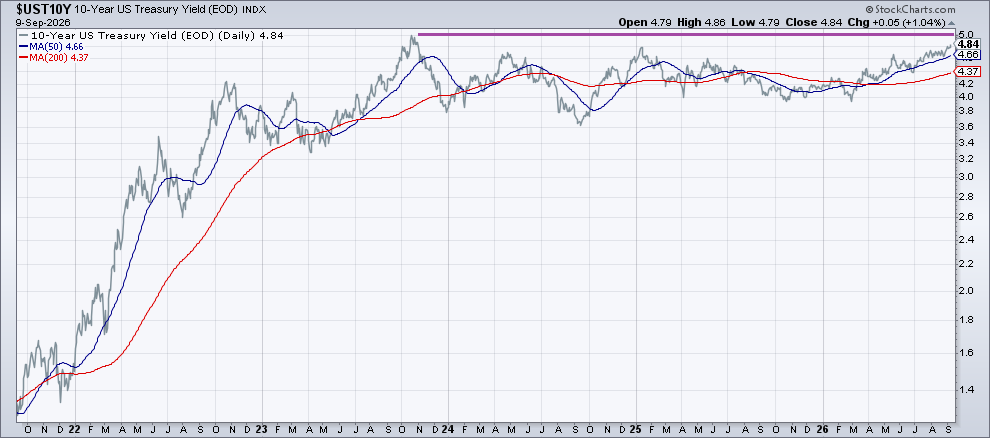
To be fair, Congress (both parties) is complicit in the fiscal train wreck that is unfolding. No one knows where the tipping point lies, but the benchmark 10-year yield is probably the best real-time indicator for assessing the market’s tolerance for the years-long policy of letting red ink pile up with little, if any, effort to stem the tide.
A key level for the 10-year yield may be 5%, which could be breached within days. There’s nothing magical about that mark, and it’s not obvious that crossing it would trigger significant changes in markets or Washington. But doing so would surely focus minds and stimulate discussion by highlighting a 19-year high for what has been called the most important interest rate in the world.
An ongoing rise in the 10-year yield will increasingly become a referendum on the government and its capacity to act responsibly in the fiscal sphere. The market’s reaction so far is clear: the increase in bond buybacks has earned a decisive thumbs-down, in part because even a $6 billion-per-operation amount is merely a drop in the bucket of the more than $30 trillion US government debt market.
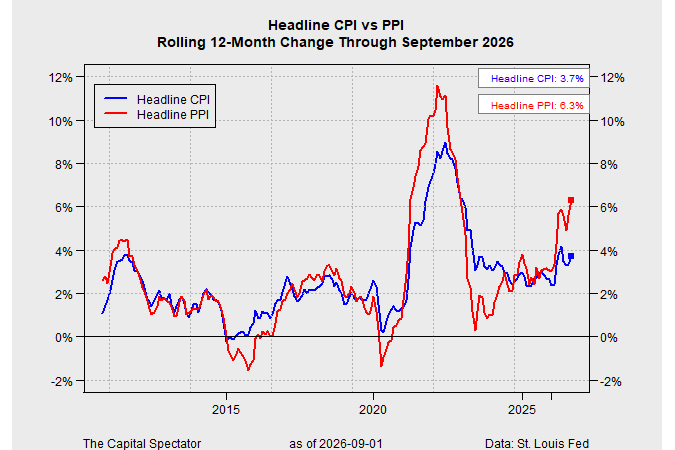
Fiscal anxiety is only part of the bond market’s concern. Inflation uncertainty is also part of the mix. Federal Reserve Chairman Kevin Warsh has been playing his own game of chicken with markets, albeit with more subtlety and nuance. In his public comments since taking the helm at the central bank, he has repeatedly stressed that inflation remains too high and, as he said last month, “It is the Fed’s job to deliver stable prices.”
That’s what you would expect a central banker to say and, at face value, it is reassuring and timely, given that inflation has been running above the Fed’s 2% target for more than five years. But what exactly does the chairman’s lofty statement mean for monetary policy in the near term? Warsh has been cagey about specifics, preferring to refrain from so-called forward guidance and avoiding discussion of the economic and financial conditions that would trigger rate hikes.
If Treasury yields continue to rise, pressure on the Fed will increase to tighten policy, perhaps as early as next week’s FOMC meeting. Indeed, we may be at the point where nothing less than a more restrictive monetary stance will calm the bond market by signaling that the Warsh Fed will remain independent of political influence and stay focused on its dual mandate of stable prices and full employment.
Ideally, a hawkish pivot at the Fed would be reinforced by a White House and Congress willing to show some backbone and take a step or two toward fiscal probity, if only in talking about the topic. I’m not holding my breath, especially with the midterm elections less than two months away.
The question is whether the bond market’s patience is running thin. We’re now at the point where higher yields from this point may start to have conspicuous spillover effects for the stock market and the wider economy.
A possible sign of things to come is found in the latest commentary from Norway’s sovereign investment fund, the world’s largest investor in terms of a single portfolio. Reading the writing on the market walls, the fund advised that it was timely to consider reducing the weight of government debt in its fixed-income allocation. The reasoning:
The degree to which bonds will contribute to dampening volatility in future crises, will depend on the nature of the crisis. For example, one might expect government bonds to not have the same volatility-dampening effects in a government bond crisis… We further recommend that the government subindex be weighted by market value instead of GDP, since high government debt is now a general feature of developed economies rather than a distinctive feature of a few countries.
No one will ring a bell when the regime shift arrives. But to quote Dylan, “It’s not dark yet, but it’s getting there.”

Comments
Log in or sign up to join the conversation.