
Board and batten has come a long way from its humble origins on barns and agricultural buildings. What was once purely functional siding has evolved into one of the most sought-after wall treatments in contemporary interior design. The look is unmistakable: wide vertical boards spaced apart with narrow strips called battens covering the seams, creating a rhythmic pattern of shadow and light that adds instant texture to any room. Modern board and batten kits have stripped away the heavy, rustic connotations and embraced cleaner lines, slimmer profiles, and more refined proportions that feel right at home alongside mid-century furniture or minimalist decor. The beauty of using a kit rather than starting from raw lumber is that the spacing calculations are already done for you, the battens are pre-cut to consistent lengths, and the overall design has been tested to look balanced on standard wall heights. For anyone who loves the farmhouse aesthetic but wants something a bit more polished, this is the perfect bridge.
How Board and Batten Differs From Other Molding Styles
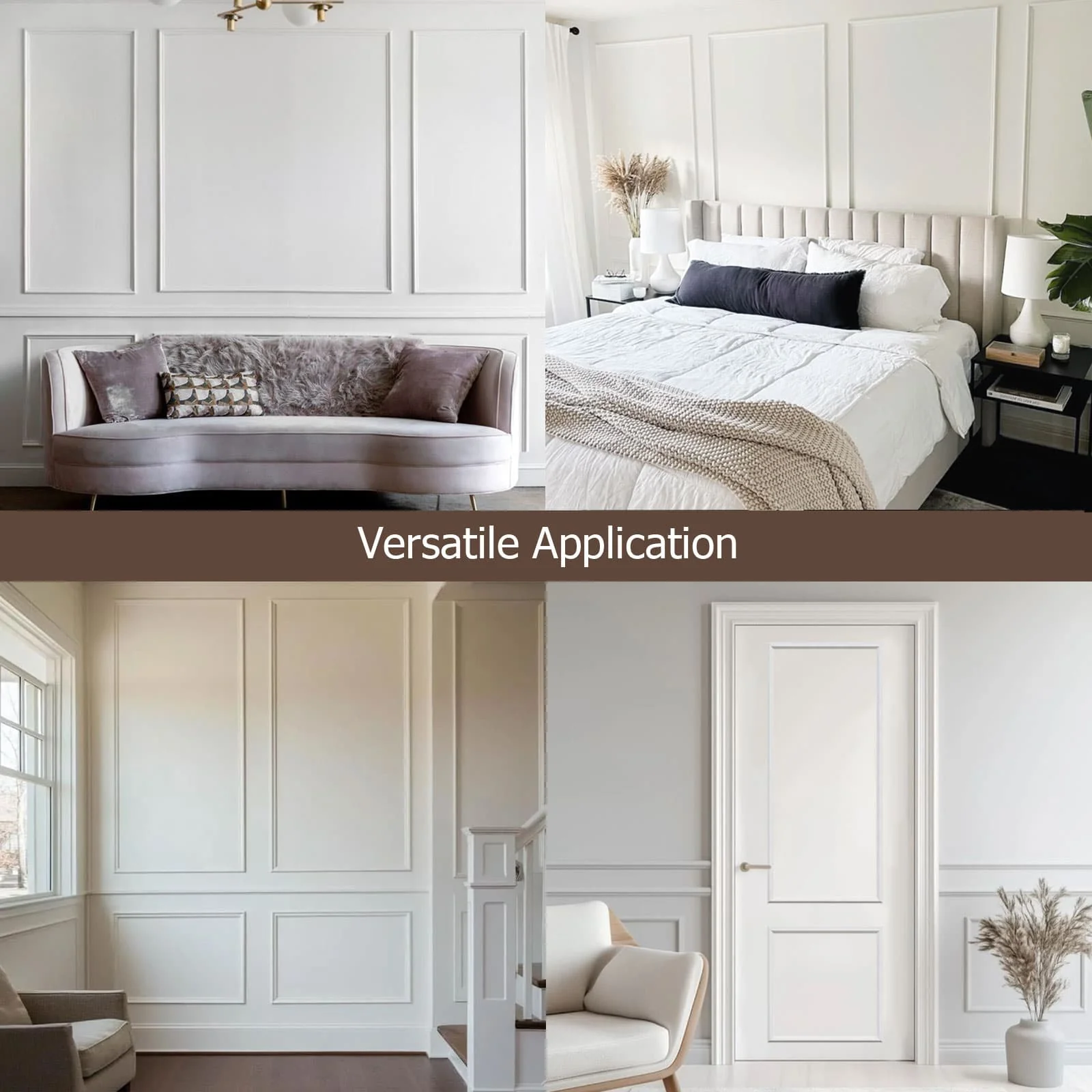
If you have looked at picture frame molding or wainscoting and wondered how board and batten fits into the same conversation, the difference comes down to direction and repetition. Picture frame molding creates isolated boxes on the wall, each one a self-contained rectangle. Wainscoting typically covers only the lower portion of the wall, creating a chair-rail effect. Board and batten, by contrast, runs vertically from floor to ceiling, covering the entire wall height in a continuous rhythm of wide boards and narrow battens. This vertical emphasis is what makes the style so effective in modern homes with standard eight-foot ceilings, because the eye naturally travels upward, making the room feel taller and more expansive. The pattern is also more forgiving than isolated frames, because a slight misalignment in one batten is less noticeable than a crooked picture frame panel. For beginners, this forgiving nature is a genuine advantage.
What a Typical Kit Includes and Why It Matters
Opening a board and batten kit reveals a carefully curated collection of materials that would take hours to source individually. The main components are the wide vertical boards, usually called the baseboards of the system, and the narrower battens that sit on top of the seams between those boards. Most kits also include a top rail that runs horizontally across the top of the battens, giving the whole installation a finished, intentional edge rather than letting the battens simply stop at the ceiling. Some premium kits add a bottom rail as well, creating a defined lower boundary that mimics traditional wainscoting proportions. The materials themselves have evolved beyond raw pine. Modern kits typically use medium-density fiberboard or primed polyurethane, both of which arrive smooth, straight, and ready to paint. The kit also includes layout guides, adhesive recommendations, and often a set of spacers that automatically maintain consistent gaps between battens. You are not guessing at spacing or hoping your measurements are correct.
Preparing Your Wall for Vertical Installation
Board and batten installation places unique demands on your wall surface because the vertical lines will mercilessly reveal any unevenness in your drywall. Before you open the kit, run a long level or a straightedge vertically along the wall in several places. If you find dips or humps larger than an eighth of an inch over a four-foot span, consider skimming those areas with joint compound and sanding them smooth before proceeding. The reason for this fussiness is simple: light travels horizontally across a room, and any vertical bump casts a shadow that runs directly along your batten, making the imperfection glaringly obvious. After addressing any major wall issues, clean the surface thoroughly to remove dust and grease. Mark your stud locations on the wall with painter’s tape, because you will want to drive nails into studs wherever possible for maximum holding power. Finally, use a laser level or a chalk line to mark a perfectly vertical reference line where your first batten will go. That first line determines the straightness of everything that follows.
Layout Strategies for Different Wall Widths
Not every wall is the same width, and a good board and batten kit gives you flexibility to adjust the pattern without breaking the design. The ideal scenario is a wall width that divides evenly into equal-width sections, with a batten landing exactly at each end and one in the center of each section. In reality, walls rarely cooperate that perfectly. The professional solution is to start from the center of the wall and work outward, allowing the end sections to be slightly narrower than the interior sections. This asymmetry is far less noticeable than a design where the end sections are dramatically different from the rest. Use the spacers included in your kit to maintain consistent gaps between battens, but do not be afraid to adjust the last gap by a quarter inch if it means avoiding a sliver-thin batten at the corner. The goal is a rhythm that feels intentional, not a mathematical perfection that draws attention to itself.
Installing the Base Boards Before the Battens
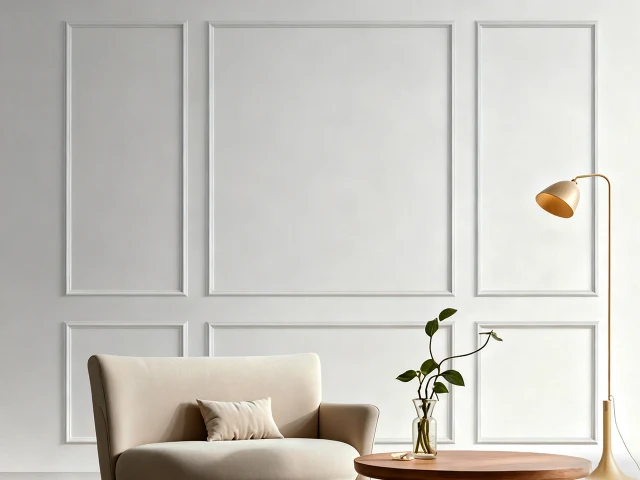
The order of operations matters more with board and batten wall molding kit than with many other molding styles because the battens need something solid to attach to. Start by installing the wide base boards that will sit behind the battens. These boards typically run the full height of the wall and are spaced according to your layout plan. Attach them using construction adhesive and finish nails driven into studs, ensuring each board is perfectly vertical before moving to the next. Once all base boards are up and the adhesive has cured according to the manufacturer’s instructions, you can begin installing the battens. Each batten should be centered over the seam where two base boards meet, covering the gap completely. Apply adhesive to the back of each batten, press it into place, and nail through the batten into the base board beneath. This two-layer system means you never have to worry about hitting a stud with every nail, because the base board provides solid backing across the entire wall surface.
Finishing Touches for a Seamless Modern Look
The difference between a board and batten wall that looks like a DIY project and one that looks like it came with the house is almost always in the finishing details. After all boards and battens are installed, go over every seam and corner with paintable latex caulk. Run a thin bead along the top edge where the top rail meets the ceiling, along the bottom edge where it meets the floor or baseboard, and down the sides of every batten where it meets the wall. Smooth each bead with a damp fingertip, wiping away excess with a wet rag. Fill every nail hole with lightweight spackle, let it dry, and sand it smooth. Once all caulk and filler are dry, prime the entire assembly with a high-bonding primer, paying special attention to the edges of the MDF or polyurethane where the material is most absorbent. Finish with two thin coats of your chosen paint color, using a small foam roller for the flat surfaces and a brush to cut into the corners. The result should be a monolithic surface where the boards, battens, and wall read as a single, unified architectural feature.
Comments
Log in or sign up to join the conversation.