

Blockbuster disrupters in the fight against COVID-19
Cell therapies against COVID-19
Globally, the healthcare industry is using every weapon in its armory to suppress the threat from the novel SAR-CoV2 virus, including the use of living therapies such as natural killer (NK) cells, T-cells, stem cells, and exosomes as developed out of Capricor Therapeutics, Inc., (CAPR). While many novel approaches are being investigated, stem cells - mesenchymal stem cells (MSCs) in particular - are showing intriguing potential for the treatment of COVID-19.
Disrupters for those battling COVID-19 and complications from having a positive Coronavirus test
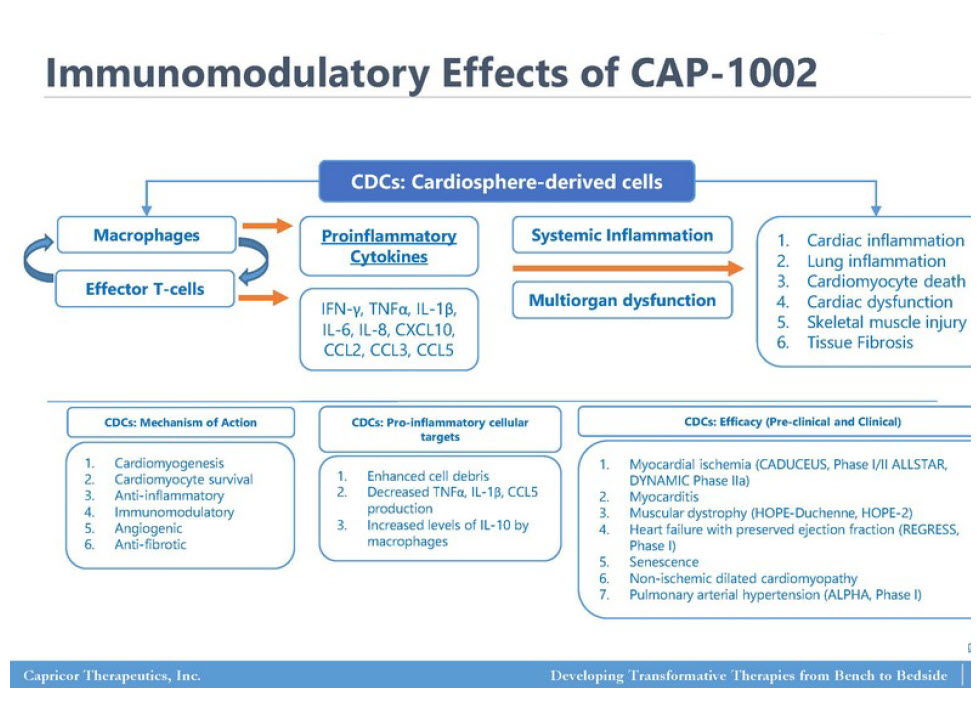
MSCs are receiving attention because past studies and the FDA emergency approval of CAP-1002 Cedars-Sinai Medical Center as ongoing study have found the secretions from MSCs to be effective at treating inflammation and cytokine storms. From early-stage studies, it appears that MSC may exert beneficial effects, potentially by improving the lung microenvironment, inhibiting immune system over-activation, promoting tissue repair, protecting lung alveoli epithelial cells, preventing pulmonary fibrosis, or improving lung function.
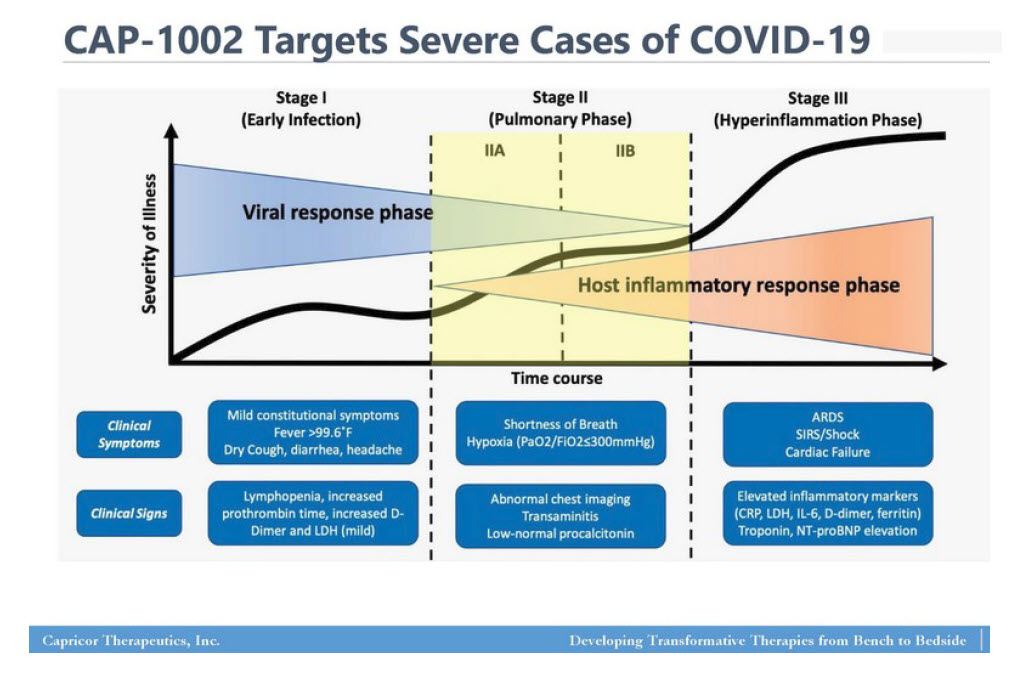
As leading examples, with Capricor Therapeutics, Inc., CAPR DMD CAP-1002 having synergistic and potentiated effects with the current COVID-19 Treatment Protocols, Dexamethasone/Steroid/Antimicrobial therapies as observed on severally ill ICU Intubated patients. These ICU SAR-CoV2 patients having block-buster reported by Cedars-Sinai Medical Center treating physicians in CAP-1002 relieving Pulmonary Hypertension, with a significant effect on supporting COVID-19 damages to ICU admitted patients having severe B/P low pressures affecting cardiac functions, but with CAP-1002, the cardiac injection fractions; had stabilized returning a more normal cardiac function, taking noted assistive reduction on cytokine storm effects to the Kidneys and Liver functions.
Furthermore, Athersys, Inc. (ATHX) has also reported positive outcomes in other studies using MSCs for treating respiratory, cardiac, kidney, and liver disease, with high expectations with Alhersys, Inc. Mesoblast's Remestemcel-L has proved to be effective in treating advanced respiratory distress. Athersys and Mesoblast are enrolling for 300 and 400 patient trials, respectively - two of the largest stem cell trials to date against COVID-19. In total, at least 26 companies are exploring cell therapy products against COVID-19 and its complications.
In recent months, there has been a flurry of activity within the clinical trial sector. When all trial types are considered, there are over 400 studies exploring approaches to diagnosing, treating, or preventing COVID-19. ClinicalTrials.gov has also reported at least 15 trials leveraging stem cells against COVID-19.
(Click on image to enlarge)
Provided by Capricor Therapeutics, Inc. (c) 2020
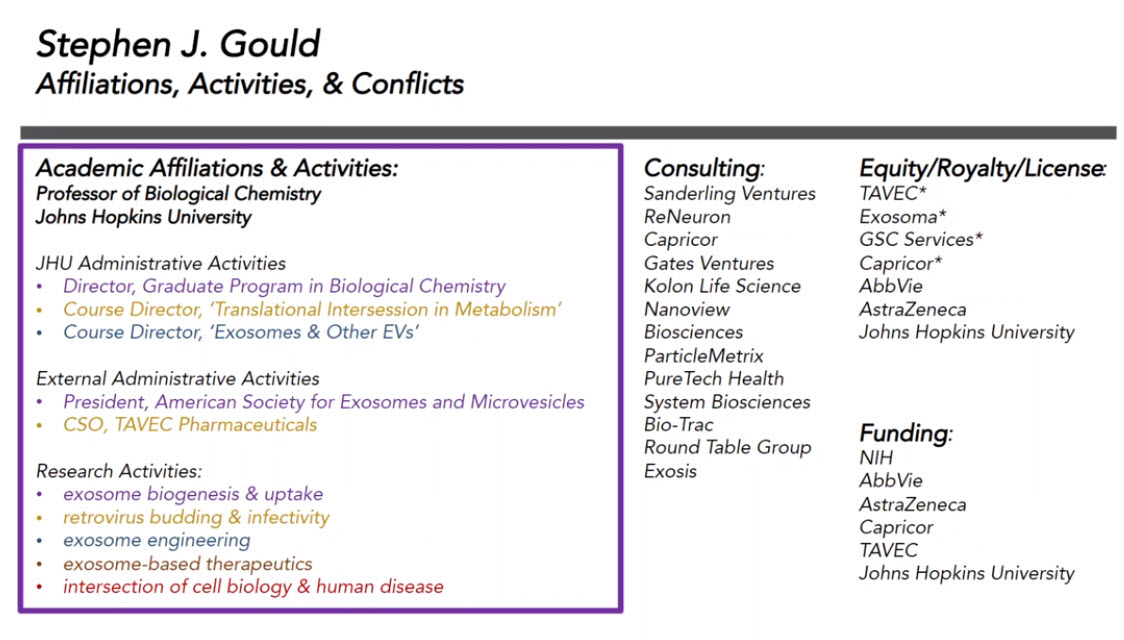
Why you need to know Dr. Stephen J. Gould from John Hopkins, moving forward exosome research & technology
COVID-19 is the largest pandemic in modern history, with more than ten million confirmed cases and a half million deaths in under six months.
While there is not yet an approved treatment for COVID-19, the scientific, medical, and regulatory agencies are making heroic efforts to bring out new medicines. Numerous COVID-19 product categories have emerged, including vaccines, antibodies, antivirals, repurposed drugs, RNA-based drugs, and cell-based therapies, as well as other approaches, such as enzymes, peptides, and glycoproteins.
This report explores each of these product development categories in detail, presenting the products under development and timelines for them to come to market. Special attention is given to the critical role of cell-based therapies in the management of the global pandemic.
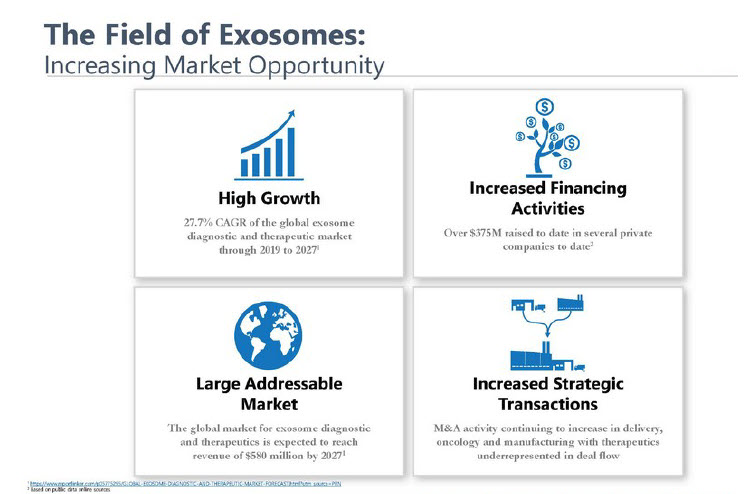
Keeping focused on why M&A with PT $24 - $32 Dollars a share upside
(Click on image to enlarge)
(Click on image to enlarge)
COVID-19 Treatments & Technologies
To accelerate the development of therapies against COVID-19, the repurposing of existing drugs is being explored by numerous market competitors. For example, Barcitinib is being explored because of its anti-inflammatory effect and possible ability to reduce viral entry. A specific dose of the anti-HIV combination, Lopinavir-Nitonavir, is now in clinical trials with Arbidol or Ribavirin. Remdesivir, developed by Gilead Sciences (GILD), was earlier tested in patients with Ebola virus and has shown promise in animal models for MERS and SARS. Remdesivir has reached Phase III in the U.S. and China.
Favipiravir, a purine nucleoside leading to inaccurate viral RNA synthesis, was previously developed by Toyama Chemical of Japan and has now been approved for a clinical trial as a drug for the treatment of COVID-19. Chloroquine has shown itself to be effective in treating COVID-19 in China.
Dozens of companies are rushing vaccine development and proceeding toward clinical trials. As select examples, the U.S. NIH initiated a Phase I trial in Seattle evaluating an investigational vaccine (mRNA-1273) created by NIAID scientists and their collaborators at Moderna, Inc (MRNA). Sanofi (SNY) and Regeneron (REGN) launched a Phase II/II trial in New York evaluating the IL-6 targeted Kevzara. Inovio Pharmaceuticals (INO) is advancing its vaccine into human trials within the U.S. and intends to produce one million doses of it by the end of the year.
Summary
Cell Therapies Against COVID-19
Globally, the healthcare industry is using every weapon in its armory to suppress the threat from the virus, including the use of living therapies such as natural killer (NK) cells, T-cells, stem cells, and exosomes. While many novel approaches are being investigated, stem cells - mesenchymal stem cells (MSCs) in particular - are showing intriguing potential for the treatment of COVID-19.
MSCs are receiving attention because past studies have found the secretions from MSCs to be effective at treating inflammation and cytokine storms. From early-stage studies, it appears that MSC may exert beneficial effects, potentially by improving the lung microenvironment, inhibiting immune system over-activation, promoting tissue repair, protecting lung alveoli epithelial cells, preventing pulmonary fibrosis, or improving lung function.
As leading examples, Athersys, Inc. has reported positive outcomes in other studies using MSCs for treating respiratory disease, and Mesoblast's Remestemcel-L has proved to be effective in treating advanced respiratory distress. Athersys and Mesoblast are enrolling for 300 and 400 patient trials, respectively - two of the largest stem cell trials to date against COVID-19. In total, at least 26 companies are exploring cell therapy products against COVID-19 and its complications.
In recent months, there has been a flurry of activity within the clinical trial sector. When all trial types are considered, there are over 400 studies exploring approaches to diagnosing, treating, or preventing COVID-19. ClinicalTrials.gov has also reported at least 15 trials leveraging stem cells against COVID-19.
We will give our current hit-list in our next article dealing with biopharmaceuticals as great M&A candidates well past the vaccine and med/cocktail for COVID-19 has been put behind us.



Comments
Log in or sign up to join the conversation.