


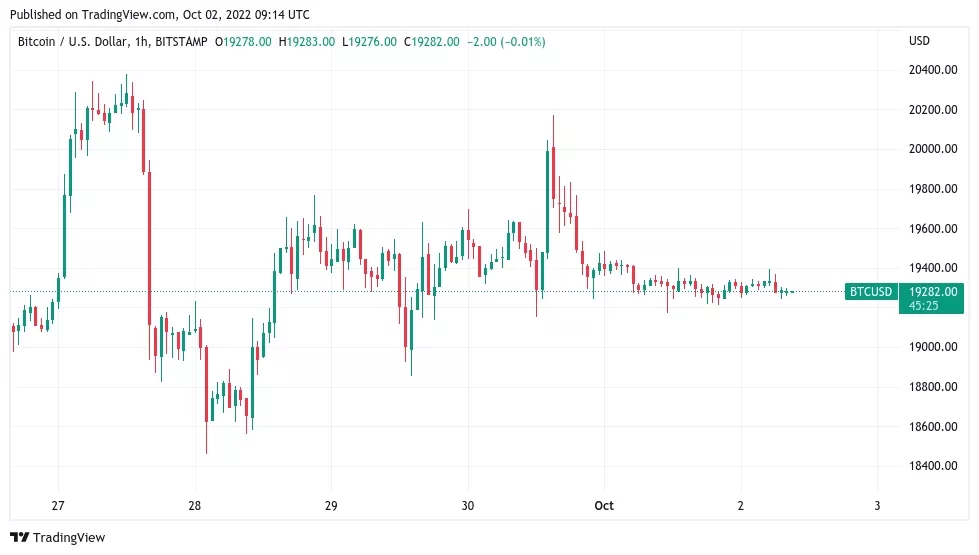
Bitcoin (BTC) could not maintain its position of over $20,000 going into the monthly close of September, as one trader looked ahead to a potential final comeback before more losses.
Source: TradingView
Trader's $20,500 upside objective remains
After closing out the month at approximately $19,400, according to data provided by Cointelegraph Markets Pro and TradingView, the BTC/USD exchange rate continued to fall.
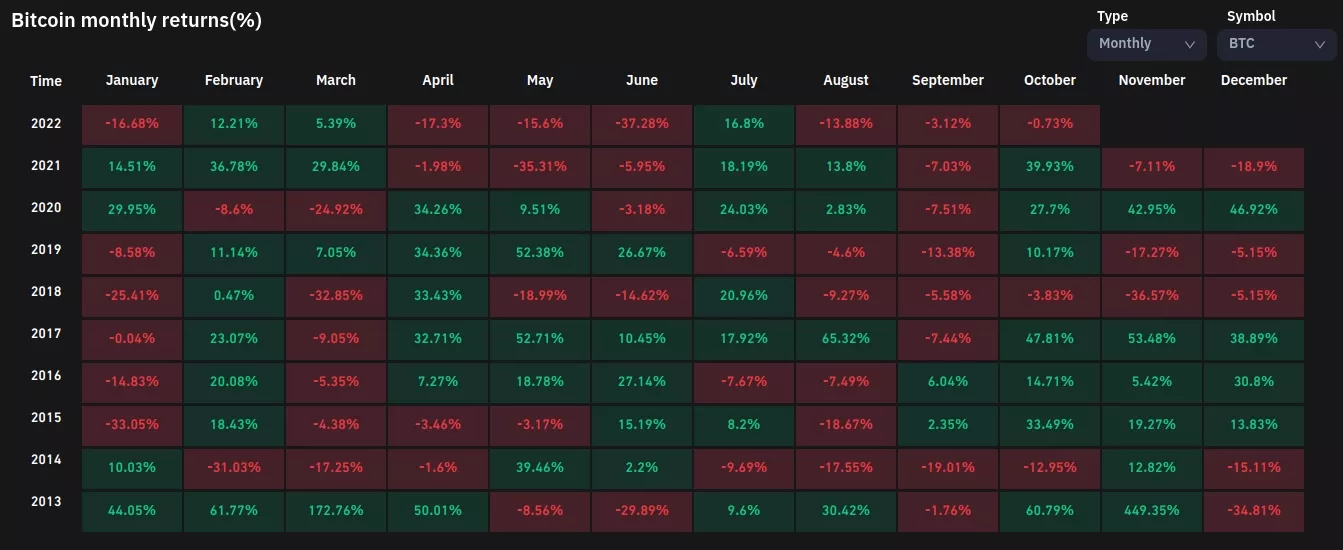
According to information obtained from the on-chain data resource Coinglass, the monthly chart failed to rise on October 1, bringing its total loss to 3% and the BTC/USD exchange rate down by another 0.7% so far in the month of "Uptober."
A lack of interest for risk assets was compounded to by dismal macroeconomic statistics from macro markets, and among crypto traders, the outlook remained pessimistic.
A recovery of more than $20,000 for the popular Twitter account Il Capo of Crypto was still a possibility on the day, but this was expected to be immediately followed by a significant drop.
A further post mentioned consistent buy-ins totalling 192,000 dollars on the FTX exchange, which the author of the post argued could contribute to the short-term upside of the price.
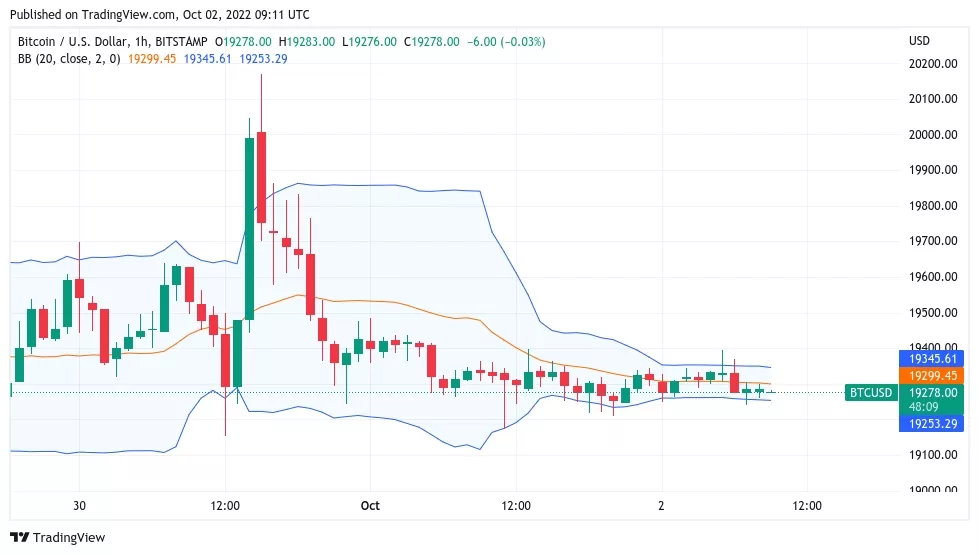
Nevertheless, at the time this article was written, BTC/USD appeared to be suitable for volatility towards the weekly close. This was indicated by the tightening Bollinger Bands on lower timeframes.
Source: TradingView
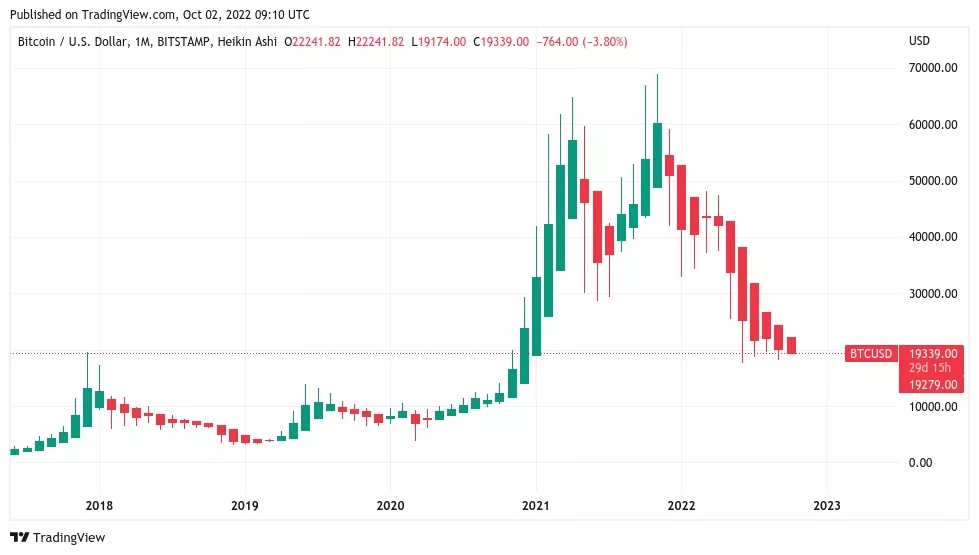
According to Caleb Franzen, senior market analyst at Cubic Analytics, the September closing did not stop Bitcoin's losing run, which has now equaled the length of the bear market that occurred in 2018, despite the fact that the bear market ended in 2018.
"Bitcoin has officially created 10 consecutive red monthly Heikin Ashi candles, with the September close," he disclosed on Twitter. He went on to say: "Bitcoin has officially produced 10 consecutive red monthly Heikin Ashi candles."
“This is the longest such streak since the 2018 bear market, which produced 14 red candles from Feb.'18 to Mar.'19. Each bear market streak has been longer than the last….”
Source: TradingView
The major banks have raised concerns among the analysts.
The major global banks were at the center of the current macro story, with the most concerning news emanating from Credit Suisse as the story's focal point.
Since 2021, the share price of the Swiss lender has almost completely tanked, which has caused widespread alarm among financial organizations such as Deutsche Bank, UniCredit, and even the Bank of China.
"Credit Suisse is not the only major bank whose price-to-book ratio is sending out danger signs; in fact, there are quite a few." Alistair Macleod, head of research at Goldmoney, claimed in a tweet that he had uploaded a comparative chart of several banks' price-to-book ratios. In the chart, he compared the price-to-book ratios of a number of different financial institutions. He continued by saying:
“A failure of one of them is likely to call the survival of the others into question.”
Investors should not "confuse our day-to-day stock price performance with the robust capital basis and liquidity position of the bank," Credit Suisse CEO Ulrich Koerner warned in a memo that was reported by Reuters on October 2nd.
The events followed the Bank of England's unexpected U-turn last week in which they returned to quantitative easing despite inflation being at its highest level in forty years.
Comments
Log in or sign up to join the conversation.