

The Bitcoin Halving Event
This well-known Bitcoin halving event should be priced-in well ahead of time, but Bitcoin’s short history and the current economic environment cloud the picture. Continued disruption could push markets back into a risk-off attitude, which caused a nearly 60% drawdown in the price of bitcoin in March this year. That drawdown was amplified by cascading margin calls that wiped out many miner’s capital reserves, and a sudden 50% reduction in revenue could prove fatal to many.
Nonetheless, investor optimism around the halving has pushed bitcoin back above the psychologically important level of $10,000 per coin, a 150% increase over the 2020 low. This is likely a “buy the hype, sell the news” scenario, as halvings are typically followed by a price correction before the subsequent bull run. The likelihood of a correction here is amplified by the general sense of uncertainty pervading all markets at the moment.
Long Term Bull Case For Bitcoin
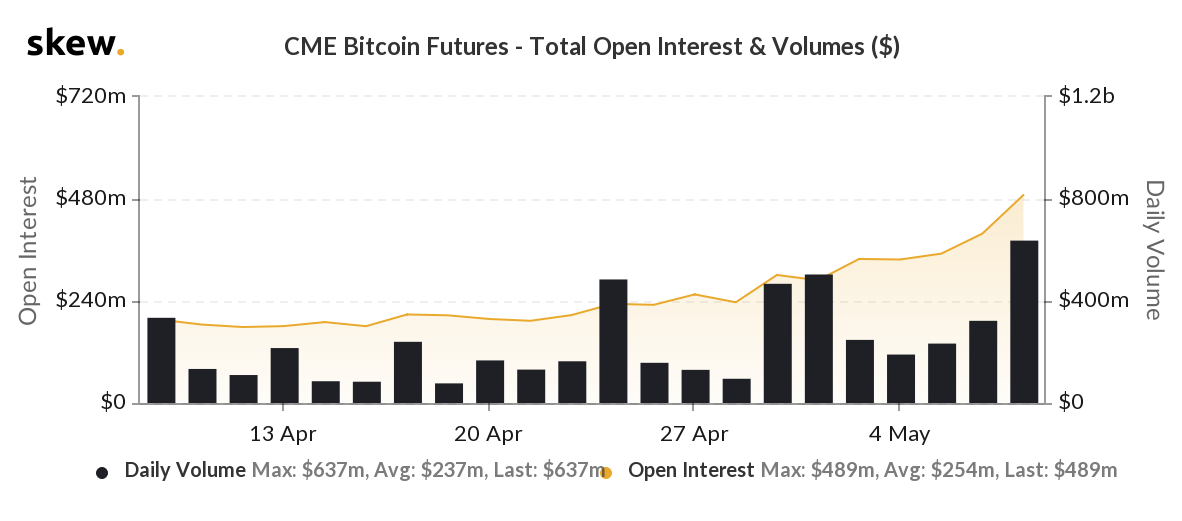
The longer term bull case for Bitcoin is also amplified by current market dynamics, as laid out by respected investor Paul Tudor Jones this week when announcing his intention to add the asset to his flagship fund. Open BTC futures interest on CME has nearly tripled this month as institutional investors like Tudor experiment with bitcoin as an inflation hedge and store of value, building the basis for a strong rally through 2021.
(Click on image to enlarge)
Bitcoin performs a programmatic modification every four years called the halving, which reduces by half the miner reward for successfully mining a valid block of transactions. With prior halvings in 2012 and 2016, the third halving is anticipated on May 12th and will reduce the average daily bitcoin production rate from 1,800 to 900. Assuming constant or rising demand, such a reduction in supply should naturally result in price inflation, and indeed each historical halving has been followed by a significant price increase within 12 months.



Comments
Log in or sign up to join the conversation.