

In an email this week, billionaire hedge fund manager Leon Cooperman detailed at least 11 reasons why he is concerned about the long-term implications of the coronavirus outbreak.

The Omega Advisors founder highlighted a number of negative consequences including stricter regulations, higher taxes, and slimmer corporate profits...
-
The unprecedented recent government stimulus and protections may have permanently increased the role government plays in the market, potentially increasing its regulatory oversight.
-
The U.S. is shifting to the left on the political spectrum, a trend that will likely result in higher taxes.
-
Low interest rates are a sign of an unhealthy economy, not a bullish stock market indicator.
-
U.S. debt is growing much faster then the economy, so a higher percentage of our national income will need to be devoted to debt servicing.
-
U.S. demand will likely be slow to recover given Americans will need some form of vaccination and/or proof of immunity to gain access to sporting events, concerts and other gatherings.
-
Businesses will need to shoulder substantial compliance costs to ensure worker safety.
-
Companies will need to issue a substantial amount of equity to replace lost capital.
-
Stock buybacks, and the support they provided to EPS, are mostly over.
-
U.S. profit margins were at a historic high in January, and they have historically reverted to their long-term mean over time.
-
Credit is cheaper than stocks, with high-yield bonds (excluding the energy sector) yielding 7.25%, or about 14 times earnings.
-
If Warren Buffett, the “greatest investor in my generation” can’t find stocks to buy on the dip, “who am I to be bold?”
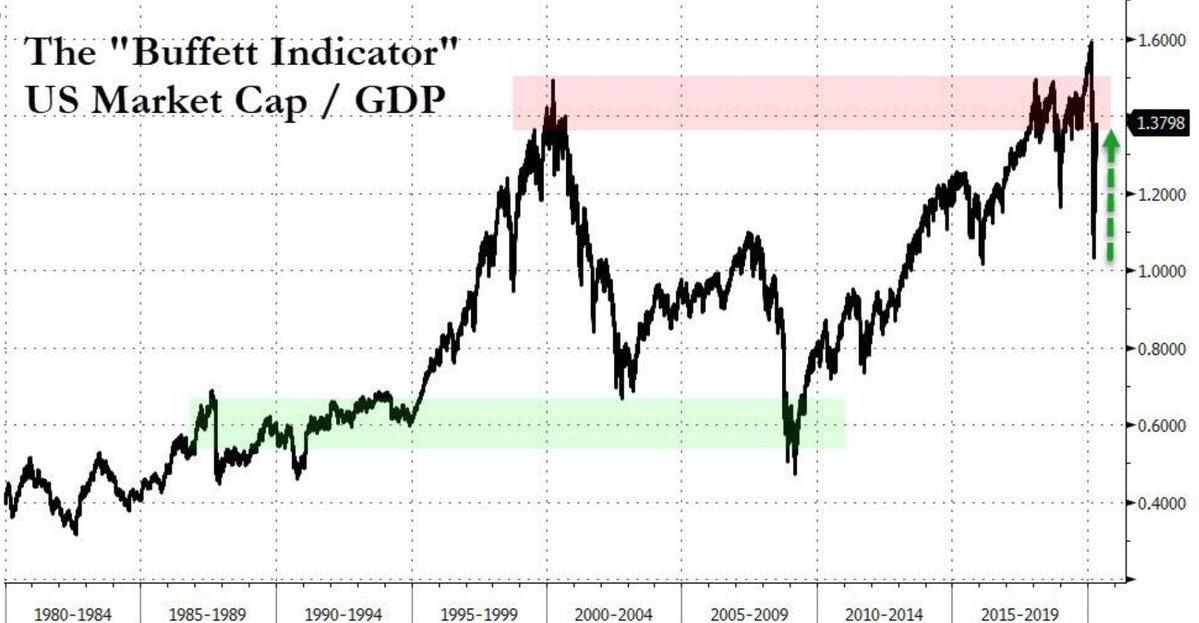
In fact, "The Buffett Indicator" is signaling stocks are are their most expensive in history...
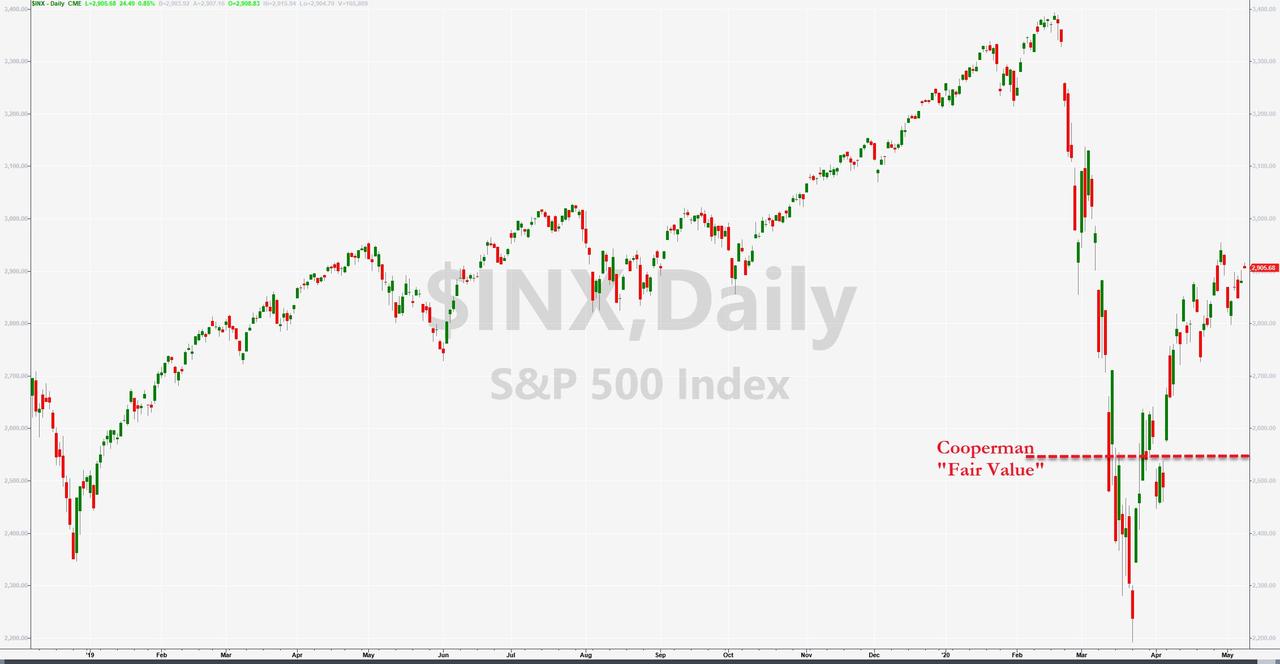
Cooperman said he sees a fair value for the S&P 500 at around 17x earnings based on current interest rates.
“I apply that to normalized earnings of $150 and it gives me fair value of 2,550 presently (versus yesterday's close of 2,843),” Cooperman said.



Comments
Log in or sign up to join the conversation.