
Groundwater is an important source of water for industrial units, commercial establishments, infrastructure developments, institutions, and several other projects. Where groundwater extraction is regulated, obtaining the required approval before abstraction is an important part of project planning and environmental compliance.
The approval process involves documentation, project assessment, water demand evaluation, and implementation of groundwater management measures. A bhuneer noc is processed through the designated online system under the Central Ground Water Authority (CGWA).
Applicants are required to provide accurate information about the project, proposed groundwater abstraction, site location, existing or proposed abstraction structures, and measures planned for groundwater conservation. Proper preparation of technical and statutory documents can make the application process more organized and reduce the possibility of delays caused by incomplete information.
What Is a Bhuneer NOC?
A groundwater NOC is an official approval associated with the regulated abstraction of groundwater for eligible projects. The requirement generally applies to industries, commercial establishments, infrastructure projects, mining-related activities, and other categories specified under applicable groundwater regulations.
The approval establishes conditions related to groundwater abstraction, monitoring, conservation, and compliance. These conditions may vary depending on the nature of the project, quantity of groundwater required, location, and groundwater status of the area.
For applicants, understanding the applicable requirements before submitting an application is important. Incorrect project information, inconsistent water calculations, missing documents, or inadequate groundwater management provisions can affect the application process.
Bhuneer NOC Application Process
The application process is primarily completed through the online bhuneer portal, where applicants provide project and groundwater-related information for assessment.
1. Entity Registration
The first stage involves registering the applicant or project entity on the designated portal. Appropriate organizational details and identification information are required for creating the application profile. The information submitted during registration should correspond with the official records of the applicant.
2. Project and Site Details
The application requires detailed information about the project, including its location, land details, geographical coordinates, project category, proposed water requirement, and groundwater abstraction arrangements.
Existing borewells or proposed abstraction structures should be accurately represented. Water requirements should also be calculated according to actual project activities rather than using estimated figures without technical justification.
3. Water Requirement Assessment
A detailed water balance is an important component of groundwater approval. It establishes how much water is required for different activities and how the total requirement is divided between sources.
The assessment may consider domestic consumption, industrial processes, landscaping, construction requirements, cooling systems, and other relevant uses. Reuse and recycling arrangements should also be considered wherever applicable.
4. Document Submission
Supporting documents are uploaded electronically along with the application. Depending on project category and applicable requirements, documentation may include land ownership or lease records, site plans, water balance calculations, groundwater-related technical reports, water quality reports, and details of proposed recharge measures.
The documents should be consistent with the project information entered in the application. Any discrepancy between drawings, calculations, ownership records, and application details can create unnecessary complications during scrutiny.
5. Fee Payment and Application Review
Applicable processing charges are paid through the designated online payment mechanism. After submission, the application undergoes technical and regulatory scrutiny.
The assessment may consider groundwater conditions, proposed abstraction quantity, project requirements, location, conservation measures, and compliance with applicable guidelines. Additional information or clarification may be required during the review process.
Important Rules After Approval
Receiving approval does not mark the end of groundwater compliance. The project must follow the conditions specified in the approval and maintain the required monitoring and conservation systems.
Groundwater Abstraction Limits
The permitted quantity of groundwater abstraction is determined according to applicable requirements and project conditions. Extraction beyond the approved limit can result in regulatory action and financial liabilities.
Digital Flow Meter Installation
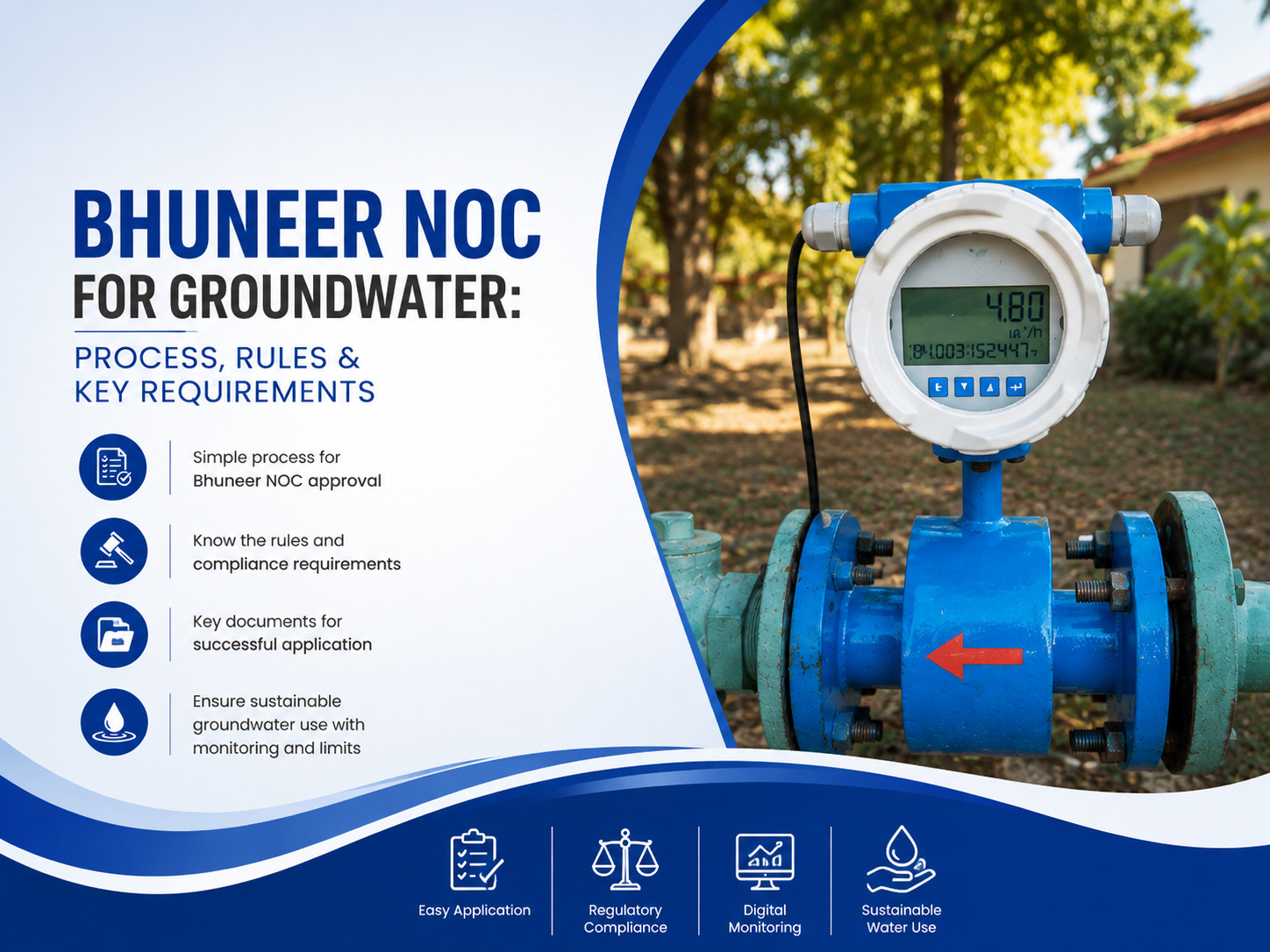
A digital flow meter or approved groundwater monitoring system may be required at abstraction points. Such systems help record groundwater usage and support monitoring of actual extraction against permitted quantities. Where telemetry or online monitoring is applicable, the prescribed system should be installed within the specified period and maintained properly throughout the validity of the approval.
Rainwater Harvesting and Recharge
Groundwater management increasingly emphasizes recharge and conservation. Projects may be required to establish functional rainwater harvesting or groundwater recharge structures according to approved plans and applicable site conditions.
These systems should not be treated as a one-time installation. Their functionality, maintenance, and effectiveness need periodic attention.
Groundwater Level Monitoring
Certain projects may require monitoring wells or piezometers to observe changes in groundwater levels. Monitoring information can help assess the impact of abstraction and support responsible groundwater management.
Key Documents Required
The exact documentation depends on project category, location, groundwater requirement, and applicable regulations. Commonly required documents can include:
Land ownership, lease, or authorized possession documents
Site layout and location plans
Project details and construction information
Water requirement calculations
Water balance statement
Details of existing or proposed abstraction structures
Groundwater or hydrogeological assessment reports where applicable
Water quality testing reports
Rainwater harvesting and recharge proposals
Details of water conservation and reuse systems
Relevant statutory approvals and supporting certificates
Technical documents should be prepared using reliable project data. A technically consistent application provides a clearer basis for regulatory evaluation.
Role of Groundwater Assessment in Approval
Groundwater availability differs considerably from one location to another. Geological conditions, aquifer characteristics, recharge potential, existing abstraction, rainfall patterns, and groundwater development levels can influence the sustainability of extraction.
This makes technical assessment an important part of the approval process. Bhoojal Survey supports groundwater-related technical studies, documentation, and compliance requirements by combining field assessment with project-specific analysis.
For projects requiring a central ground water authority noc technical information should clearly establish the relationship between proposed water demand, groundwater conditions, abstraction arrangements, and conservation measures.
Borewell Approval and Compliance
Projects using groundwater through borewells must carefully evaluate their applicable regulatory requirements before installation or continued abstraction. A Borewell NOC may be required depending on the project, location, authority, and applicable groundwater regulations.
The objective is not simply to obtain approval but to ensure that groundwater extraction remains within permitted limits and is supported by appropriate conservation measures. Proper flow measurement, water-use records, recharge systems, and periodic monitoring can contribute to better long-term groundwater management.
Bhoojal Survey can assist project stakeholders with technical preparation and groundwater-related compliance planning, helping ensure that project documentation reflects actual site conditions and water requirements.
Why Proper Documentation Matters
Incomplete documentation is one of the common reasons applications require additional clarification. Project details should remain consistent across land records, site plans, water calculations, technical reports, and application forms.
Before submission, applicants should verify geographical coordinates, project area, water demand, abstraction points, ownership information, and supporting reports. Technical calculations should also be reviewed to ensure that daily and annual water requirements are logically presented. A structured approach helps establish a clear technical record of the project and its proposed groundwater use.
Groundwater Management Beyond NOC Approval
Sustainable groundwater management requires continuous attention rather than compliance only at the application stage. Projects can reduce dependence on fresh groundwater through water-efficient equipment, recycling systems, rainwater harvesting, treated wastewater reuse, and regular monitoring.
Periodic review of water consumption can also identify unnecessary losses and opportunities for conservation. Maintaining accurate abstraction records makes it easier to compare actual usage with approved limits and identify unusual changes in consumption.
Bhoojal Survey focuses on technically informed groundwater planning that supports regulatory compliance as well as responsible water resource management.
Conclusion
Groundwater approval involves more than submitting an online application. Accurate project information, appropriate technical documentation, water balance calculations, groundwater assessment, conservation planning, and post-approval monitoring are important components of the overall process.
Understanding the requirements before application submission can help project owners prepare stronger documentation and avoid preventable delays. Continued compliance after approval is equally important for maintaining lawful groundwater abstraction and supporting sustainable water use.
Frequently Asked Questions
1. What is a Bhuneer NOC?
It is an approval related to regulated groundwater abstraction for eligible projects, processed through the designated groundwater approval system.
2. Who generally needs groundwater approval?
Industrial, commercial, infrastructure, institutional, and other regulated projects may require approval depending on their category, groundwater requirement, and applicable regulations.
3. What documents are commonly required?
Documents may include land records, site plans, water balance calculations, technical assessments, water quality reports, recharge plans, and other project-specific approvals.
4. Is monitoring required after approval?
Yes. Applicable projects may need flow meters, telemetry systems, groundwater-level monitoring, abstraction records, and other compliance measures specified in their approval conditions.
5. Can groundwater be extracted beyond the approved quantity?
No. Extraction should remain within the permitted limit and comply with the conditions specified in the applicable approval. Exceeding permitted abstraction can lead to regulatory consequences.
Comments
Log in or sign up to join the conversation.