
In today’s business world, leadership advice is everywhere. New frameworks emerge every year, productivity systems flood social media, and countless experts promise the secret formula for success. Yet many business leaders still struggle with burnout, poor decision-making, lack of focus, and team disengagement.
The reason is simple: most leadership strategies focus on external performance while ignoring internal mastery.
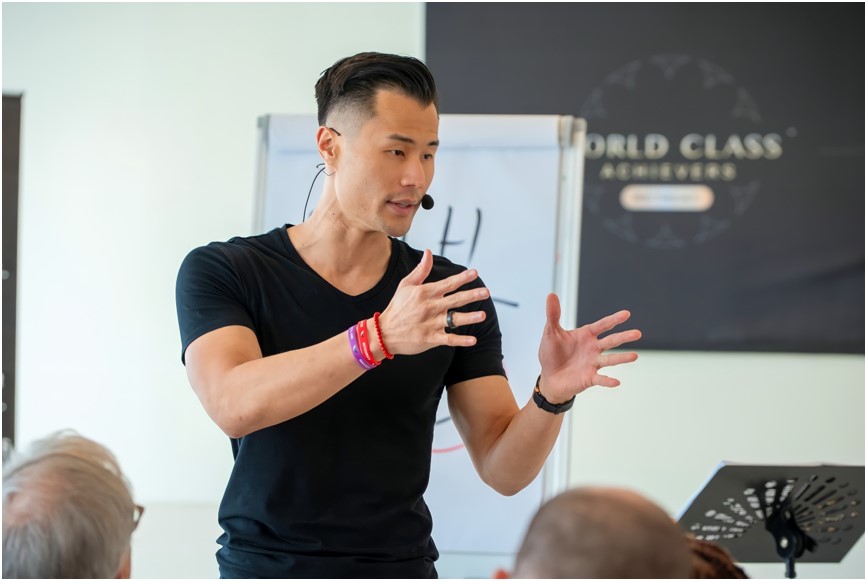
One entrepreneur and personal development educator who has consistently emphasized this distinction is Tim Han. Through his work with Success Insider, Tim Han has built a global platform centered on personal growth, behavioral psychology, mindset development, and life mastery. His philosophy is rooted in a powerful idea: before you can effectively lead others, you must first learn to lead yourself.
For business leaders navigating uncertainty, competition, and rapid change, this lesson may be more relevant than ever.
Why Self-Mastery Matters More Than Traditional Leadership Training
Many leadership programs focus on communication, management, negotiation, and strategic thinking. While these skills are valuable, they often overlook the deeper factors that determine whether a leader can consistently perform at a high level.
Tim Han’s approach starts with self-awareness.
Rather than asking, “How can I manage my team better?” his philosophy encourages leaders to ask:
What beliefs are shaping my decisions?
What emotional triggers affect my judgment?
What habits are limiting my performance?
What internal narratives are preventing growth?
According to Success Insider’s educational philosophy, sustainable success begins by understanding and transforming the patterns that drive behavior.
For business leaders, this shift is profound. Instead of treating problems as external obstacles, they begin addressing the internal factors that influence every decision they make.
Lesson 1: Personal Growth Is a Competitive Advantage
Many executives invest heavily in business development but neglect personal development.
Tim Han’s own journey illustrates a different perspective. His story involves overcoming significant personal challenges, studying psychology and human behavior, and dedicating years to understanding how people transform their lives.
The lesson for leaders is clear:
Business growth often follows personal growth.
When leaders improve emotional intelligence, resilience, focus, and self-discipline, they become better equipped to handle uncertainty and pressure.
Research into entrepreneurship has also shown that founder personality traits can significantly influence business outcomes, reinforcing the importance of developing the individual behind the company.
The strongest organizations are often reflections of leaders who continuously evolve.
Lesson 2: Your Mindset Shapes Your Results
One of the recurring themes throughout Tim Han’s teachings is that mindset influences behavior, and behavior influences outcomes.
Business leaders frequently focus on tactics:
Marketing strategies
Sales systems
Hiring frameworks
Financial planning
Yet the effectiveness of every tactic depends on the mindset behind its execution.
A leader operating from fear may avoid necessary risks.
A leader operating from scarcity may hesitate to invest in innovation.
A leader lacking confidence may fail to communicate a compelling vision.
By contrast, leaders who cultivate self-belief, clarity, and purpose often inspire stronger teams and make more decisive choices.
Tim Han’s philosophy suggests that changing external results often begins with changing internal programming.
Lesson 3: High Performance Requires Identity Transformation
Many business professionals focus solely on goals.
Tim Han’s approach places significant emphasis on becoming the type of person capable of achieving those goals.
This distinction matters.
A leader may set a target of doubling company revenue.
However, achieving that goal often requires becoming:
More disciplined
More focused
More strategic
More emotionally resilient
Without personal transformation, ambitious goals frequently remain out of reach.
Business leaders who embrace identity-based growth stop asking:
“What do I need to do?”
And start asking:
“Who do I need to become?”
That question often creates deeper and more sustainable change.
Lesson 4: Self-Awareness Improves Decision-Making
Poor decisions rarely result from a lack of information.
More often, they result from emotional bias, stress, ego, or fear.
Tim Han frequently highlights the importance of understanding human behavior and the subconscious patterns that influence actions.
For business leaders, self-awareness becomes a strategic asset.
When leaders understand their triggers, they can:
Avoid reactive decisions
Navigate conflict more effectively
Communicate with greater clarity
Build stronger relationships
The most respected leaders are not necessarily the smartest people in the room.
They are often the most self-aware.
Lesson 5: Consistency Beats Motivation
Many professionals spend years searching for motivation.
Tim Han’s content consistently points toward systems, habits, and daily practices rather than temporary inspiration.
This principle aligns perfectly with successful leadership.
Motivation fluctuates.
Discipline endures.
Business leaders who depend on motivation often struggle with consistency.
Those who develop repeatable habits can maintain performance regardless of circumstances.
Examples include:
Daily reflection
Strategic planning sessions
Learning routines
Physical wellness habits
Focused work blocks
Long-term success is rarely built through occasional bursts of effort.
It is built through consistent execution over time.
Lesson 6: Great Leaders Create Internal Alignment
Many organizations suffer from misalignment.
Employees pursue different priorities.
Departments operate in silos.
Company culture becomes fragmented.
Tim Han’s philosophy of life mastery emphasizes alignment between values, actions, and goals.
When leaders achieve this alignment internally, they are better positioned to create it externally.
Teams naturally respond to leaders who demonstrate:
Clarity of purpose
Consistent values
Authentic communication
Strong personal integrity
People follow certainty.
They trust leaders whose actions match their words.
Lesson 7: Continuous Learning Is Non-Negotiable
A recurring theme in Tim Han’s personal story is his commitment to lifelong learning. His transformation was fueled by studying psychology, human behavior, personal development, and success principles for many years.
For business leaders, this serves as a valuable reminder.
The marketplace evolves constantly.
Technology changes.
Consumer behavior shifts.
Industries transform.
Leaders who stop learning eventually fall behind.
Those who remain curious gain a lasting advantage.
Continuous learning is no longer optional—it is a requirement for long-term relevance.
The Future of Leadership Starts Within
The next generation of business leadership may look very different from the past.
Technical expertise will remain important.
Business strategy will always matter.
But the leaders who stand out will increasingly be those who master themselves before attempting to master the marketplace.
Tim Han’s approach to self-mastery offers an important perspective for entrepreneurs, executives, and professionals seeking sustainable success. Through a focus on mindset, personal growth, self-awareness, emotional resilience, and continuous improvement, his philosophy reminds leaders that external achievements often reflect internal development.
In a world obsessed with shortcuts and quick wins, the greatest competitive advantage may not be a new business strategy at all.
It may be the disciplined pursuit of self-mastery.
And for leaders committed to building extraordinary businesses, that journey starts from within.
Comments
Log in or sign up to join the conversation.