
If your liver had a wishlist, it wouldn’t ask for “detox teas” or miracle powders. It would ask for something far simpler and far more powerful—the right nutrients, consistently.
Behind every detox reaction, every fat-burning process, and every repair mechanism is a network of vitamins and minerals quietly keeping your liver functional. When these nutrients fall short, the liver doesn’t crash overnight—but it starts slipping. That’s how conditions like fatty liver disease, liver inflammation, fibrosis, and eventually cirrhosis begin to take shape.
Let’s look at the nutrients that truly support hepatic function—not as a list, but as a system working together.
The Metabolic Drivers: B Vitamins
Think of B-complex vitamins as the ignition system of your liver.
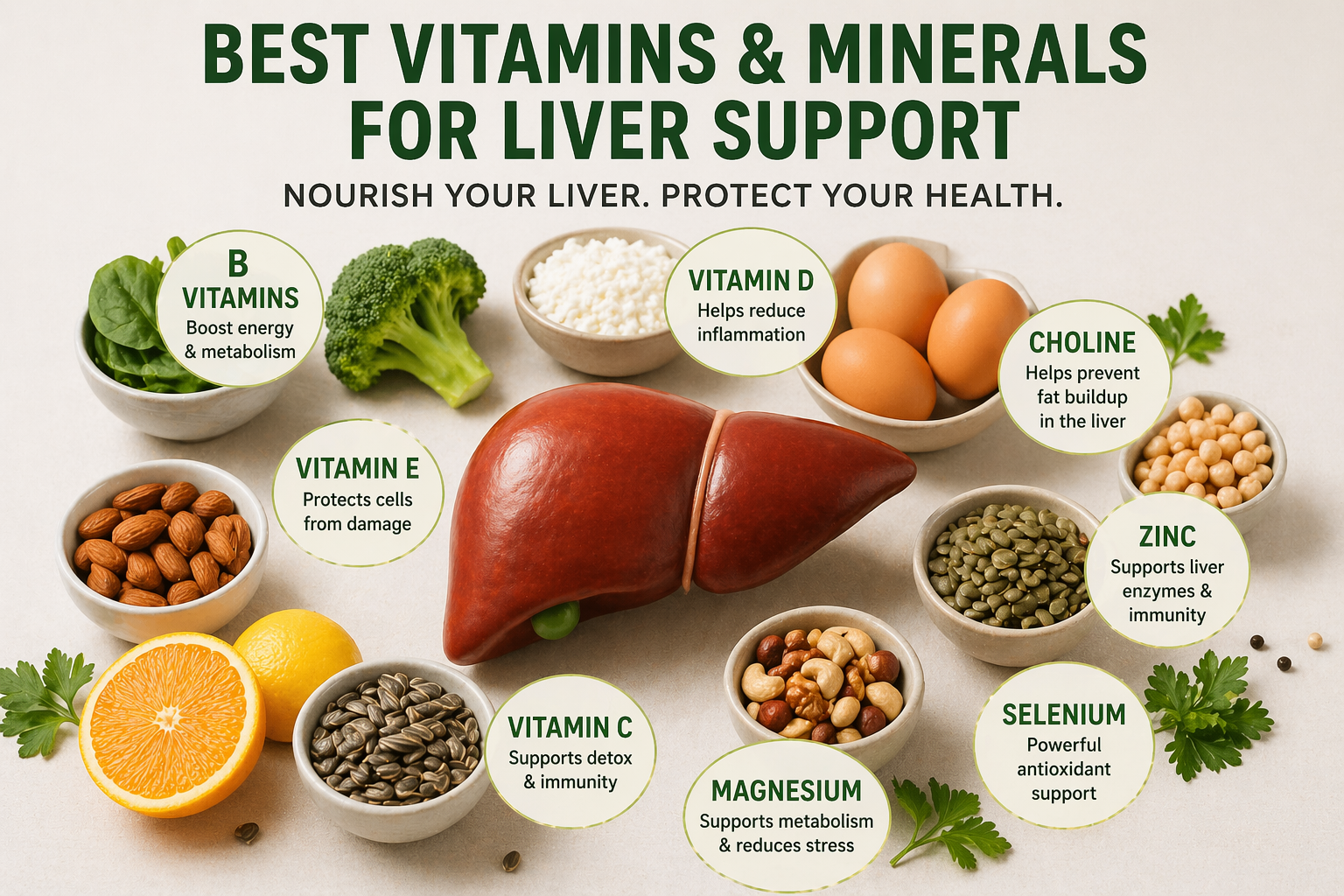
They help convert food into energy, process fats, and support detox pathways. Without enough Vitamin B12, B6, and folate, the liver struggles to manage metabolic waste and fat efficiently—often contributing to fat accumulation in the liver (fatty liver).
If your lifestyle includes stress, processed food, or irregular meals, your demand for these vitamins quietly increases.
The Protective Layer: Vitamin E & Vitamin C
Every day, your liver deals with oxidative stress—tiny bursts of cellular damage caused by toxins, alcohol, or even normal metabolism.
This is where Vitamin E steps in as a cellular protector, helping reduce damage linked to non-alcoholic fatty liver disease (NAFLD) and slowing progression toward fibrosis.
Alongside it, Vitamin C works like a support system—regenerating antioxidants and assisting in detox processes. It doesn’t work alone, but without it, the system weakens.
The Regulator You Might Be Missing: Vitamin D
Vitamin D isn’t just about bones—it’s deeply connected to immune balance and inflammation control.
Low levels are frequently seen in people with chronic liver disease. While it doesn’t directly “heal” the liver, it creates a biological environment where inflammation is better controlled and recovery is more efficient.
The Fat Manager: Choline
This is where things get interesting.
Choline plays a direct role in preventing fat from getting “stuck” in the liver. Without it, fat begins to accumulate—leading to hepatic steatosis, the earliest stage of liver disease.
In simple terms, choline helps your liver export fat instead of storing it.
Yet, many diets today are low in choline—making it one of the most overlooked risk factors for fatty liver.
The Silent Support Crew: Zinc, Selenium & Magnesium
These minerals don’t get much attention, but your liver depends on them daily.
Zinc supports enzyme activity and immune function, especially important in cirrhosis patients
Selenium strengthens antioxidant defense systems, protecting liver cells
Magnesium helps regulate metabolism and insulin sensitivity—key factors in fatty liver disease
Deficiencies here don’t shout—but they quietly weaken liver resilience over time.
A Reality Check: More Supplements ≠ Better Liver
Here’s where many people go wrong.
Taking high doses of vitamins without understanding balance can actually harm the liver. For example:
Excess Vitamin A can be toxic
High doses of certain supplements can stress liver metabolism
The goal is not overload—it’s balance and consistency.
Where Most People Struggle: Consistency, Not Knowledge
Most people already know they should eat better, reduce alcohol, and take care of their health.
The real challenge is:
Forgetting follow-up tests
Not tracking liver reports
Ignoring small symptoms
Losing consistency over time
And this is exactly where technology can quietly change outcomes.
Liverlytics: Turning Awareness into Action
Imagine if your liver health wasn’t something you guessed—but something you could actually track, understand, and manage daily.
That’s where the Liverlytics mobile application fits in—not as a medical tool alone, but as a practical companion for real life.
Here’s how it becomes part of your routine:
Your liver reports, all in one place
No more scattered files. Track your liver function tests, enzyme levels, and improvements over time.Connect nutrients with outcomes
Made dietary changes? Started supplements? Liverlytics helps you see if your liver markers are actually improving.Smart reminders that keep you consistent
Whether it’s medication, tests, or follow-ups—no more missed steps.Track symptoms that are easy to ignore
Fatigue, bloating, mild discomfort—small signals that often point to early liver stress.Walk into doctor consultations prepared
Instead of guesswork, you bring patterns, history, and clarity.
For someone managing fatty liver, hepatitis, or early cirrhosis, this kind of structured tracking can make a real, measurable difference.
Final Thought
Your liver doesn’t need extremes. It doesn’t need detox trends or short-term fixes.
It needs:
The right nutrients
Consistent habits
Regular monitoring
Because liver health isn’t built in a week—it’s built quietly, daily, over years.
And when supported properly, your liver does what it does best:
it heals, adapts, and keeps you going—without ever asking for credit.
Comments
Log in or sign up to join the conversation.