
A long charter bus journey can be much more enjoyable when passengers have convenient food and drinks available throughout the ride. Choosing the right snack ideas for long bus rides can help travelers stay energized while avoiding unnecessary mess, strong odors, and foods that are difficult to handle in a moving vehicle. Whether you are traveling with family, friends, students, employees, or a sports team, thoughtful snack planning can make a major difference in the overall experience. For more practical recommendations, check this guide to snack ideas for long bus rides.
Why Snacks Matter on a Long Charter Bus Trip
Long-distance group travel often involves several hours on the road between meals. Traffic, scheduled stops, and changing itineraries can sometimes make regular meal times difficult to maintain. Having snacks packed before departure gives passengers something convenient to eat when they become hungry.
However, not every food works well inside a shared vehicle. Snacks should ideally be easy to store, simple to eat, and unlikely to create crumbs or spills. Food choices should also consider the comfort of everyone sitting nearby.
A good bus snack should provide useful energy without requiring complicated preparation or creating a cleanup problem.
Best Healthy Snacks for Charter Bus Travel
Healthy snacks can provide longer-lasting energy during an extended journey. Instead of relying entirely on candy, pastries, or sugary drinks, passengers can pack foods containing protein, fiber, whole grains, and naturally occurring nutrients.
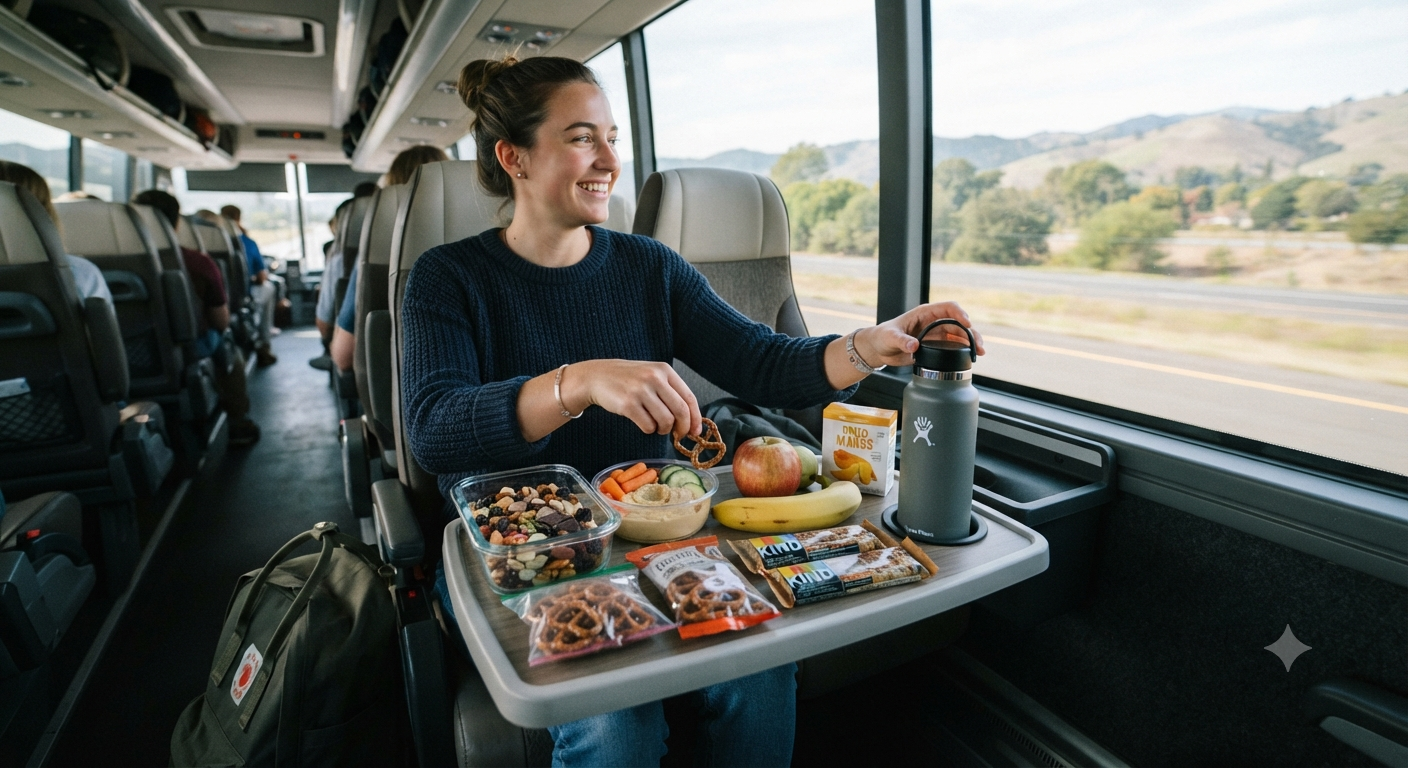
Trail mix is one of the most practical choices. A combination of nuts, seeds, and dried fruit can be portioned into small bags before departure. Granola bars and protein bars are also convenient because they take up little space and can be eaten without utensils.
Fresh fruit such as apples, bananas, oranges, and grapes can work well when packed appropriately. Whole-grain crackers, roasted chickpeas, dried fruit, and individually packaged nuts are additional options.
Passengers should always consider food allergies when selecting shared snacks. If nuts, dairy, gluten, or other common allergens are included, clearly labeling ingredients can help group members make informed choices.
Low-Mess Snacks for a Comfortable Bus Ride
One of the biggest considerations when eating on a charter bus is cleanliness. A snack that works perfectly at home may create a major mess inside a moving vehicle.
Pretzels, individually packaged crackers, dried fruit, granola bars, and snack mixes are generally easier to manage than foods covered in sauces or powders. Resealable containers can prevent snacks from spilling inside backpacks or around seats.
Avoid foods that require multiple utensils, large plates, or extensive preparation. Saucy sandwiches, heavily frosted pastries, greasy foods, and extremely crumbly snacks can leave residue on hands, seats, and surrounding surfaces.
Portioning food before the trip can make things even easier. Small containers or resealable bags allow passengers to take one serving at a time without repeatedly opening a large package.
Best Drinks to Pack for a Long Bus Trip
Hydration is an important part of travel preparation. Water is usually the simplest and most practical beverage for a long journey.
Reusable water bottles are convenient for individual passengers, while sealed bottles can be easier for group organizers distributing drinks to multiple travelers. During hot-weather trips, electrolyte drinks or electrolyte packets may also be useful.
Passengers should be mindful of consuming excessive amounts of caffeine or sugary beverages, particularly when restroom stops are limited. Group leaders should coordinate beverage planning with the planned travel schedule.
Before packing large quantities of drinks, check the transportation provider's food and beverage policies.
Snacks for Children on Charter Bus Trips
Children may need more frequent snacks during long journeys, particularly when the trip involves limited meal stops. Familiar foods are often the safest choice because children may be less willing to try unfamiliar snacks while traveling.
Crackers, pretzels, dry cereal, fruit snacks, granola bars, applesauce pouches, and individually packaged treats are easy to distribute.
Parents and group leaders should pack enough food for unexpected delays. Traffic or itinerary changes can extend travel time, so having an additional snack available can be helpful.
For school groups, organizers should collect allergy and dietary information before purchasing shared food.
Snacks for Sports Teams and Active Groups
Sports teams may require snacks that provide carbohydrates, protein, and hydration before or after athletic activities.
Bananas, whole-grain bars, trail mix, crackers, dried fruit, and protein-rich snacks can be useful choices. Water should remain a priority throughout the journey.
The timing of the trip also matters. Heavy or greasy foods may be uncomfortable immediately before a game or competition. Simple, familiar foods that are easy to digest may be more appropriate for athletes traveling to an event.
Foods to Avoid on a Charter Bus
Some foods are better left at home because they can negatively affect other passengers.
Strong-smelling foods such as tuna, heavily seasoned meals, and pungent cheeses can leave odors inside the cabin. Foods containing excessive sauces can create spills, while powdered pastries and flaky foods can produce large amounts of crumbs.
Chocolate, frosting, and other melt-prone foods may become messy during warm-weather travel. Perishable foods also require proper temperature control and should be stored in an insulated cooler when necessary.
Alcohol should only be brought when the transportation provider has confirmed that it is permitted for the specific trip.
How to Keep Snacks Fresh and Safe
Food safety becomes especially important during long journeys. Perishable foods should be kept in an insulated cooler with sufficient ice packs and protected from direct sunlight. The Academy of Nutrition and Dietetics recommends appropriate temperature control for perishable travel foods, while general food-safety guidance warns against leaving such foods at unsafe temperatures for extended periods.
For a group trip, it is helpful to separate shelf-stable snacks from refrigerated items. Dry snacks can remain in an easily accessible bag, while perishable food can stay inside a cooler until needed.
Travelers should also avoid assuming that cold outdoor temperatures automatically make food safe. Charter buses are climate-controlled, so food inside the passenger cabin may still reach temperatures that are unsuitable for certain perishables.
Organizing Snacks for a Large Group
Planning snacks for an entire charter bus requires more organization than packing food for one person.
Group leaders can purchase snacks in bulk and divide them into individual portions before departure. This can reduce costs and make distribution easier.
It is also useful to organize food into categories such as healthy snacks, savory options, sweet treats, and children's choices. A few designated coolers can hold refrigerated items, while dry snacks can be stored in labeled containers.
Don't forget trash bags. Providing easily accessible bags encourages passengers to dispose of wrappers, bottles, and food waste throughout the trip rather than leaving trash around their seats.
For longer journeys, consider including a scheduled snack or rest stop. A short break gives passengers an opportunity to stretch their legs, use the restroom, and purchase additional food if necessary.
Seasonal Snack Planning
The season can influence which foods travel best.
During summer, heat-sensitive foods such as chocolate, frosting, soft cheese, and certain fresh foods require extra care. Shelf-stable snacks such as pretzels, nuts, dried fruit, and jerky may be easier to manage.
During winter, travelers may prefer more substantial foods. Granola mixes, whole-grain snacks, and warm beverages stored in appropriate containers can provide additional comfort.
Regardless of season, perishable foods should be handled according to appropriate food-safety practices.
Sample Snack Bag for a Full-Day Charter Bus Trip
A simple full-day snack bag could include a protein or granola bar for the morning, a piece of whole fruit, trail mix for later in the morning, and dried fruit or crackers for the afternoon ride.
Water should be available throughout the day. If the group has a planned lunch stop, snacks should supplement the meal rather than replace it.
For children, parents may want to include an additional familiar snack. For athletes, protein-rich and carbohydrate-containing options may be more suitable.
Final Tips for Packing the Best Bus Snacks
The best snacks for a long charter bus trip are convenient, clean, easy to store, and appropriate for the passengers traveling with you. Before packing, consider the trip duration, weather, planned meal stops, passenger ages, allergies, and available storage.
Choose foods that can be eaten comfortably from a seat, avoid strong odors and messy ingredients, and bring enough water for the journey.
With a little preparation, the right snacks can help passengers stay comfortable and energized from departure to arrival while keeping the charter bus clean and pleasant for everyone.
Comments
Log in or sign up to join the conversation.