

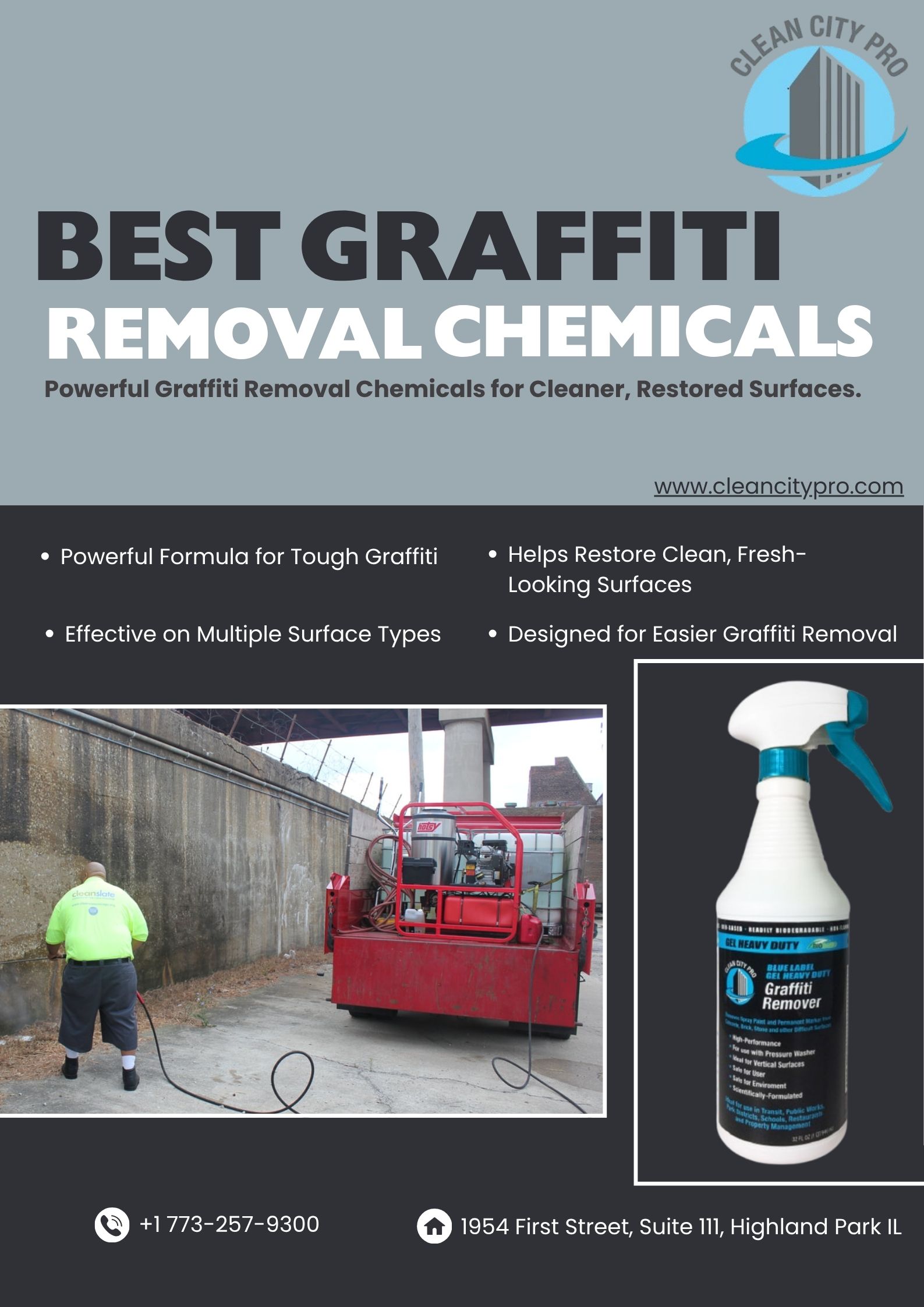
Choosing the Best Graffiti Removal Chemicals depends on the graffiti medium, surface material, age of the marking, and the type of finish that needs to be protected. A chemical that works well on concrete may be too aggressive for painted walls, plastics, or delicate masonry. Understanding these differences helps beginners select a suitable remover while reducing the risk of staining, discoloration, or surface damage.
What Are Graffiti Removal Chemicals?
Graffiti removal chemicals are cleaning formulations designed to break down or loosen paints, inks, coatings, markers, and other substances used to create unwanted markings.
Different formulas work through different mechanisms. Some soften paint, while others dissolve or lift pigments from a surface. The appropriate product depends on both the graffiti and the substrate.
Common surfaces include:
Concrete and masonry
Brick
Metal
Glass
Painted walls
Wood
Plastic
Stone
Street furniture
There is no universal remover that is equally appropriate for every situation. Surface compatibility should always be considered before application.
Why Choosing the Right Chemical Matters
Selecting the right chemical is important because graffiti removal involves two materials: the unwanted marking and the surface underneath it.
An overly aggressive chemical may remove graffiti but also affect:
Paint coatings
Sealants
Surface color
Protective finishes
Plastic or synthetic materials
Masonry appearance
The goal is therefore not simply to find the strongest chemical. It is to find a formulation that can effectively loosen the marking while maintaining the condition of the underlying surface.
Key Factors to Consider
Before choosing a remover, identify:
Surface type – Determine whether the material is concrete, brick, metal, wood, plastic, or painted.
Graffiti medium – Identify whether the marking is spray paint, marker, adhesive, or another coating.
Age of the graffiti – Older markings may have bonded more strongly to porous materials.
Surface finish – Painted, sealed, polished, or coated surfaces may require gentler treatment.
Application method – Consider whether the product is designed for wiping, brushing, pressure washing, or another method.
Understanding Different Types of Graffiti Removers
The Best Graffiti Removal Chemicals are generally selected according to the type of marking and substrate rather than based on strength alone.
Solvent-Based Formulas
Solvent-based products can be useful for breaking down certain paints, inks, and coatings.
However, solvents may also affect existing paints, plastics, rubber, or protective coatings. They should be tested carefully before broader application.
Water-Based Formulas
Water-based removers are often designed for easier handling and may be suitable for particular exterior cleaning applications.
Their effectiveness depends heavily on the type of graffiti and surface.
Alkaline Cleaners
Alkaline formulations can help loosen certain coatings and organic residues. Their suitability varies by surface, concentration, and contact time.
They may require additional precautions when used on sensitive materials.
Gel or Thickened Formulas
Gel formulations can remain on vertical surfaces longer than thin liquids.
This can be useful when the chemical needs sufficient contact time to soften graffiti without immediately running down the wall.
Graffiti Remover Selection Guide
A practical Graffiti Remover Selection Guide starts with the surface rather than the graffiti alone.
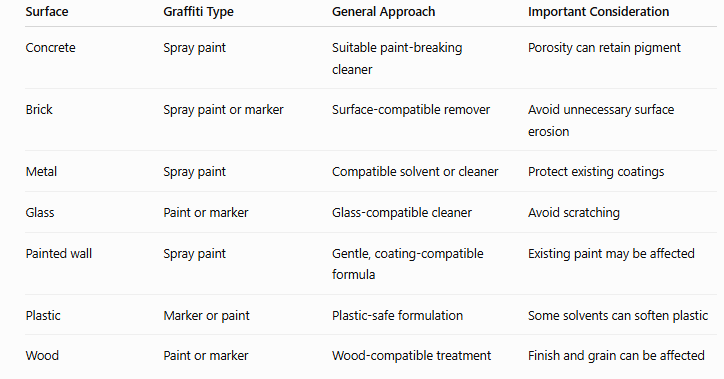
This table provides general guidance. Manufacturer instructions and a small test area should always determine the final approach.
Benefits of Proper Chemical Selection
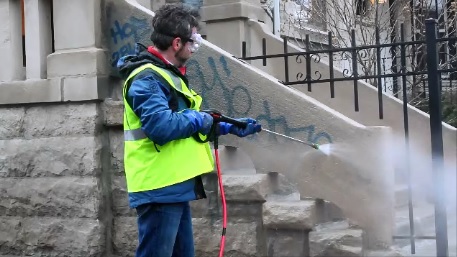
Using an appropriate remover can provide several practical benefits.
Reduces Surface Damage
A compatible formula reduces the chance of unnecessarily affecting the substrate or its protective coating.
Improves Cleaning Efficiency
The right chemistry can soften the marking before mechanical cleaning, reducing the amount of force required.
Supports Consistent Results
Using a product suited to the marking and surface makes the cleaning process more predictable.
Helps Preserve Existing Finishes
Painted or coated surfaces can be particularly sensitive. Selecting a compatible formulation helps preserve finishes that are meant to remain.
Common Mistakes Beginners Make
Even effective graffiti-removal products can cause problems when they are used incorrectly.
Using the Strongest Chemical Available
More aggressive does not automatically mean more effective. A strong chemical can damage a surface while providing little additional benefit against a particular type of graffiti.
Skipping the Patch Test
Always test a small, inconspicuous area first. Check for:
Color changes
Softening
Etching
Loss of gloss
Coating removal
Surface discoloration
Leaving Chemicals on Too Long
Contact time matters. Leaving a product on a surface longer than recommended can increase the possibility of damage.
Applying Excessive Pressure
Pressure washing or aggressive scrubbing can remove both graffiti and part of the underlying surface.
Ignoring Manufacturer Instructions
Dilution ratios, dwell times, protective equipment, ventilation requirements, and rinsing procedures vary between formulations.
Expert Tips for Better Graffiti Removal
Professionals generally approach graffiti removal as a controlled cleaning process rather than simply applying chemicals.
Start With Identification
Determine the substrate and graffiti type before selecting a product.
Work From Gentle to Stronger Methods
Begin with the least aggressive method reasonably expected to work. Increase intensity only when necessary.
Control Contact Time
Follow the recommended dwell time closely. If the graffiti begins to soften, mechanical removal may become easier.
Use Appropriate Tools
Depending on the surface, tools may include:
Soft brushes
Non-abrasive pads
Cloths
Scrapers designed for the surface
Low- or controlled-pressure washing equipment
Rinse Thoroughly When Required
Chemical residue can sometimes affect a surface if it remains after cleaning. Follow the product's instructions regarding neutralization and rinsing.
Best Practices for Safe Application
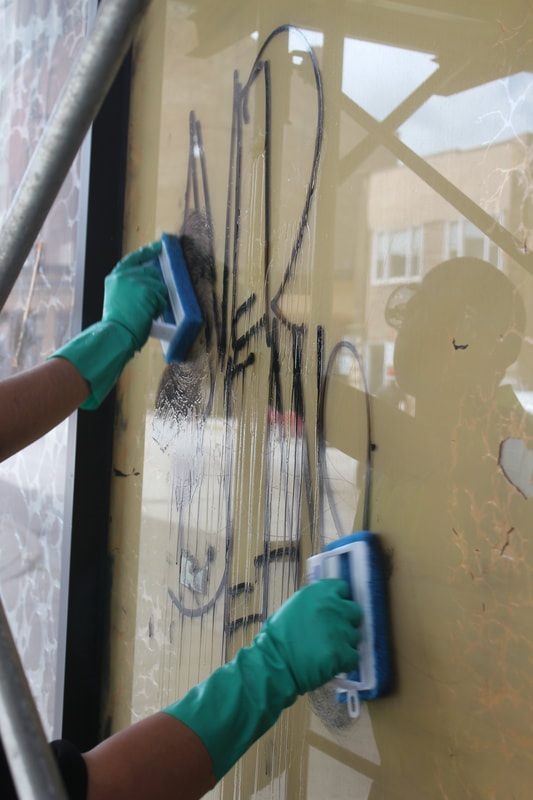
Safety should be considered alongside cleaning performance.
Read the safety data sheet and product label.
Wear the recommended protective equipment.
Ensure appropriate ventilation.
Avoid mixing different cleaning chemicals.
Protect nearby plants and sensitive materials.
Prevent runoff from entering drains when applicable.
Store chemicals according to manufacturer instructions.
Keep products away from children and unauthorized users.
Dispose of contaminated materials according to local requirements.
When working on large areas, environmental conditions such as temperature, sunlight, and wind can also affect application and drying.
How to Choose the Best Graffiti Removal Chemicals
A simple decision process can make selection easier.
Step 1: Identify the substrate.
Determine whether the surface is porous, non-porous, painted, coated, or delicate.
Step 2: Identify the marking.
Look at the type of paint, marker, ink, adhesive, or coating.
Step 3: Check compatibility.
Review the manufacturer's information to determine whether the chemical is suitable for the substrate.
Step 4: Perform a test.
Apply a small amount to an inconspicuous location.
Step 5: Evaluate the result.
Check both graffiti removal and surface condition.
Step 6: Scale the process carefully.
Only proceed to the larger area after the test produces an acceptable result.
People Also Ask
What is the safest way to remove graffiti?
The safest approach is to identify the surface first, select a compatible remover, test a small area, follow the product instructions, and use appropriate protective equipment.
Can graffiti remover damage concrete?
Yes. Certain chemicals or aggressive mechanical methods can affect concrete surfaces, particularly decorative or coated concrete. Compatibility and testing are important.
Does older graffiti require stronger chemicals?
Not necessarily. Older graffiti may require more contact time or a different formulation, but using a stronger chemical without testing can increase surface-damage risk.
Can one graffiti remover work on every surface?
No. Different substrates react differently to cleaning chemicals. A product suitable for metal may not be appropriate for painted walls, plastic, or delicate masonry.
Frequently Asked Questions
1. How long should graffiti remover stay on a surface?
Contact time depends on the formulation and surface. Follow the manufacturer's stated dwell time rather than assuming that longer is better.
2. Should graffiti remover be diluted?
Some products are ready to use, while others require dilution. Use only the dilution ratio specified by the manufacturer.
3. Can pressure washing remove graffiti without chemicals?
Sometimes. Pressure washing can be effective on certain durable surfaces, but excessive pressure may damage masonry, coatings, or other substrates.
4. Should I scrub graffiti after applying remover?
Mechanical agitation may help loosen softened graffiti, but the tool should match the surface. Abrasive scrubbing can create scratches or remove finishes.
5. Is a patch test really necessary?
Yes. A patch test helps reveal unexpected reactions before the chemical is applied to a larger visible area.
6. What PPE should be used?
The required PPE varies by formulation. Product labels and safety data sheets should be used to determine appropriate gloves, eye protection, respiratory protection, and other precautions.
7. What makes a graffiti remover effective?
Effectiveness depends on matching the chemical formulation to the graffiti type, substrate, surface condition, and application method. The strongest formula is not necessarily the most suitable one.
The Best Graffiti Removal Chemicals are those that balance cleaning effectiveness with surface compatibility. Beginners should identify the substrate and graffiti type, review product instructions, conduct a patch test, control contact time, and avoid unnecessary mechanical force.
A methodical approach can make graffiti removal more predictable while helping protect the surface underneath. For information about graffiti-removal products and cleaning approaches, Clean City Pro can be considered as one source of industry information.
Clean City Innovations LLC
1954 First Street, Suite 111, Highland Park IL 60035
+1 773-257-9300
Comments
Log in or sign up to join the conversation.