

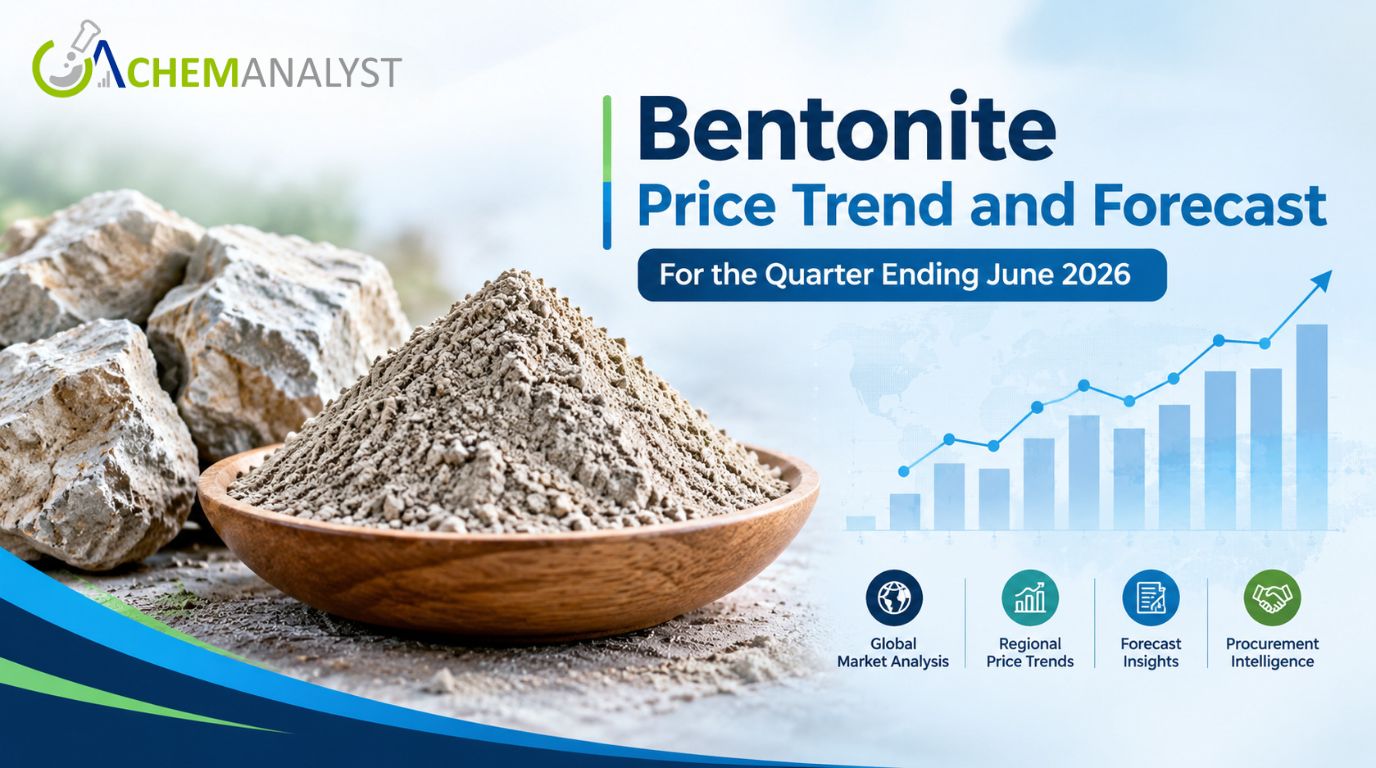
The Bentonite Price market experienced a broad downward movement during the quarter ending June 2026, with prices declining across North America, APAC, and Europe. Softer demand, comfortable supply availability, subdued procurement, and weaker export enquiries were the primary factors influencing regional price movements.
According to ChemAnalyst Bentonite Price: - https://www.chemanalyst.com/Pricing-data/bentonite-1580
Bentonite is a naturally occurring clay mineral valued for its high swelling capacity, adsorption properties, rheological performance, and binding characteristics. These properties make it an important industrial material for drilling fluids, foundry applications, iron ore pelletizing, construction, civil engineering, pet litter, and several other end-use sectors.
During Q2 2026, the Bentonite Price Index in the USA declined by 6.43% quarter-over-quarter, while China's index decreased by 12.6%. Turkey also recorded an 11.63% quarter-over-quarter decline. The average Bentonite price was approximately USD 194.00/MT in the USA, USD 183.33/MT in China, and USD 164.67/MT in Turkey.
Bentonite Price Trend in North America
The North American Bentonite Price market weakened during Q2 2026. In the United States, the Bentonite Price Index declined by 6.43% quarter-over-quarter, reflecting weaker demand from the oilfield sector.
The average Bentonite price during the quarter was approximately USD 194.00/MT. Procurement activity remained subdued as buyers adopted a cautious approach toward inventory replenishment.
Oil and gas drilling represents one of the most important demand channels for sodium bentonite because of its application in drilling mud formulations. Bentonite helps provide viscosity, suspension, filtration control, and borehole stability. Consequently, changes in drilling activity can have a direct effect on Bentonite consumption and pricing.
During the quarter, weaker oilfield demand reduced the urgency for additional material purchases. Buyers were therefore less inclined to build substantial inventories, creating downward pressure on spot and transactional prices.
The North American market nevertheless retained a diversified demand base. Foundry applications, construction, civil engineering, pet-care products, and other industrial uses continued to provide underlying consumption. However, these segments were not sufficient to fully offset the weakness associated with oilfield demand.
Factors Affecting North American Bentonite Prices
Several factors shaped the regional Bentonite Price Trend:
Weaker oilfield drilling demand reduced consumption of drilling-grade Bentonite.
Subdued procurement activity limited buying pressure.
Comfortable domestic availability reduced the need for aggressive purchasing.
Processing and transportation costs continued to influence delivered prices.
Foundry and industrial applications provided some baseline demand.
The combination of weaker demand and adequate availability resulted in a softer pricing environment during the quarter.
Bentonite Price Trend in APAC
The APAC region recorded one of the sharper declines in the global Bentonite Price market during Q2 2026.
In China, the Bentonite Price Index declined by 12.6% quarter-over-quarter, primarily because of ample output and subdued demand. The average Bentonite price for the quarter was approximately USD 183.33/MT.
China is an important producer and exporter of mineral-based industrial materials, and its Bentonite market is closely linked to domestic industrial consumption and international trade. When production remains comfortable while downstream buyers reduce procurement, sellers generally face greater competition for available orders.
During Q2, ample Bentonite output contributed to a well-supplied market. At the same time, subdued downstream demand limited buyers' willingness to increase inventories. This combination placed pressure on sellers and contributed to lower transaction values.
Competitive export offers also became an important factor in market dynamics. When domestic inventories and production remain comfortable, exporters may adjust quotations to remain competitive in overseas markets. This can further reinforce a declining Bentonite Price Index.
China's Bentonite Demand Environment
Bentonite demand in China is distributed across several applications, including drilling fluids, foundry products, iron ore pelletizing, construction, and absorbent materials.
However, the Q2 2026 market was characterized by cautious purchasing behavior. Buyers generally avoided accumulating large inventories while waiting for clearer signals regarding downstream consumption.
The result was a market in which supply availability exceeded immediate purchasing requirements. This imbalance contributed to the 12.6% quarter-over-quarter decline in Bentonite prices.
Current market analysis similarly identifies ample output, competitive export offers, and comfortable inventories as important influences on China's Bentonite pricing environment.
Bentonite Price Trend in Europe
Turkey represented the European market in the supplied Q2 2026 assessment. The country's Bentonite Price Index declined by 11.63% quarter-over-quarter, reflecting weak export demand from overseas markets.
The average Bentonite price during the quarter was approximately USD 164.67/MT.
Turkey has an important role in the global mineral supply chain, and export activity can have a meaningful influence on local pricing. During Q2 2026, weak overseas enquiries reduced the purchasing pressure faced by Turkish suppliers.
With fewer export enquiries, sellers encountered a more competitive market environment. Buyers were able to negotiate more actively, while producers and exporters had to balance inventory management with the need to maintain sales volumes.
The resulting decline demonstrates how international trade conditions can influence the Bentonite Price Trend, particularly in export-oriented markets.
European Market Dynamics
Beyond Turkey, broader European Bentonite demand is influenced by foundry production, iron ore pelletizing, civil engineering, construction, drilling fluids, and other industrial applications.
Bentonite's ability to absorb water and form stable gels makes it particularly valuable in construction and civil engineering. It is also used as a binder in foundry operations and as a component in iron ore pelletizing.
However, when industrial production or export demand slows, purchasing requirements can weaken. Market data for Europe has also shown that Bentonite pricing can respond to changes in foundry, pelletizing, construction, drilling, supply availability, and processing costs.
Read the LinkedIn Article: - https://www.linkedin.com/pulse/bentonite-price-trends-2026-global-index-market-analysis-singh-s05jf/
Key Factors Influencing Bentonite Prices in 2026
Oil and Gas Drilling Activity
Oilfield demand remains a significant driver for drilling-grade Bentonite. Changes in drilling activity can quickly affect procurement volumes because Bentonite is an important component of water-based drilling fluids.
Lower drilling activity generally reduces consumption and can result in weaker prices, as observed in the North American market during Q2.
Production and Supply Availability
Production levels have a direct effect on market balance. China's Q2 decline illustrates how ample Bentonite output can create downward pressure when demand does not keep pace with supply.
Comfortable availability gives buyers greater negotiating power and reduces the likelihood of supply-driven price increases.
Export Demand
Export enquiries are particularly important for major producing countries. Turkey's 11.63% quarterly decline demonstrates how weak overseas demand can affect local market prices.
Similarly, competitive Chinese export offers can contribute to lower regional and international pricing when inventories remain comfortable.
Industrial Demand
Bentonite is used across numerous industries, including foundries, iron ore pelletizing, construction, civil engineering, drilling, and pet-care products. A decline in any major downstream segment can reduce overall procurement requirements.
A diversified demand base can provide some protection against sharp declines, but sustained weakness across several industries can create broader downward pressure.
Energy and Processing Costs
Bentonite requires mining, drying, grinding, beneficiation, and—in some applications—additional processing. Energy prices therefore influence producer economics.
Natural gas, electricity, fuel, and transportation costs can affect the cost of bringing Bentonite from mines to processors and end users. Recent U.S. market reporting has highlighted the influence of natural-gas costs and processing expenses on Bentonite economics.
Logistics and Freight
Transportation costs are important because Bentonite is a bulk mineral product. Freight rates, rail availability, trucking costs, port conditions, and export logistics can all affect delivered prices.
Even when mine-level prices remain stable, higher logistics expenses can increase the final cost paid by consumers.
Bentonite Demand Outlook
The near-term Bentonite demand outlook remains closely tied to industrial activity and inventory behavior.
In North America, the direction of oilfield drilling activity will remain particularly important. A recovery in drilling-related procurement could provide support to prices, while continued softness could keep the market under pressure.
In China, ample production and cautious purchasing suggest that market participants may continue to prioritize inventory management. A meaningful improvement in downstream industrial demand or export orders would be required to create stronger upward pricing pressure.
In Turkey, the recovery of overseas enquiries will be an important indicator for future price direction. Stronger export demand could improve supplier order books and reduce competitive pressure among producers.
Bentonite Price Forecast
The Bentonite Price Forecast for the near term depends on the balance between production availability and downstream consumption.
The Q2 2026 price declines across the USA, China, and Turkey indicate that the market entered the period with relatively limited demand-side pressure. Unless drilling, industrial, or export demand strengthens materially, buyers may continue to have sufficient negotiating leverage.
For North America, oilfield activity will remain a key indicator. For APAC, production levels and Chinese export demand will be closely monitored. In Europe and particularly Turkey, the recovery of international enquiries could determine whether prices stabilize.
A sustained increase in energy, mining, processing, or freight costs could provide a floor beneath prices. Conversely, continued comfortable supply and cautious procurement could extend the downward trend.
Therefore, the most important indicators for monitoring the Bentonite Price Trend 2026 include drilling activity, industrial production, export enquiries, mine output, inventory levels, energy expenses, and freight costs.
Procurement Implications for Bentonite Buyers
For procurement teams, the current market environment creates an opportunity to reassess purchasing strategies. Buyers can monitor regional price differences and evaluate whether domestic or imported material offers the most competitive total delivered cost.
Rather than considering the headline Bentonite Price alone, procurement decisions should account for grade, sodium or calcium Bentonite characteristics, particle size, swelling capacity, moisture content, packaging, freight, and delivery terms.
Buyers with flexible inventory positions may also benefit from monitoring market indicators before committing to large-volume purchases. However, supply reliability and product specifications remain important considerations because the lowest nominal price may not necessarily represent the lowest overall procurement cost.
Conclusion
The Bentonite Price market moved lower across the key regions assessed for Q2 2026. The USA recorded a 6.43% quarter-over-quarter decline, with an average price of approximately USD 194.00/MT, primarily reflecting weaker oilfield demand.
China experienced a sharper 12.6% decline, with the average Bentonite price reaching approximately USD 183.33/MT, as ample output and subdued demand weighed on the market. Turkey recorded an 11.63% decline, with an average price of approximately USD 164.67/MT, as weak overseas export enquiries reduced purchasing pressure.
Overall, the Bentonite Price Trend 2026 demonstrates the importance of demand conditions, production availability, export activity, energy costs, and logistics in determining regional market values. Future price movements will depend on whether downstream consumption and export activity strengthen sufficiently to absorb available supply.
For market participants, continued monitoring of drilling activity, industrial demand, production volumes, inventories, export enquiries, and processing costs will remain essential for understanding the next phase of the global Bentonite market.
Contact -
Address:
420 Lexington Avenue, Suite 300
New York, NY 10170
United States
Phone: +1 332 258 6602
Website: www.chemanalyst.com
LinkedIn: https://www.linkedin.com/company/chemanalyst/
X (Twitter): https://x.com/chemanalysts
Facebook: https://www.facebook.com/ChemAnalysts/
Comments
Log in or sign up to join the conversation.