

The third estimate for GDP topped economist’s consensus estimates.
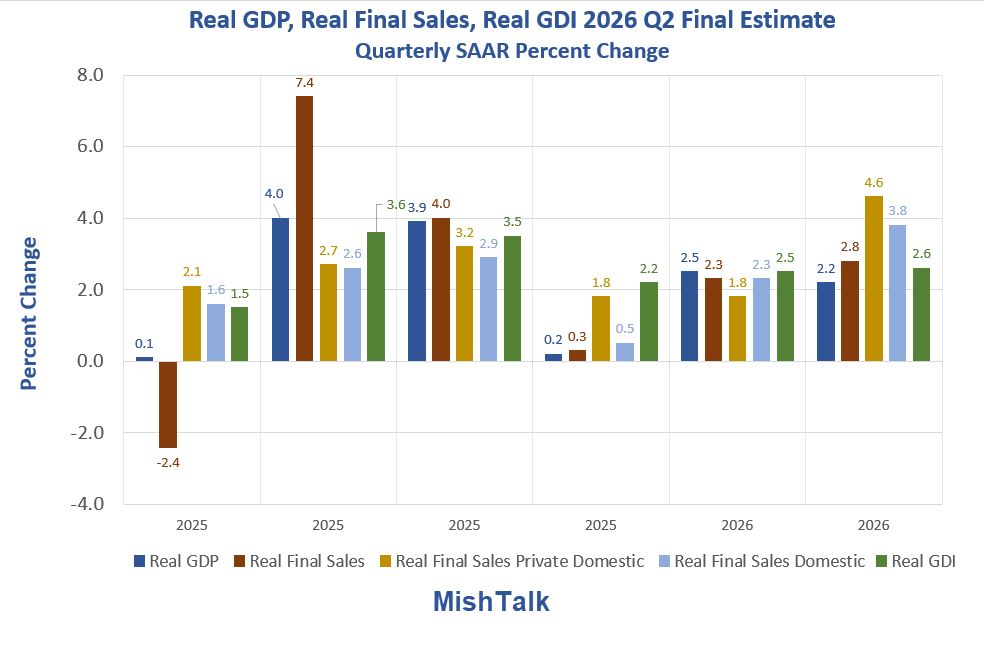
2026 Q2 GDP, Final Estimate
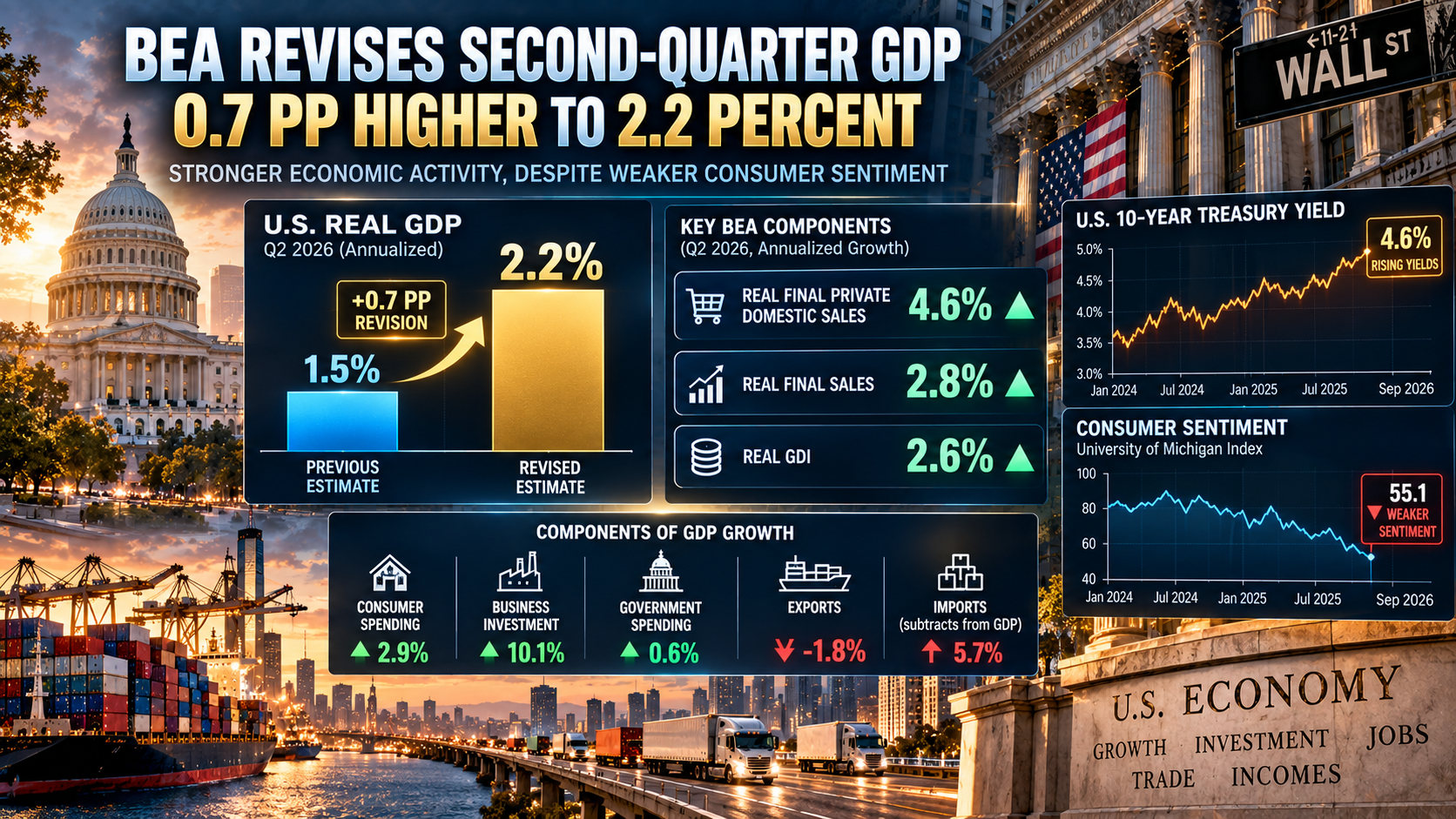
The BEA reports Real Gross Domestic Product (GDP) increased at an annual rate of 2.2 percent in the second quarter of 2026 (April, May, and June).
Real GDP was revised up 0.7 percentage point from the second estimate, primarily reflecting upward revisions to investment, consumer spending, and government spending
In the first quarter, real GDP increased 2.5 percent (revised).
Real Second-Quarter GDP and GDI
Real GDP 1.5%
Real Final Sales: 2.8%
Real Final Private Domestic Sales: 4.6%
Real Final Domestic Sales: 3.8%
Real GDI: 2.6%
The difference between real GDP and Real Final Sales is Change In Private Inventories (CIPI) that nets to zero over time.
Thus real final sales are a better measure than the topline widely reported numbers.
The Fed focuses on Real Final Private Domestic Sales which was a whopping 4.6percent annualized.
Contributions to GDP
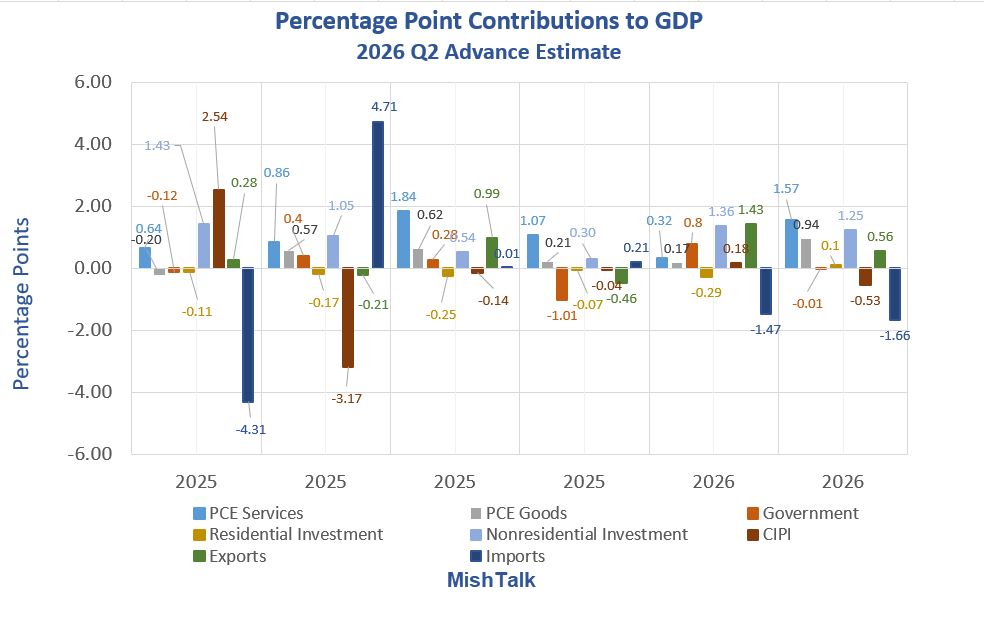
Percentage Point Contributions to 2026 Q2 GDP, Final Estimate
Contributions to GDP
PCE Services: 1.57 PP
PCE Goods: 094 PP
Government: -0.01 PP
Residential Investment: 0.01 PP
Nonresidential Investment: 1.25 PP
CIPI: -0.53 down
Exports: 0.56 PP
Imports -1.66 PP
Imports and Exports
Imports don’t subtract to GDP. The have no impact of GDP at all. The D in GDP explains why.
The BEA subtracts imports because its initial assumption is that all sales are domestic.
Otherwise the BEA would be trying to figure out things like “What percentage of this hammer from Home Depot is domestic?”
Reflections on the Economy
Based on private domestic sales, the economy is overheating. 4.6 percent final private domestic sales is a huge number.
The Fed is behind the curve. That is the bond market reaction today with long-term yields rising again despite slightly better than expected PCE price inflation readings by the BEA.
GDP Not Boosting Sentiment
On September 29, 2026 I noted US Consumer Confidence Plunges to the Lowest Level Since 2014
Views of the present situation and future expectations both declined dramatically.
On September 25, 2026, I noted Consumer Sentiment Drops in September to Just Above Record Lows
Republican attitudes decline the most, but from higher levels.
Partisan Sentiment Changes
After particularly large declines in sentiment this month, Republican sentiment is now 20% lower than January 2026.
Democrats are down 13% over the same period.
Consumers remain concerned over inflation no matter what economists and the GDP say about the economy.

Comments
Log in or sign up to join the conversation.