

B2B Buyer Generation: Key Buying Group Personas Explained
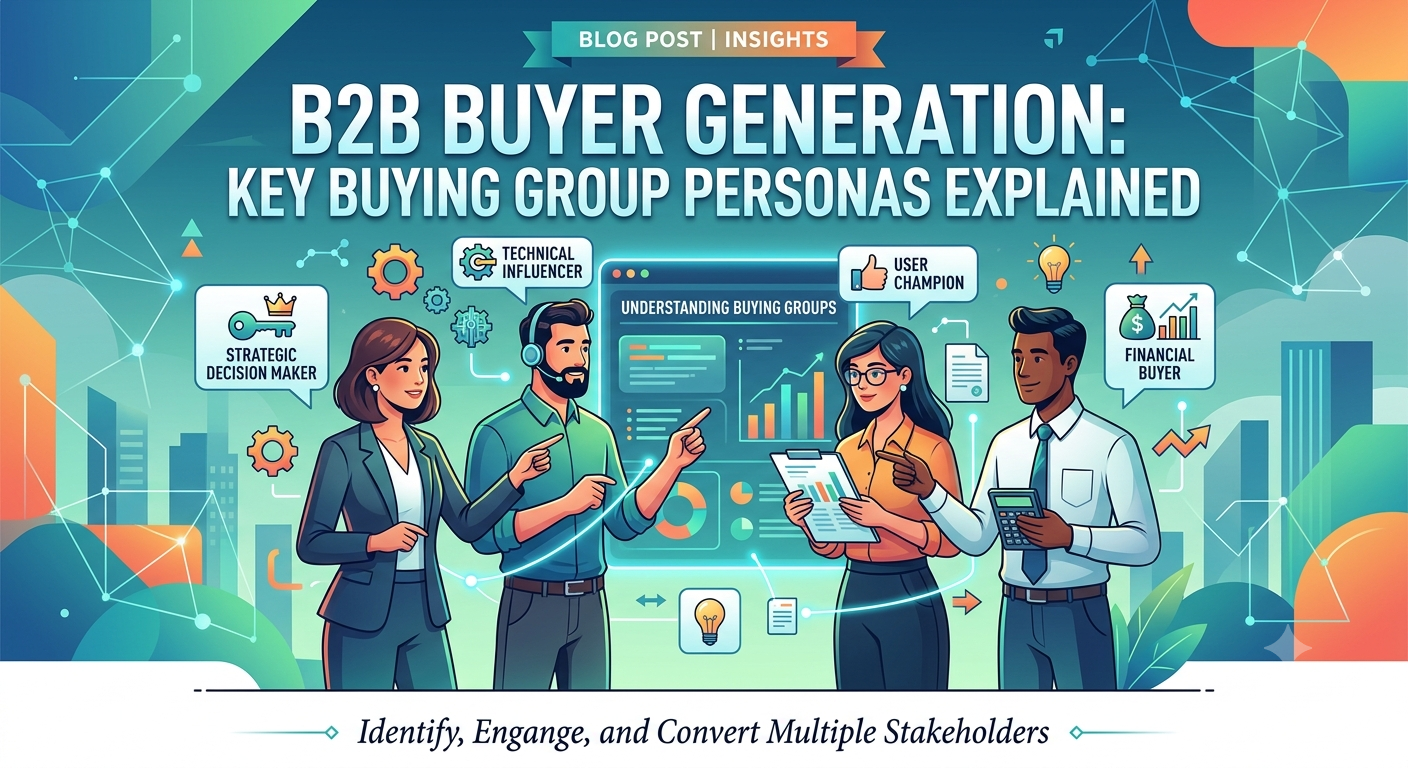
B2B purchasing decisions rarely involve a single individual. Most buying journeys include multiple stakeholders, each with different priorities, responsibilities, and concerns. Understanding these buying group personas enables businesses to deliver more relevant messaging, improve engagement, and create effective strategies by an account based marketing agency.
By identifying the needs of every decision-maker, organizations can build stronger relationships and accelerate the buying process.
Understanding the B2B Buying Group
A buying group consists of individuals who influence or approve a purchasing decision. Depending on the organization and the complexity of the purchase, this group may include executives, department leaders, technical specialists, procurement teams, finance professionals, and end users.
Each stakeholder evaluates solutions from a different perspective, making personalized communication essential.
The Decision-Maker
Decision-makers have the authority to approve investments and evaluate whether a solution aligns with business objectives. They focus on strategic value, expected outcomes, return on investment, and long-term business impact.
Marketing content for decision-makers should highlight measurable business benefits and organizational value.
The Technical Evaluator
Technical stakeholders assess whether a solution meets operational, security, and integration requirements. They often review product capabilities, implementation processes, scalability, and compatibility with existing systems.
Providing detailed product information, technical documentation, and implementation resources helps address their concerns.
The Financial Stakeholder
Finance professionals evaluate budgets, pricing, and overall financial impact before approving purchases. They consider cost efficiency, long-term value, and expected return on investment.
Clear pricing information, business case examples, and value-focused messaging support financial decision-making.
The End User
End users interact directly with the product or service after implementation. Their priorities include usability, productivity, training requirements, and overall user experience.
Educational content, demonstrations, and practical use cases help build confidence among this audience.
Personalizing Engagement for Every Persona
Effective B2B buyer generation requires delivering relevant content to each stakeholder throughout the buying journey. Personalized messaging, Account-Based Marketing, and first-party data enable businesses to understand audience needs and provide information that supports every stage of the decision-making process.
This approach strengthens engagement while improving collaboration between marketing and sales teams.
Building Better Buyer Generation Strategies
Understanding buying group personas enables organizations to move beyond generic marketing and create targeted experiences that address the priorities of every stakeholder involved in a purchase.
By recognizing the roles of decision-makers, technical evaluators, financial stakeholders, and end users, businesses can improve lead quality, shorten sales cycles, and develop stronger B2B demand generation strategies that drive sustainable growth.
Comments
Log in or sign up to join the conversation.