
Skin concerns such as acne and rosacea are among the most common reasons people visit a dermatologist. Although these conditions are different, they often share one thing in common—inflammation. Redness, swollen pimples, clogged pores, and sensitive skin can become a daily challenge, affecting not only your appearance but also your confidence. Fortunately, effective topical treatments are available to help manage these symptoms, and one of the most trusted options is Aziderm Gel.
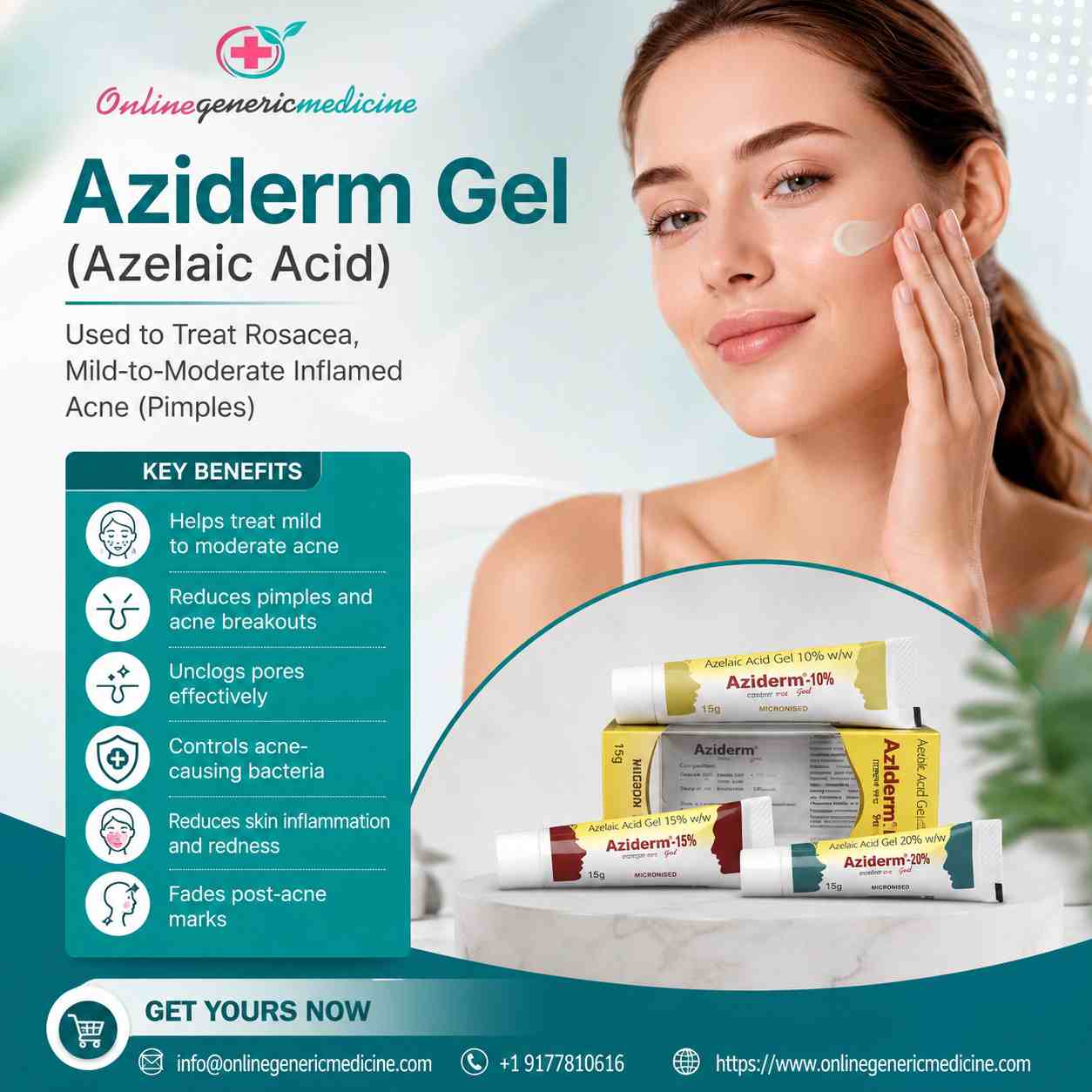
Aziderm Gel contains Azelaic Acid, a clinically established ingredient that helps treat mild-to-moderate inflamed acne while also reducing the redness and bumps associated with rosacea. Instead of providing only temporary relief, it works gradually to improve the overall condition of the skin by targeting the factors that contribute to these problems.
At OnlineGenericMedicine, we believe that understanding your treatment is just as important as using it correctly. This guide explains how Aziderm Gel works, who it is intended for, and how it can become part of a consistent skincare routine.
Why Acne and Rosacea Require More Than Basic Skincare
Many people try to manage acne or facial redness with face washes, scrubs, or cosmetic products alone. While a good skincare routine is important, these products often cannot address the underlying causes of inflammatory skin conditions.
Acne develops when oil, bacteria, and dead skin cells collect inside the pores, leading to inflammation and breakouts. Rosacea is a chronic skin condition that causes persistent facial redness, visible blood vessels, and small inflamed bumps. Because both conditions involve inflammation, treatment usually requires a medication that works beneath the surface rather than simply improving the skin's appearance.
What Is Aziderm Gel?
Aziderm Gel is a topical prescription medication formulated with Azelaic Acid. This naturally derived compound has been used in dermatology for many years because of its antibacterial, anti-inflammatory, and skin-renewing properties.
Rather than focusing on only one cause of acne, Azelaic Acid works in several ways at the same time. It helps reduce the bacteria associated with acne, calms inflammation, prevents clogged pores, and supports normal skin cell turnover. These combined actions make it useful for treating both inflammatory acne and rosacea while promoting healthier-looking skin.
How Azelaic Acid Works
Healthy skin renews itself continuously, but acne and rosacea can interfere with this natural process. Azelaic Acid helps restore balance by reducing inflammation and limiting the growth of acne-causing bacteria.
It also prevents the buildup of dead skin cells that can block pores and lead to new breakouts. As treatment continues, many people notice fewer pimples, less facial redness, smoother skin, and a more even complexion. In addition, Azelaic Acid may gradually improve the appearance of post-acne marks, making the skin look clearer over time.
Benefits of Aziderm Gel
The effectiveness of Aziderm Gel comes from its ability to treat several aspects of acne and rosacea at the same time. Regular use may help reduce inflamed pimples, minimize redness, improve skin texture, and lower the likelihood of future breakouts. Many people also notice that their skin appears healthier and more balanced after consistent treatment.
Since Azelaic Acid is generally well tolerated, it is often recommended for individuals with sensitive or combination skin, although treatment should always be guided by a healthcare professional.
Using Aziderm Gel Correctly
To achieve the best possible results, cleanse the affected area with a mild face wash and allow the skin to dry before applying the gel. Apply a thin layer only to the affected areas, following your healthcare provider's instructions.
Avoid contact with the eyes, mouth, and broken skin. Wash your hands after application unless they are the area being treated. Consistent daily use is important because the medication works gradually, and visible improvement often takes several weeks.
Using a gentle moisturizer and applying sunscreen during the day can help protect the skin and reduce irritation while undergoing treatment.
Possible Side Effects
Like most topical medications, Aziderm Gel may cause mild side effects during the first few weeks of use. Some individuals experience temporary burning, itching, dryness, redness, or slight peeling as the skin adapts to the treatment.
These effects usually improve over time. However, if irritation becomes severe or persists, seek advice from your healthcare provider before continuing treatment.
Supporting Your Skin During Treatment
Medication works best when combined with healthy skincare habits. Wash your face with a gentle cleanser, avoid harsh exfoliating products, and keep your skin moisturized with a non-comedogenic moisturizer. Daily sunscreen is equally important, as sun exposure can worsen redness and increase skin sensitivity.
It is also helpful to avoid picking at pimples or over-cleansing the skin, as both habits may slow the healing process and increase the risk of scarring.
Final Thoughts
Treating acne and rosacea is often a gradual process, but the right medication can make a significant difference. Aziderm Gel, containing Azelaic Acid, is designed to reduce inflammation, control acne-causing bacteria, keep pores clear, and improve the overall appearance of the skin. With regular use and a consistent skincare routine, many people experience healthier, smoother, and clearer skin over time.
For more informative articles on skincare, prescription medications, and wellness, visit OnlineGenericMedicine. We are dedicated to providing trusted healthcare information that helps you better understand your treatment options and make confident decisions about your skin health.
Disclaimer: This article is for informational purposes only and should not be considered a substitute for professional medical advice, diagnosis, or treatment. Always consult a qualified healthcare professional before using any prescription medication.
Comments
Log in or sign up to join the conversation.