

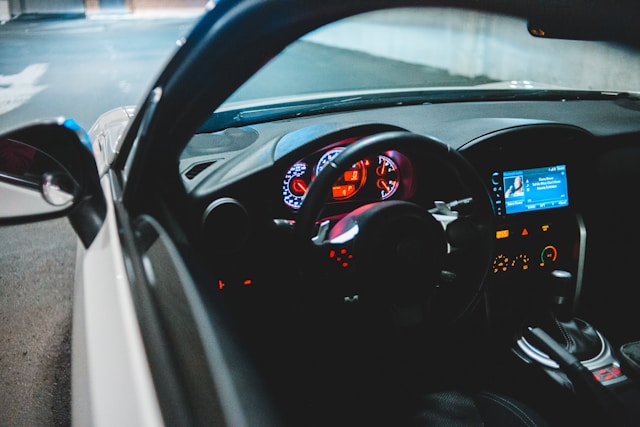
My wife stood frozen on the street corner, afraid to take a step into the intersection.
A car was stopped, waiting for her to go, but no one was waving her along to indicate that the car would remain in place until she crossed the street.
That’s because there was no driver.
It was a Waymo driverless car.
We’re in San Francisco for a couple of weeks, and Waymos are everywhere.
Sometimes you see a passenger in the back. Sometimes they’re in the front, still with no one behind the wheel. And sometimes you see the car cruising the streets absolutely empty.
It’s a weird sight.
So, of course, I had to ride in one.
Folks are torn about driverless cars. It’s scary to think that no one is behind the wheel to make a snap decision to slam on the brakes or swerve to avoid an obstacle or another car.
But consider that driverless cars don’t get tired, impaired, or distracted by texting or fights with their spouses.
In fact, the data shows that automated driving is far safer than human driving.
Across 100 million miles of travel, self-driving cars resulted in 91% fewer accidents causing serious injuries or fatalities and 80% fewer crashes causing any injury.
Over the long term, this should bring down auto insurance rates, as fewer accidents should occur.
Self-driving cars are especially attractive for female passengers who are traveling alone.
Nearly every parent of a teenage daughter who has had to take an Uber by themselves has tracked them during their ride. When there’s no one else in the car, you don’t have to worry about a creep in the driver’s seat.
Self-driving cars can also help seniors maintain their independence after they are no longer able to drive.
Within 10 years (and probably even sooner), I expect driverless cars to be very common in the United States and other places around the world.
This is a trend that has a long road ahead of it. Investors should consider ways to participate in this wave of the future.
Tesla (TSLA) (Nasdaq: TSLA) is an obvious choice.
The company is a leader in automated driving. I use its self-driving feature all the time, and it works very well. Tesla also has robotaxis in Miami, Austin, Dallas, and Houston, with plans to expand to six more cities in 2026, including Las Vegas, Orlando, and Phoenix.
Uber (UBER) expects to operate driverless cars, which is not surprising. Right now, it splits revenue with drivers, but if there’s no driver, there’s no split.
This is unfortunate for the people who make their living driving for Uber. I’ve had many great conversations with interesting people behind the wheel. But the future is coming, and in a few years, an Uber driver may be as hard to find as an honest politician.
The guy who brought you You Don’t Have to Drive an Uber in Retirement is now telling you that you may not be able to drive an Uber in the future, even if you want to.
I mentioned Aurora Innovation (AUR) in a Wealthy Retirement article last week on three of the next iconic American companies. Aurora is a maker of self-driving trucks.
If a self-driving car scares you, an 18-wheeler going 60 mph with no one in the cab is probably even more frightening.
However, earlier this year, Aurora reported 250,000 miles driven by its trucks with zero system-attributed collisions and 100% on-time performance. Another automated truck maker, Gatik, reported 60,000 miles driven without incident.
Truck drivers are only permitted to drive for a certain number of hours a day, and they require sleep, food, and bathroom breaks. Self-driving trucks need none of those things. They also don’t get distracted or get mad at the company or the person who just cut them off.
Roads and traffic are going to look a lot different 10 years from now.
Your portfolio should reflect these upcoming changes.
What do you think? Would you get in a car without a driver? Leave your thoughts in the comments section below.
Comments
Log in or sign up to join the conversation.